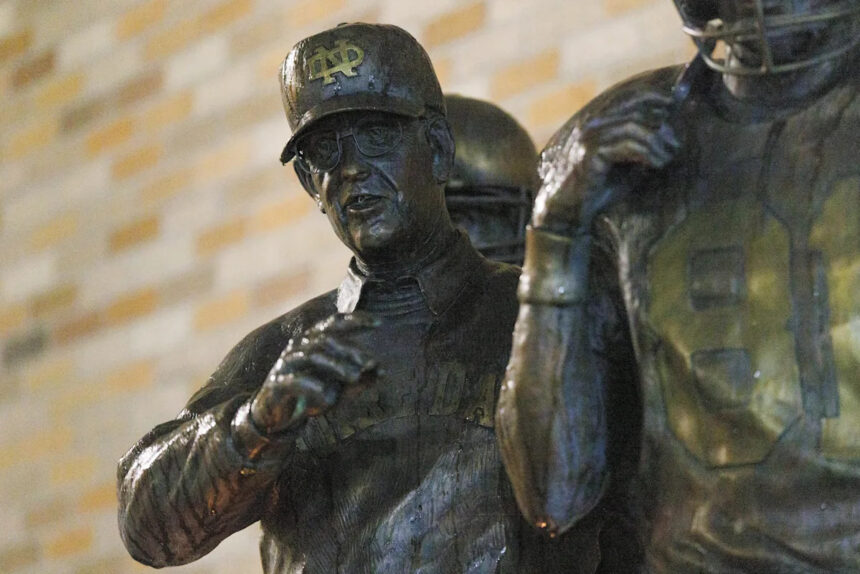
Legendary Notre Dame Coach Lou Holtz, Architect of a Golden Era, Dies at 89
The echoes of Notre Dame Stadium, so often stirred to a frenzy by his teams, fell silent on Wednesday. The sports world mourns the passing of an authentic American icon, as legendary football coach and commentator Lou Holtz died at the age of 89. More than a coach, Holtz was a philosopher of grit, a master motivator, and the man who returned the Notre Dame Fighting Irish to the pinnacle of college football, delivering the program’s last consensus national championship in 1988. His passing marks the end of an era defined by his unmistakable lisp, his twinkling eyes, and an unwavering belief in the power of fundamentals and faith.
While his legacy is eternally intertwined with the golden dome of Notre Dame, Holtz’s journey was one of remarkable breadth and resilience. From a brief, tumultuous stint in the NFL to resurrecting programs across the collegiate landscape, his career was a testament to his unique leadership. He leaves behind a profound void, not just in South Bend, but across the entire tapestry of American sports.
The Holtz Journey: From William & Mary to the Big Apple and Beyond
Lou Holtz’s coaching odyssey was a testament to his transformative touch. His reputation was built not at a single powerhouse, but through a proven ability to engineer turnarounds wherever he went. Before the bright lights of Notre Dame, he honed his craft by taking over struggling programs and forging them into winners.
- William & Mary: Secured a share of the Southern Conference title in 1971.
- North Carolina State: Led the Wolfpack to a remarkable ACC Championship in 1973 and four consecutive bowl victories.
- Arkansas: Guided the Razorbacks to three top-10 finishes and a share of the Southwest Conference title in 1979.
- Minnesota: Inherited a team on a 17-game losing streak and produced a bowl victory in his second season.
This remarkable resume led to an unlikely, and ultimately brief, foray into professional football. In 1976, Holtz was hired as head coach of the New York Jets. The fit was disastrous from the start. His disciplined, detail-oriented approach clashed with the professional culture, culminating in his stunning resignation with one game left in a 3-10 season. This oft-forgotten chapter, however, cemented his destiny as a college coach through and through, a teacher whose methods were tailor-made for developing young men.
The Notre Dame Dynasty: Restoring Glory in South Bend
When Lou Holtz arrived at Notre Dame in 1986, the program’s storied legacy was showing cracks. The task was Herculean: restore Notre Dame to national prominence while upholding its unique academic and ethical standards. Holtz didn’t just meet expectations; he exceeded them in spectacular fashion. He instilled a culture of relentless effort, famously emphasizing “the three most important things in life”: “Your faith, your family, and the Notre Dame football program.”
The apex of this era came in the magical 1988 season. Holtz’s Fighting Irish, led by quarterback Tony Rice and a ferocious defense, navigated a brutal schedule to finish a perfect 12-0. The season was punctuated by a cathartic victory over top-ranked Miami, avenging a heartbreaking loss from the year before and reclaiming Notre Dame’s place atop the college football world. The 34-21 victory over West Virginia Mountaineers in the Fiesta Bowl secured the national championship, a title that remains the program’s most recent to this day.
Holtz’s tenure at Notre Dame (1986-1996) was marked by consistent excellence: a 100-30-2 record, nine consecutive New Year’s Day bowl appearances, and a staggering 23 victories over top-10 opponents. He didn’t just win games; he produced leaders, Heisman Trophy winners like Tim Brown, and teams that played with a recognizable, hard-nosed identity.
Life After the Sidelines: The Analyst and Final Challenges
Following his departure from Notre Dame in 1996, Holtz’s competitive fire still burned. In 1999, he took on perhaps his most daunting rebuild yet with the South Carolina Gamecocks. The results were initially miraculous, transforming an 0-11 team into back-to-back 8-4 and 9-3 seasons with Outback Bowl victories. This “turnaround artist” had done it again. However, after three subsequent losing seasons, Holtz retired from coaching for good in 2004, leaving a complex but ultimately respected legacy in Columbia.
For a new generation of fans, Lou Holtz became a fixture in their living rooms as a charismatic and often delightfully opinionated ESPN analyst. Paired with Mark May, their “debates” became must-see television. Holtz, ever the optimist and patriot, would famously pick Notre Dame and underdogs with unwavering conviction, becoming a beloved and sometimes polarizing character. He brought the same passion he had on the sideline to the broadcast booth until his departure from the network in 2015.
Legacy and Lasting Impact: More Than Wins and Losses
Lou Holtz’s legacy cannot be measured by trophies alone, though his Hall of Fame resume is impeccable. His true impact lies in the countless players, coaches, and fans he inspired with his simple yet powerful life philosophy. He was a prolific speaker and author, dispensing wisdom through his “Lou Holtz’s Three Rules”: Do what’s right, do your best, and treat others the way you want to be treated.
Expert analysis of his coaching philosophy reveals a master of psychological motivation and meticulous preparation. His practices were notoriously demanding, focusing on eliminating mistakes. He believed completely that effort and attitude were choices, and he demanded those choices from everyone in his program. In the modern era of spread offenses and transfer portals, Holtz’s brand of tough, fundamental, run-first football feels like a relic. Yet, the core principles of discipline, accountability, and team-over-self that he championed remain the timeless bedrock of any successful organization, athletic or otherwise.
Looking forward, the predictions for Notre Dame’s future will now forever be measured against the Holtz standard. Every coach who walks the sidelines in South Bend, including current leader Marcus Freeman, carries the weight of ending the national championship drought that began the day Holtz left. His shadow is both an inspiration and a constant reminder of what is possible.
The passing of Lou Holtz is the closing of a definitive chapter in college football history. He was the last of a breed—a coach who could be both a feared disciplinarian and a grandfatherly mentor, a strategist who believed blocking and tackling mattered more than any scheme, and a man whose faith and family were always presented as his true championships. The sports world has lost a giant, but the lessons of Lou Holtz—echoing from the practice fields of Arkansas to the peak of the college football mountain in South Bend—will continue to inspire long after the final whistle. Rest in peace, Coach. The echoes are yours.
Source: Based on news from Yahoo Sports.