How the Patriots Can Replace Stefon Diggs: A Blueprint for the Post-Diggs Era
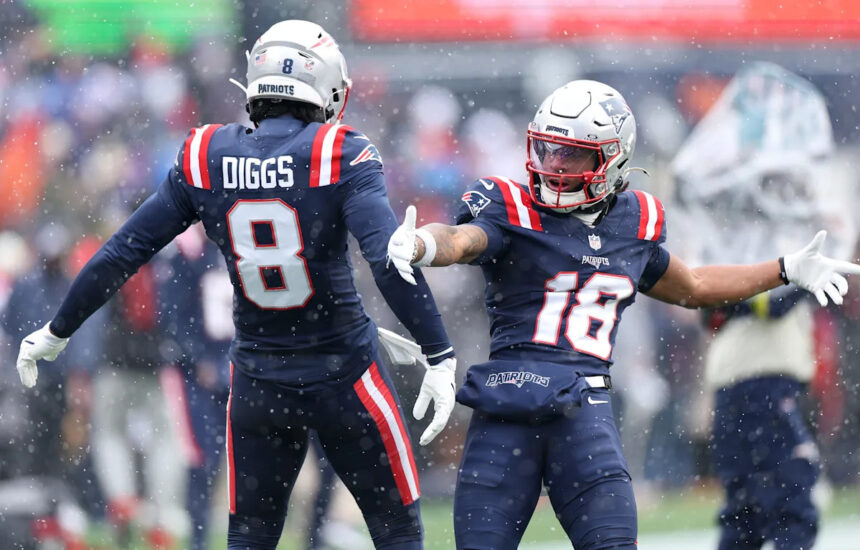
The winds of change are blowing hard through Foxborough. In a move that signals a definitive pivot, the New England Patriots are parting ways with veteran wide receiver Stefon Diggs just one season after his high-profile arrival. Despite leading the team in receptions and serving as a de facto offensive captain in 2025, the 32-year-old will be released as the new league year begins. This decision leaves a massive void in production, leadership, and schematic versatility. However, armed with over $57 million in cap space and a treasure trove of premium draft capital, the Patriots are uniquely positioned to architect a modern offense. Replacing a player of Diggs’ caliber isn’t about finding one man; it’s about executing a multi-faceted strategy. Here’s how the Patriots can turn this seismic shift into an opportunity for rebirth.
The Internal Candidate: Can Kyle Williams Ascend?
Before looking outward, the Patriots must assess what they have in-house. The most logical beneficiary of Diggs’ departure is second-year pro Kyle Williams. Drafted in the third round last year, Williams’ rookie season was a quiet one, largely overshadowed by Diggs’ presence and his own recovery timeline. However, his profile is intriguing. A precise route-runner with reliable hands and a high football IQ, Williams fits the classic “Patriot Way” mold at the receiver position.
The critical question is whether he can expand his role. Diggs was used extensively and flexibly, lining up both in the slot and outside, and was a trusted blocker in the run game. For Williams to step into a leading role, he must prove he can handle that same positional diversity and the associated physical demands. His development this offseason will be one of the most important storylines. He represents a cost-controlled option with upside, but banking on him as the sole solution would be a gamble. The Patriots will likely view him as a key piece of the puzzle, but not the centerpiece.
The Free Agency Playbook: Targeting Proven Production
With a war chest of cap space, New England can be aggressive in free agency to immediately inject talent into the receiver room. The goal here should be to acquire a proven commodity who can command defensive attention from day one. The free agent market, while not overflowing with elite, young number-one options, does have players who can fill specific roles Diggs vacated.
The Patriots’ strategy should focus on two types of receivers:
- The Established Chain-Mover: A player like the Bengals’ Tyler Boyd embodies the reliable, savvy slot presence Diggs often provided. He’s a master of finding soft spots in zone coverage and converting critical third downs.
- The Vertical Threat: To truly diversify the offense, New England needs a field-stretcher. A target like the Dolphins’ speedster, if available, could open up the intermediate game for others and punish defenses that creep into the box.
Free agency allows the Patriots to add a known quantity—a player whose NFL production is documented. This move provides stability for a young quarterback and ensures the offense isn’t wholly reliant on rookie development. Using a portion of their $57 million in salary cap space on a top-tier free agent receiver is the fastest way to mitigate the loss of Diggs’ on-field production.
The Draft Strategy: Building the Future Core
The most exciting avenue for replacement lies in the 2026 NFL Draft. Holding three picks on the first two days (likely including a very high first-round selection), the Patriots have the ammunition to select a blue-chip receiving talent. This draft class is reportedly deep at wide receiver, offering New England a chance to build a cost-controlled, dynamic young core.
Their approach with these premium picks could take several shapes:
- The Premier Prospect: Using a top-10 pick on a consensus top receiver would be a direct, powerful statement. This player would be expected to become the offensive centerpiece for the next decade.
- The Volume Approach: Instead of one high pick, the Patriots could use their second-round capital to select two receivers with complementary skillsets—for example, a big-bodied outside target and a shifty, YAC-focused slot player. This spreads the risk and creates competition.
The draft is where the Patriots can find a player with the scheme versatility Diggs possessed. Scouts will be looking for prospects who can line up anywhere, understand route concepts against complex coverage, and contribute as blockers. A successful draft haul at receiver would not just replace Diggs; it could potentially elevate the entire offensive ceiling for years to come.
A Philosophical Shift: Reimagining the Offensive Identity
Perhaps the most profound way to “replace” Stefon Diggs is to not try to replicate him at all, but to use this transition as a catalyst to fundamentally reshape the offense. Diggs was a security blanket and a leader, but his release untethers the Patriots from a specific offensive model. This is an opportunity for the offensive coordinator to install a system that is less reliant on a single alpha receiver and more focused on collective defensive stress.
This could mean:
- Heavier utilization of 12 personnel (two tight ends), leveraging the talents of their young tight ends in the passing game.
- A more committed and diverse rushing attack, making the play-action pass more lethal.
- A true committee approach at receiver, where targets are distributed based on matchup advantages rather than defaulting to a number-one option.
This philosophical shift requires a cohesive vision and excellent coaching, but it makes the offense less predictable and more resilient. The goal becomes replacing Diggs’ 120 targets with 40 more targets for the tight end, 30 for the running back, and 50 spread across two new receivers. It’s about system over star, at least in the immediate transition.
Conclusion: A Multi-Pronged Path Forward
The release of Stefon Diggs is not an ending for the New England Patriots; it is a bold beginning. It clears the deck, both financially and philosophically, for the franchise to construct its next great offense. The path to replacing his production and leadership will not be found in a single transaction.
The most likely and effective strategy will be a multi-pronged approach: promoting a developing talent like Kyle Williams, signing a reliable veteran in free agency to provide a floor, and using the draft to secure the high-ceiling talent for the future. Coupled with a potential shift in offensive philosophy, the Patriots have all the tools to turn this moment of uncertainty into a strength. The post-Diggs era in New England will be defined not by the absence of one star, but by the emergence of a new, collective, and dynamic offensive identity. The blueprint is there; the execution starts now.
Source: Based on news from Yahoo Sports.