‘We Should Not Have Played’: The Day Tennis Was Caught in the Crossfire of Middle East Conflict
The pristine courts of professional tennis are worlds away from the chaos of war. Players focus on serves, not sirens; on break points, not breaking news. But in January 2022, that carefully constructed bubble was violently punctured. As Iranian drones and missiles struck targets in the United Arab Emirates, the ATP Challenger tournament in Fujairah became an unsettling front-row seat to international conflict, leaving players questioning the very decision to play on.
A Distant Boom: The Tournament That Ignored the Real World
The Fujairah International Tennis Championship is a staple of the ATP Challenger circuit. For rising stars and journeymen pros, it’s a crucial opportunity for ranking points and prize money. The port city of Fujairah, nestled against the Hajar Mountains, is known for its relative calm, a contrast to the glitter of nearby Dubai. But on January 17, 2022, the geography that made it a peaceful host also placed it in the line of fire.
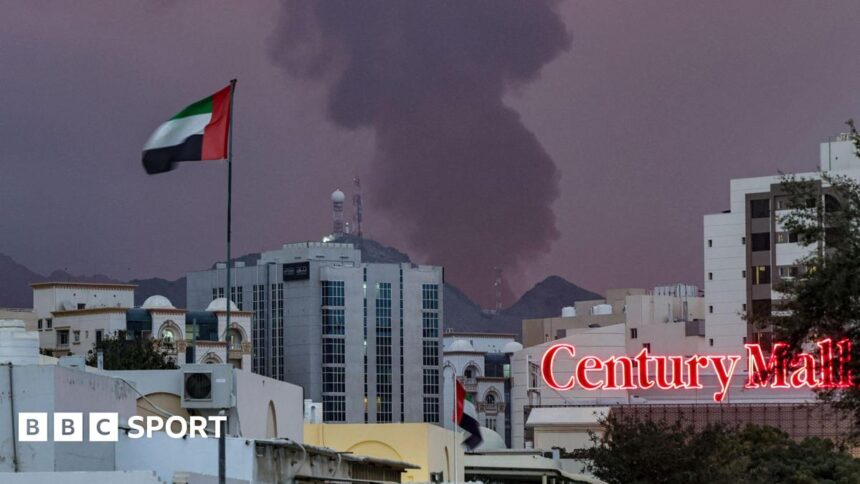
Fujairah is home to a critical global oil storage and bunkering hub. That infrastructure made it a target. As players warmed up or rested in their Dubai hotels, Iranian drone and missile attacks struck an oil facility and the airport in Abu Dhabi days earlier. Then, on the morning of a match day, the conflict came shockingly close.
Australian player James McCabe was on a practice court. “I heard a big explosion,” he recounted. “I looked up and saw a big plume of smoke… then fighter jets started flying overhead.” The smoke billowed from the Fujairah oil terminal, just 10 kilometers from the tournament venue. Explosions echoed. For the athletes, the abstract headlines of Middle East tensions had just become their terrifying reality.
The Controversial Call: To Play or Not to Play?
In the immediate aftermath, logic suggested the event would be suspended. Governments were advising citizens to take shelter. The sound of war was literally overhead. The expectation among the players was unanimous: they would not be competing.
Yet, in a decision that continues to draw scrutiny, tournament officials and ATP supervisors, after consultations with local authorities, deemed it safe to proceed. Matches were merely delayed. The message to players was that the attack was an isolated incident and the area was secure. This created a surreal dissonance.
- Player Safety vs. Tournament Logistics: The core conflict was between immediate security concerns and the immense pressure to maintain a global tour schedule. Cancelling events is a last resort, involving financial losses and ranking complications.
- Local Assurance vs. Global Perception: Local UAE authorities, likely aiming to project stability, gave the all-clear. But for international players unfamiliar with the region’s tensions, this assurance rang hollow against the sound of explosions.
- The “Shelter in Place” Paradox: “We expected to stay in shelter because that’s what the governments were advising,” McCabe told the BBC, highlighting the stark contradiction. They were advised to shelter, yet also told to go out and play a professional sport.
This decision forced players into an impossible position. For many ranked outside the top 100, skipping a match can mean forfeiting precious earnings and points. The economic pressure to compete often overrides personal unease.
Expert Analysis: The Unraveling of Sport’s Protective Bubble
This incident exposes the fragile illusion of apolitical space in global sports. Tennis, like many international circuits, operates on the premise that it can transcend geopolitics. The Fujairah event proves this is often a convenient fiction.
“Sport has always existed within the political world, but it works hard to curate an environment where that world is kept at bay,” says Dr. Anya Briggs, a sociologist of sport. “What happened in Fujairah was that barrier failing catastrophically. The players weren’t just reading about a conflict; they were hearing and seeing it. The directive to play wasn’t just about safety assessments; it was a statement attempting to normalize an abnormal, violent situation.”
The episode also raises serious questions about duty of care and communication protocols. Who ultimately makes the call when conflict erupts? Should it be the tour, the local organizer, or an independent security firm? The players felt like bystanders to a decision that directly impacted their wellbeing.
Mental toll versus physical risk also becomes a factor. Even if the statistical chance of a missile hitting a tennis court was minuscule, the psychological impact of playing under such conditions is significant. Performance is affected, and the experience leaves a lasting mark.
Predictions: Repercussions for the Future of Tour Stops
The fallout from Fujairah will influence how tours operate in geopolitically sensitive regions for years to come.
- Enhanced Player Advocacy: The ATP and WTA player councils will likely demand clearer, more transparent emergency protocols. Expect crisis communication plans to be scrutinized and potentially co-drafted with player representatives.
- Geopolitical Risk Assessments: When awarding tournaments, tours may implement more rigorous, ongoing risk analyses that go beyond basic crime statistics to include regional conflict threats. Neutral third-party security audits could become mandatory.
- The Gulf Region’s Sporting Ambitions: The UAE and Saudi Arabia are investing billions in sports. This incident is a stark reminder that economic power cannot insulate events from regional strife. Host nations will need to demonstrate not just luxury facilities, but unparalleled security guarantees and contingency planning.
- A Reluctance to Travel: Some players, particularly those with families, may think twice before committing to events in volatile regions, regardless of prize money increases. The tours’ ability to attract full-strength fields could be challenged.
Conclusion: The Unanswered Question of Safety
The Fujairah Challenger tournament finished. Matches were played, a champion was crowned, and the tour moved on to its next stop. But the phrase from James McCabe—”We should not have played”—lingers as a powerful indictment and a sobering lesson.
It underscores that in an interconnected world, the lines between sport and conflict are increasingly blurred. The event was not canceled by war, but it was irrevocably stained by it. The decision to play on, despite the visible smoke and audible explosions, prioritized the machinery of the sport over the palpable fear of its participants.
Ultimately, the question isn’t just whether it was technically safe to play that day in Fujairah. The deeper, more enduring question is: what is the ethical and psychological cost of asking athletes to perform when the sounds of conflict fill the air? The answer, echoed in the disbelief of those players, suggests that some games are not worth the point. The integrity of sport depends not just on fair lines, but on the fundamental guarantee of a secure stage.
Source: Based on news from BBC Sport.