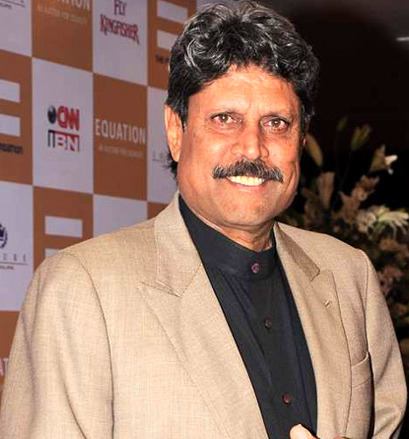
Kapil Dev’s Bold Call: Back Abhishek Sharma for the T20 World Cup Final
In the high-stakes, pressure-cooker atmosphere of a World Cup final, conventional wisdom often dictates playing it safe. Yet, as defending champions India prepare to face a formidable New Zealand in Ahmedabad on Sunday, a voice of legendary defiance has cut through the noise. Kapil Dev, the man who lifted India’s first World Cup trophy, has made a stunning and unequivocal call: back the struggling opener, Abhishek Sharma. Amidst a chorus of doubt over the young southpaw’s form, Kapil’s endorsement is not just a vote of confidence; it’s a profound statement on faith, potential, and the intangible spark that can win championships.
The Kapil Doctrine: Faith Over Form in a Final
Kapil Dev’s cricketing philosophy was forged in an era of fearless, instinctive play. On Friday, he applied that same principle to the modern game, urging the Indian team management to look beyond the scorecard. “The youngster must trust his ability,” Kapil asserted, emphasizing that Abhishek’s potential threat to any bowling attack outweighs his recent run of low scores. This is a significant intervention. In a tournament where every move is microscopically analyzed, the call to retain a perceived “weak link” in the ultimate match is a high-risk, high-reward strategy that only a cricketer of Kapil’s stature could make without hesitation.
His reasoning is rooted in the psychology of big-match play. Disrupting a player’s rhythm and confidence on the eve of a final by dropping him can have a cascading effect on team morale. Kapil’s stance suggests that the management’s unwavering belief could be the catalyst Abhishek needs to unleash his destructive best on the grandest stage. It’s a powerful message: leadership in crisis isn’t about making the easiest decision, but the bravest one for the player and the team’s collective spirit.
Decoding Abhishek Sharma’s Turbulent Tournament
There is no sugarcoating Abhishek Sharma’s T20 World Cup numbers. Beyond a fluent half-century against Zimbabwe, his returns have been lean, making him a focal point for critics. The concerns are valid: as an opener, his role is to provide explosive starts, and a pattern of early dismissals can hand the initiative to the opposition, especially against a shrewd New Zealand attack.
However, a deeper look reveals nuances that Kapil Dev might be considering:
- Impact Beyond Runs: Even in brief stays, Abhishek’s intent forces fielding captains to keep the field up, creating potential gaps for the next batter.
- The Zimbabwe Knock as Blueprint: His innings against Zimbabwe was a masterclass in clean hitting, a reminder of the game-changing power he possesses. In a final, one such 30-ball 50 can decide the contest.
- Bowling Option: His more-than-handy left-arm orthodox spin provides the captain with a versatile sixth bowling option, a crucial asset in a final where plans can unravel.
The central conflict is between current form and latent threat. New Zealand would arguably be more relieved to see Abhishek on the bench, facing a known quantity, than walking out with a point to prove and nothing to lose.
Final Forecast: Pressure, Pitch, and the X-Factor
The Narendra Modi Stadium in Ahmedabad presents a colossal theatre for this drama. The pitch is expected to be slower, placing a premium on powerplay scoring. This is where Kapil Dev’s gamble will be truly tested. Can Abhishek Sharma translate the faith shown in him into a fearless assault on the Kiwi new ball? The alternative—bringing in a more technically sound but less explosive option—offers stability but perhaps less match-winning upside.
Our prediction hinges on this very gamble. If India retains Abhishek, as Kapil advocates, we foresee two starkly contrasting possibilities:
- Scenario A: The Redemption Arc. Unshackled by fear of failure, Abhishek plays his natural game, provides a blistering start (a quickfire 40+), and sets the platform for a mammoth total. His innings becomes the defining X-factor of the final.
- Scenario B: The Early Setback. The pressure proves immense, and he falls early. This would immediately put India on the back foot, testing the middle order’s mettle under scoreboard pressure from the outset.
New Zealand, ever the astute tacticians, will undoubtedly probe his technique and temperament from ball one. The battle within the battle—Abhishek vs. the wiles of Tim Southee and Trent Boult—could be a pivotal opening chapter to the final.
The Verdict: Why Kapil Dev’s Wisdom Resonates
In the end, Kapil Dev’s backing of Abhishek Sharma transcends a simple selection debate. It is a reminder of cricket’s human element. Great teams are not just assemblies of the most in-form players, but ecosystems of trust where talent is nurtured through rough patches. Dropping a young player after backing him through a tournament could send a message of impatience, potentially damaging for future campaigns.
By publicly advocating for Abhishek, Kapil has shifted the narrative. He has placed the burden of expectation not just on the young opener’s shoulders, but equally on the management to demonstrate conviction. This final is as much a test of Rohit Sharma and Rahul Dravid’s leadership philosophy as it is of the players’ skills.
As the sun sets in Ahmedabad on Sunday, India will walk out to defend their crown. Whether Abhishek Sharma is at the top of the order or not, Kapil Dev has already made his point: true champions are sometimes made not by discarding struggling talent, but by empowering it at the most crucial hour. It is a bold, inherently optimistic, and quintessentially Kapil Dev stance. And if that faith is repaid with a flurry of boundaries, it will be remembered not just as a selection call, but as a masterstroke of man-management from one legend to a potential future one.
Source: Based on news from India Today Sport.
Image: CC licensed via commons.wikimedia.org