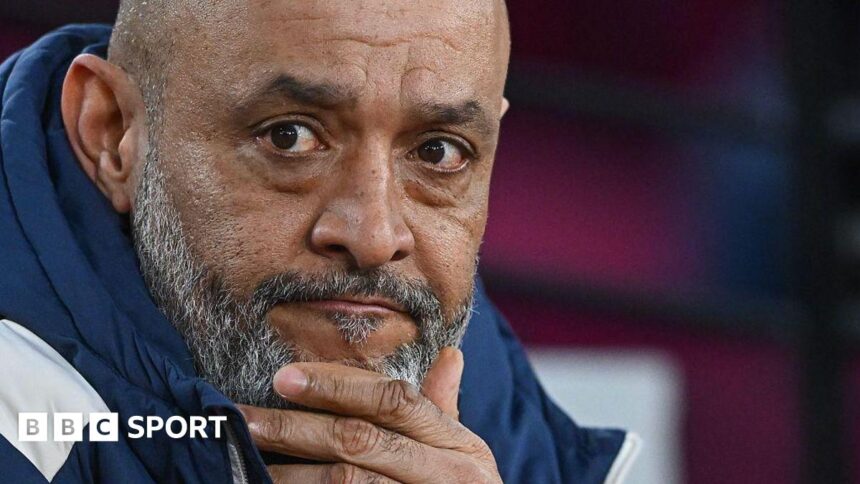
What is a Foul? What is a Contact? Nuno’s Plea Exposes Premier League’s Set-Piece Crisis
The theatre of a Premier League set-piece has become a lawless frontier. As players jostle, grab, and grapple in the penalty area, a fundamental question is being asked by managers, players, and fans alike: what, in the modern game, actually constitutes a foul? West Ham United manager Nuno Espirito Santo has now launched the most pointed critique yet, demanding urgent clarity from officiating bodies and warning that the current state of affairs is “almost crazy.” His plea cuts to the heart of a growing controversy that threatens the integrity of the game’s most pivotal moments.
Speaking ahead of his side’s FA Cup clash with Brentford, Nuno revealed he has taken his concerns directly to PGMOL chief Howard Webb. His request was starkly simple: for referees to visit clubs and explain to players “what is a foul, what is a contact, how far can you go.” This is not a trivial complaint about a single decision, but a damning indictment of a system in crisis. When a seasoned manager feels the need to ask for a basic definition of the sport’s primary rules, the league has a profound problem. The blurred line between competitive physicality and illegal obstruction is now the defining tactical battleground, and Nuno’s intervention signals that patience has run out.
The “Almost Crazy” Reality of the Modern Set-Piece
Nuno’s specific focus on corners and free-kicks is telling. These moments, designed to be opportunities for attacking ingenuity, have degenerated into staged wrestling matches. The initial contact between attacker and defender is no longer the focal point; instead, a complex web of blocking, holding, and shirt-pulling unfolds away from the ball, orchestrated to neutralize key threats.
“We are seeing things that are not normal,” Nuno stated. This “not normal” reality includes:
- Pre-meditated Grappling: Players are instructed not to defend the space, but to physically immobilize opponents, often before the ball is even in flight.
- The Decoy Block: A player makes no attempt to play the ball, instead setting a moving screen to impede a defender marking a different attacker.
- Selective Enforcement: The inconsistency from match to match, and even minute to minute, creates a lottery. What is penalized one week is ignored the next, leaving teams in a constant state of confusion.
This environment rewards dark arts over athletic or technical skill. As Nuno implies, the question is no longer about a 50/50 challenge, but about how much illegal interference a player can get away with before the whistle is blown. The line has moved, and nobody—not players, managers, or fans—knows where it now lies.
A Chorus of Concern: Nuno is Not a Lone Voice
While Nuno’s phrasing is particularly vivid, he is merely the latest Premier League figure to sound the alarm. The issue of set-piece clarity has been simmering for seasons. Other managers have bemoaned the “rugby” tactics increasingly employed in the box. Pundits routinely dissect video stills showing clear holds that go unpunished. The VAR system, intended to correct “clear and obvious errors,” has proven hopelessly inconsistent in this grey area, often deeming the chaos as subjective rather than illegal.
This collective frustration stems from a fundamental shift. Defending set-pieces has become less about positioning and jumping, and more about structured obstruction. The attacking team, in turn, employs its own blockers to free up targets. The result is a messy stalemate where the actual delivery of the ball and the aerial duel are almost secondary. Nuno’s call for referees to educate clubs is an admission that the players themselves are operating in a vacuum of understanding. If the laws are being applied differently to the letter they are taught, the sport faces a crisis of legitimacy.
Howard Webb’s PGMOL: The Ball is in Their Court
Nuno’s direct appeal to Howard Webb places significant pressure on the PGMOL. Webb, a former elite referee, has publicly championed transparency and improved communication since taking the role. Nuno’s request for officials to visit training grounds is a tangible test of that commitment. It would be a radical but logical step towards alignment.
The challenge for Webb and his team is monumental. They must:
- Define the “Line”: Establish a clear, unified standard for what constitutes unacceptable holding and blocking, distinct from legitimate jostling for position.
- Empire Referees: Ensure all match officials have the confidence to penalize infractions early and consistently, setting a tone that discourages systematic fouling.
- Leverage VAR Consistently: Use video review to penalize the off-the-ball offenses that the on-field referee cannot possibly see, applying the same standard every time.
Without this concerted action, the current ambiguity will persist. Managers will continue to coach to the very edge of the invisible, ever-moving line, and the spectacle will continue to be marred by controversy and confusion.
Predictions: Stricter Edicts or Continued Chaos?
Looking ahead, the league faces a fork in the road. The path of least resistance is the status quo: occasional crackdowns that fade as the season progresses, leading to the familiar, frustrating cycle. However, the volume of the complaint is reaching a crescendo that may force decisive action.
We can predict two potential outcomes. First, a mid-season or pre-season “clampdown” memo from PGMOL, instructing referees to penalize any contact with arms wrapped around an opponent or deliberate blocking runs. This would lead to a spike in penalties and free-kicks initially, before players adapt. The second, more hopeful outcome is the adoption of Nuno’s suggestion: a genuine outreach program where officials work with clubs to co-create a shared understanding. This would be a proactive, rather than reactive, approach to law enforcement.
The risk of inaction is a further erosion of trust. Fans celebrate goals while anxiously awaiting a VAR check for a potential foul in the buildup that nobody truly understands. It sucks the joy from the game’s most exhilarating moments. Nuno, by asking the simplest of questions—what is a foul?—has highlighted that the sport’s basic contract with its participants and audience is in jeopardy.
Conclusion: The Need for a Clear Signal
Nuno Espirito Santo’s call for clarity is not merely managerial grumbling; it is a necessary intervention for the health of the sport. When the core rules of engagement become opaque, the game descends into cynical exploitation rather than sporting contest. The “almost crazy” environment he describes is a direct result of inconsistent application and a failure to protect the basic principles of fair play.
The solution lies in leadership. Howard Webb and the PGMOL must now provide the clear, consistent answers that players and managers desperately need. They must draw a bright, unambiguous line around set-piece conduct and enforce it without fear or favor. Otherwise, the spectacle of the Premier League will remain tarnished by a weekly debate over what should be a simple premise: football is a game of skill, not a contest of unpunished obstruction. The question has been asked. The football world awaits a definitive answer.
Source: Based on news from BBC Sport.