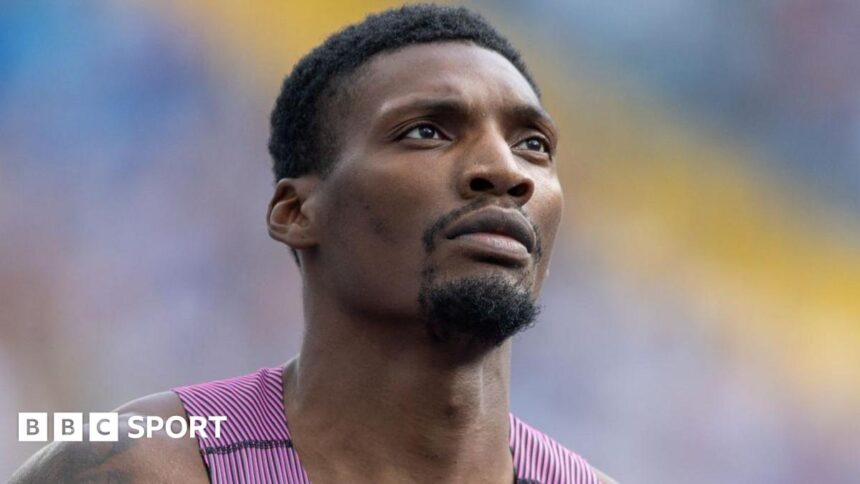
Fred Kerley’s Fall from Grace: A Two-Year Ban and the Unraveling of a Sprint King
The world of track and field is built on a fragile foundation of trust and superhuman effort. When a champion stumbles, the ground shakes for everyone. Today, the sport confronts the sobering, definitive fall of one of its most electrifying stars. Fred Kerley, the brash, charismatic American who seized the world 100m gold in 2022 with a predator’s poise, will not grace a track in competition for two years. The reason is not a failed drug test for a banned substance, but for a series of administrative missteps deemed so severe they carry the weight of a positive test: whereabouts failures. This isn’t a story of a syringe or a pill; it’s a tale of neglect, a shattered reputation, and a glaring reminder that in the modern anti-doping landscape, procedural rigor is as non-negotiable as physical purity.
The Verdict: Negligence, Recklessness, and a Career Put on Ice
The Athletics Integrity Unit (AIU), track and field’s independent anti-doping watchdog, has rendered its judgment. A tribunal found Kerley “negligent and, to a certain extent, reckless” in failing to comply with the anti-doping regulations that govern elite athletes. The specifics are crushing in their bureaucratic simplicity. Kerley recorded three whereabouts failures within a 12-month period, specifically between May 11 and December 6, 2024.
For those outside the elite sports bubble, the “whereabouts” system requires designated athletes to provide a 60-minute window each day, 365 days a year, detailing their exact location for potential out-of-competition testing. Missing a test, or filing inaccurate information, constitutes a failure. One strike is a warning. Two raise alarms. Three whereabouts failures constitute an anti-doping rule violation, equivalent to a positive test.
The consequences are severe and multi-faceted:
- Two-Year Ban: Kerley’s period of ineligibility is backdated to his provisional suspension in August 2025, meaning he cannot compete until August 11, 2027.
- Results Disqualified: All his competitive results from December 6, 2024, through August 12, 2025, have been scrubbed from the record. This includes any prize money, medals, or titles won in that span.
- Missed Championships: He had already missed the 2025 World Championships in Tokyo due to his suspension, a bitter absence for a competitor of his caliber.
In essence, nearly a year of his athletic prime has been erased, and two more lie barren ahead.
Expert Analysis: More Than a Paperwork Error
To dismiss this as a mere clerical error is to misunderstand the fundamental principle at stake. Sports law and anti-doping experts emphasize that the whereabouts system is the bedrock of effective, no-notice out-of-competition testing—the most powerful deterrent to doping. “Filing failures are often portrayed as administrative, but the system’s integrity relies entirely on athlete compliance,” notes Dr. Sarah Fletcher, a sports ethicist. “The tribunal’s use of ‘negligent’ and ‘reckless’ is legally significant. It indicates this wasn’t an innocent one-off mistake, but a pattern of disregard for the rules that protect the sport’s fairness.”
For an athlete of Kerley’s profile—a former world champion and Olympic medalist—the resources and support to manage this obligation are immense. Most top-tier athletes employ managers, agents, or dedicated apps to track and update their whereabouts. The finding of negligence suggests a breakdown in this professional structure or a personal dismissal of its importance. In the post-Lance Armstrong, post-Russian scandal era, anti-doping bodies like the AIU have shown zero tolerance for whereabouts violations, viewing them as potential shields for doping cycles. Kerley’s ban sends an uncompromising message: no star is above the protocol.
The Ripple Effect: Kerley’s Legacy and the 2028 Olympic Dream
The human and professional cost for Fred Kerley is incalculable. At 30 years old, this ban targets the absolute peak years of a sprinter’s career. He will be 33 when he returns, an age where sprinting’s cruel clock is often the ultimate opponent. His unique journey from 400m bronze medalist (Tokyo 2020) to world 100m gold medalist in 2022 was a story of audacious transformation and raw power. That narrative is now permanently altered.
The most poignant casualty may be the 2028 Los Angeles Olympics. Competing in a home Games, potentially as a defending medalist, would have been a career-capping fairy tale. That dream is almost certainly over. His provisional suspension and subsequent ban also dismantle the formidable U.S. sprint relay pool, leaving a gap in both the 4x100m and 4x400m squads he could have bolstered.
Furthermore, his marketability and brand, built on his “Kerb Your Enthusiasm” swagger and distinctive style, face severe damage. Sponsors align with reliability as much as performance. A two-year ban for rule violations, regardless of the reason, makes an athlete a high-risk investment.
Predictions for the Future and a Warning to the Sport
Looking ahead, the landscape shifts dramatically. The men’s sprint scene, already in a state of flux, moves on without one of its most compelling characters. Rivals like Noah Lyles, Letsile Tebogo, and emerging talents will seize the spotlight and lanes he vacates. The question becomes: what version of Fred Kerley returns in 2027? Can the fire and physical gifts remain after a forced hiatus of that length? History is not kind to sprinters returning from long bans, regardless of their cause.
This case also sets a stark precedent. It demonstrates the AIU’s unwavering commitment to enforcing the whereabouts rule with maximum sanctions. For every young athlete rising through the ranks, the Kerley case must become a canonical warning: your responsibility to the system is as critical as your training. Ignorance or carelessness is not a defense; it is a career-ending gamble.
Conclusion: A Cautionary Tale of Modern Sport
Fred Kerley’s story is no longer simply about a man who could run faster than almost anyone on Earth. It has morphed into a cautionary tale for the modern athlete. In an era where trust is the currency of sport, procedural diligence is the price of admission. His ban for whereabouts failures underscores that the battle for clean sport is fought not only in labs testing urine samples but also in the daily, mundane act of updating an online calendar.
The loss is multifaceted: for Kerley, a devastating hiatus at his peak; for fans, the absence of a thrilling and unpredictable force; and for the sport, another bruise to its credibility. As the track world turns its focus to the next meet, the next champion, the image of Kerley’s 2022 triumph in Eugene now exists under a different light—a reminder of how precipitous the fall can be, not from a stumble on the track, but from a failure to be found. His legacy, once defined by gold and speed, is now irrevocably linked to a two-year silence and a harsh lesson in accountability.
Source: Based on news from BBC Sport.