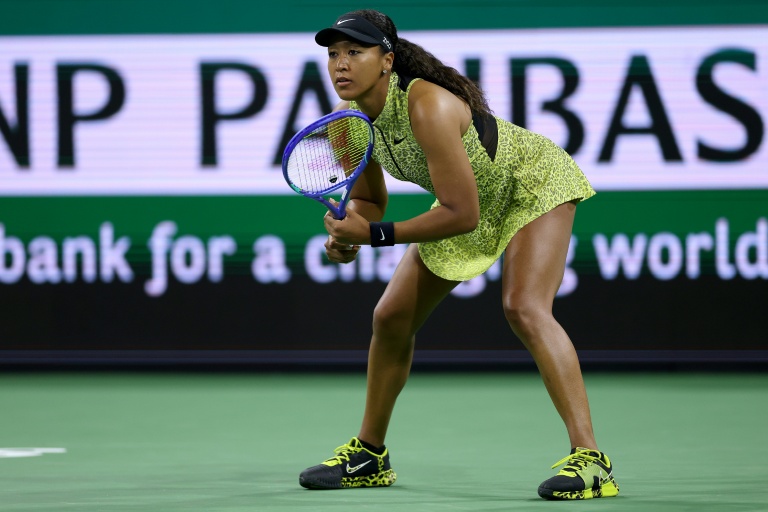
‘Grateful’ Osaka Returns to Action with Commanding Indian Wells Victory
The desert air at Indian Wells carries a certain weight of expectation, a stage where comebacks are measured and champions are tested. On Friday, under the California sun, Naomi Osaka didn’t just play a tennis match; she navigated a significant emotional and physical checkpoint. In her first competitive action since a painful withdrawal from the Australian Open, the four-time Grand Slam champion delivered a performance of steadying resolve, defeating qualifier Victoria Jimenez Kasintseva 7-5, 6-2 to advance to the third round. The victory was less about flash and more about foundation—a solid, grateful step back into the light.
A Return Built on Uncertainty and Resilience
For an athlete of Osaka’s caliber, the unknown is a rare and uncomfortable opponent. Stepping onto Stadium Court, she faced a dual mystery: the game of the 97th-ranked Jimenez Kasintseva, and, more critically, the state of her own body and game. The abdominal injury that forced her out in Melbourne was a familiar foe, a recurring setback she described with palpable frustration. “It wasn’t, like, too positive,” Osaka admitted of her preparation, revealing the mental hurdle this specific physical issue presents. “I was really disappointed, because it’s something that I have done to myself before, and I feel like every year I go through that specific injury.”
This context made her straight-sets win profoundly meaningful. The first set was a necessary recalibration, a feeling-out process where Osaka’s legendary power was carefully measured. After securing a tight 7-5 opener, the Japanese superstar found her rhythm, her serve clicking and her groundstrokes gaining depth and authority to close out the match 6-2. The scoreline told a story of progression, from cautious to commanding.
Expert Analysis: Reading Between the Strokes
From a technical standpoint, Osaka’s performance offered encouraging signs for her team and fans. The strategic management of her game was evident.
- Serve Placement Over Pure Power: Initially, Osaka seemed to prioritize placement and variety on her serve, a clear tactic to protect her abdomen while building points. As the match progressed and confidence grew, the ace count climbed, showcasing her ability to ramp up intensity.
- Forehand as a Barometer: Her cross-court forehand, a weapon that dictates play, grew in consistency and penetration. When Osaka is controlling rallies with this shot, it’s a primary indicator of her comfort level.
- Emotional Composure: Perhaps the most significant takeaway was her on-court demeanor. There was a palpable sense of patience, a willingness to work through points without forcing winners from low-percentage positions. This mental fortitude is often the last piece to return after an injury layoff, and its presence was a major positive.
The victory wasn’t a statement of dominance, but a declaration of readiness. She proved her game is intact and her competitive fire burns bright, even amidst the rust of competition.
The Road Ahead: Predictions for the Indian Wells Campaign
Osaka’s path at the BNP Paribas Open now becomes exponentially more challenging. The third round and beyond will likely feature top-tier opponents who will test her movement and stamina far more severely than a qualifier could. The key questions moving forward are:
- Physical Recovery: How will her body respond to the stress of back-to-back matches? The true test of the abdominal area will be in recovery between rounds.
- Level Escalation: Can she seamlessly elevate her power and precision against higher-ranked players who will attack her second serve and expose any lingering hesitation?
- The “Grateful” Mindset: Osaka herself used the word “grateful” post-match. This perspective, focusing on the joy of competition rather than the burden of expectation, could be her secret weapon, freeing her to play aggressive, instinctive tennis.
Predicting a deep run remains cautious, but the possibility is now firmly on the table. Her draw will dictate her chances, but her first match demonstrated she has the foundational tools to compete with anyone. The goal here may not be lifting the trophy, but successfully navigating multiple high-pressure matches to rebuild momentum for the clay and grass seasons.
A Champion’s Perspective: More Than a Win
Naomi Osaka’s journey in recent years has been as much about mental health advocacy and personal growth as forehands and trophies. This return feels like a synthesis of those chapters. The disappointment of Melbourne’s injury is tempered by the maturity of her Indian Wells approach. There is a visible appreciation for the act of playing that perhaps wasn’t as pronounced during her earlier, meteoric rise.
Her performance against Jimenez Kasintseva was a masterclass in managing the moment. She didn’t play with the reckless abandon of someone with nothing to lose, nor the tight anxiety of someone carrying the world on her shoulders. She played with focused intent, a professional doing the job she loves, fully aware of its fragility. This evolution is crucial for her long-term sustainability in the sport.
Naomi Osaka’s first match back at Indian Wells was a success measured not just in games won, but in hurdles cleared. The injury return is underway, the competitive spirit is undeniable, and the gratitude is authentic. In the desert, she planted a flag of resilience, proving that while her power game can overwhelm, it is her growing mental and emotional strength that will define this next act of her remarkable career. The tennis world, having missed her unique presence, will be watching with keen interest as this chapter unfolds.
Source: Based on news from Yahoo Sports.