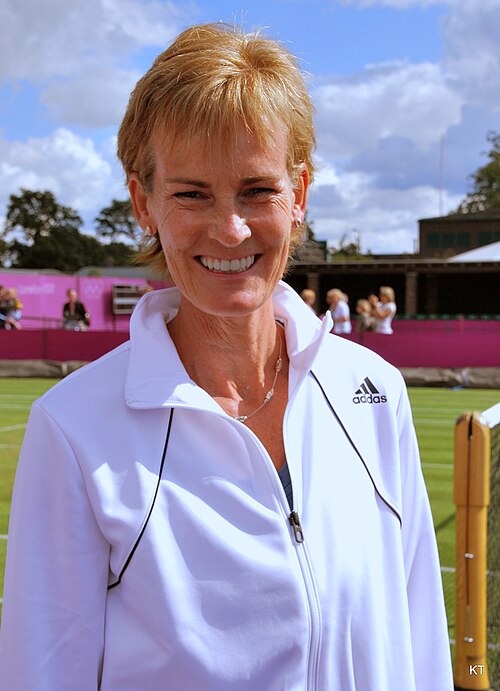
Judy Murray’s Rallying Cry: Why a Female-Powered Sporting Workforce is the Next Grand Slam
The conversation around women in sport has, for years, rightly focused on the athletes: their prize money, media coverage, and iconic moments on the field of play. But what about the architects behind the scenes? Tennis legend and pioneering coach Judy Murray is shifting the spotlight, issuing a powerful call to action that goes beyond the baseline. Following the announcement of an expansion for her groundbreaking ‘She Rallies’ scheme, Murray has underscored a critical, yet often overlooked, deficit: the desperate need for a much bigger presence of women in the sporting workforce. This isn’t just about equality for equality’s sake; it’s a strategic imperative for the very health and future of sport itself.
Beyond the Baseline: The Stark Gender Imbalance in Sports Infrastructure
While female athletes are breaking records and selling out stadiums, the infrastructure supporting them remains disproportionately male. Look at any major sporting organization, from national federations and professional clubs to local community facilities. The leadership tables, coaching benches, technical roles, and boardrooms are still overwhelmingly occupied by men. This creates a self-perpetuating cycle. As Judy Murray astutely observes, “You can’t be what you can’t see.” The lack of visible female coaches, officials, administrators, and decision-makers subtly signals to girls that sport is a domain for male participation, not female leadership. This absence has tangible consequences, from the dropout rate of teenage girls in sport to the narrow pathway for women seeking careers within it. Murray’s advocacy moves the discussion from simply getting girls on the court to ensuring women are building, managing, and directing the court itself.
She Rallies: A Blueprint for Systemic Change
Judy Murray’s response to this crisis is characteristically pragmatic and grassroots-focused. The expansion of her ‘She Rallies’ initiative is a direct attack on the problem’s root. The scheme isn’t merely about producing elite players; it’s about creating a sustainable ecosystem. By training female coaches and activators, particularly in underserved communities, ‘She Rallies’ addresses the pipeline problem head-on. The program’s genius lies in its multiplier effect:
- Creating Visible Role Models: It places trained, confident women at the heart of community tennis, showing girls that sport belongs to them too.
- Building a Support Network: It fosters a “girl gang” mentality, combating the isolation women can feel in male-dominated sports environments.
- Redesigning the Delivery: It emphasizes fun, social connection, and skill-building in a way that resonates with many girls, moving away from purely competitive, performance-driven models often led by men.
- Developing Career Pathways: It provides qualifications and confidence, enabling women to turn a passion for sport into a viable profession, from coaching to club management.
This model is a blueprint for systemic change that can be replicated across sports. It proves that increasing female participation isn’t just about marketing campaigns; it’s about investing in the human infrastructure—the coaches, the organizers, the leaders—who make sport happen at every level.
The Ripple Effect: Why a Gender-Balanced Workforce Elevates All Sport
The argument for a more gender-balanced sporting workforce extends far beyond social justice. It is a matter of performance, innovation, and commercial savvy. Diverse leadership breeds better decision-making. Different perspectives lead to more creative problem-solving and product development. Consider the practical outcomes:
- Improved Retention of Girls and Women: Female coaches often have a deeper understanding of the physiological and social challenges girls face, from puberty to confidence issues, leading to more supportive environments that keep them engaged.
- Broadened Commercial Appeal: Women make the majority of consumer spending decisions. Having women in key commercial and marketing roles helps sports organizations connect authentically with this massive audience, unlocking new revenue streams.
- Enhanced Safeguarding and Culture: A mixed-gender workforce creates healthier, more balanced environments for all athletes, reducing risks of abuse and promoting holistic well-being.
- Innovation in Coaching and Performance: Women bring different coaching styles and communication methods, enriching the technical and tactical development of all athletes, male and female.
In essence, sport has been operating with one hand tied behind its back, ignoring half the population’s talent pool for leadership. Judy Murray’s call is to unleash that potential, arguing that sporting excellence and gender diversity are not separate goals, but intertwined objectives.
The Road to a New Game: Predictions and the Path Forward
Judy Murray’s voice adds crucial weight to a growing chorus. So, what does the future hold if her call is heeded? We can predict several shifts. First, we will see governing bodies tying funding to demonstrable progress in gender balance across coaching and leadership roles. Second, proactive mentorship and sponsorship programs for women in sport will become standard among forward-thinking clubs and federations. Third, the value of “soft skills” like communication, empathy, and community-building—often associated with female leadership—will be formally recognized as critical high-performance tools.
The path forward requires concrete action. Organizations must:
- Audit their workforce and set transparent, measurable targets for gender balance.
- Invest in dedicated training and apprenticeship schemes for women, like ‘She Rallies’.
- Challenge unconscious bias in hiring and promotion, ensuring job descriptions and interview panels are inclusive.
- Celebrate and elevate the profiles of women already succeeding in non-playing roles.
The goal is not a token female appointment, but a fundamental rewiring of sport’s operational DNA.
Conclusion: The Final Serve is in Our Court
Judy Murray has lobbed the ball decisively into the court of every sports administrator, federation head, and club owner. Her call for a much bigger presence of women in the sporting workforce is the logical, necessary next step in sport’s evolution. This is about building a resilient, innovative, and truly representative sports industry that can nurture talent at every level and connect with the entire population. The expansion of ‘She Rallies’ is a powerful proof of concept, showing that change is possible when investment meets intention. The question is no longer “why should we?” but “how quickly can we?” The match for equality has moved from the center court to the boardroom, the coaching clinic, and the local club committee. It’s a match we all have a stake in winning. The final serve is in our court.
Source: Based on news from Sky Sports.
Image: CC licensed via es.wikipedia.org