Russell Seizes Melbourne Pole as Verstappen’s Crash Reshapes Australian GP Grid
The opening chapter of Formula 1’s new regulatory era was supposed to be a story of evolution. Instead, under the bright Melbourne sun, it became a tale of dramatic revolution and shocking reversal. In a qualifying session that upended all pre-season narratives, George Russell delivered a statement pole position for Mercedes, while the seemingly invincible Max Verstappen was left picking up the pieces—literally—after a catastrophic crash that consigns the reigning champion to the very back of the grid.
Chaos at Turn 6: Verstappen’s Uncharacteristic Error
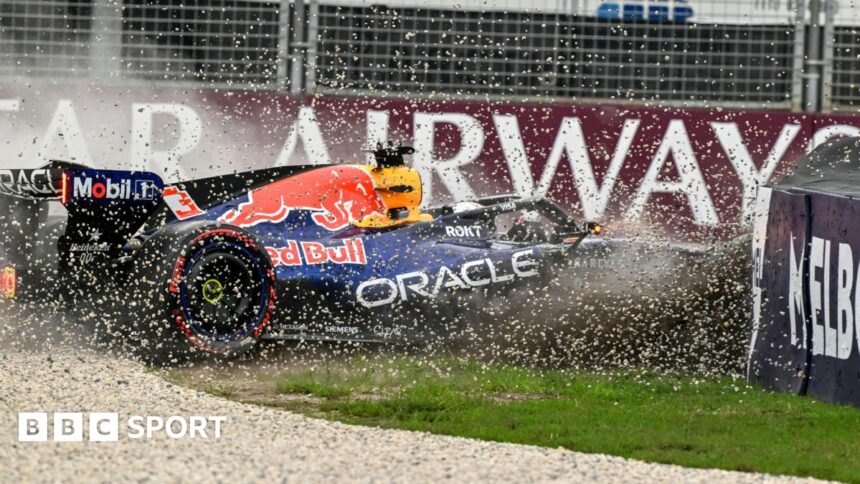
The shockwave rippled through the Albert Park circuit just minutes into Q1. As drivers embarked on their first flying laps, the focus was on who would set the initial benchmark. That question was answered not with a time, but with a sickening crunch of carbon fibre. Max Verstappen, pushing hard on his out-lap, lost the rear of his Red Bull through the high-speed, left-hand Turn 6. The car snapped viciously, spearing across the track and slamming into the outside barrier, destroying the right-hand side.
The crash was significant for its rarity as much as its impact. Verstappen, renowned for his car control and relentless precision, made a critical error. The incident immediately raised two pivotal questions:
- Car Instability: Was this a driver misjudgment, or a sign of a fundamentally tricky Red Bull RB20 on the edge?
- Strategic Catastrophe: With extensive damage and a mandatory parc fermé breach for chassis changes, a back-of-grid start became inevitable.
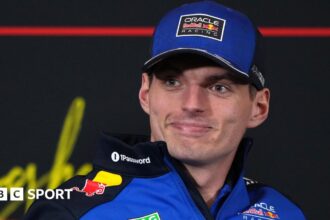
“I just lost the car,” a terse Verstappen reported. For a team and driver accustomed to controlling weekends from the front, the landscape for Sunday’s race has been utterly transformed.
Mercedes’ Resurgence: Russell and Antonelli Dominate
While Red Bull faced crisis, Mercedes seized opportunity with both hands. The Silver Arrows, who endured two winless seasons under the previous regulations, emerged as the dominant force in qualifying. George Russell was in a league of his own, his lap a seamless blend of aggression and confidence. His final Q3 time was a crushing 0.363 seconds clear of his own teammate, a margin that in modern F1 qualifies as a lifetime.
That teammate, however, is the story within the story. Rookie Kimi Antonelli, promoted to the seat after Lewis Hamilton’s shock move to Ferrari, silenced any doubters with a sensational second place. The young Italian’s composure under the immense pressure of his debut qualifying was staggering. He didn’t just shadow Russell; he validated the team’s radical ‘zero-pod’ evolution concept.
The sheer scale of Mercedes’ pace is the weekend’s biggest technical talking point. Russell’s final advantage over the nearest non-Mercedes car—Red Bull’s Isack Hadjar in third—was a mammoth 0.785 seconds. This suggests a car fundamentally in tune with the new ground-effect regulations, particularly in the fast, flowing sections of Albert Park. Team Principal Toto Wolff, while cautious, could not hide his satisfaction. “The data from winter testing pointed to a performance leap, but to see it translate like this is a credit to everyone at Brackley and Brixworth,” he stated.
The Rest of the Grid: Intrigue Behind the Silver Supremacy
The shockwaves from the top reshuffled the entire order. Red Bull’s weekend now rests on the shoulders of Isack Hadjar, who did well to put his car third but inherits the role of team leader in the most fraught circumstances imaginable. The Ferrari of Charles Leclerc in fourth lacked the ultimate pace to challenge Mercedes, a concern for the Scuderia on a track where they hoped to fight.
More worrying for the Italian team was the struggle of Lewis Hamilton. The seven-time champion, in his final Australian GP for Mercedes, could only manage seventh, behind both McLarens of local hero Oscar Piastri and Lando Norris. Hamilton reported a “fundamentally unbalanced” car throughout the session, a stark contrast to the feeling enjoyed by Russell and Antonelli. This intra-team disparity will be a key focus for Mercedes engineers overnight.
Key Takeaways from the Top Ten:
- Mercedes’ Pace is Real: Their one-lop speed advantage appears genuine and significant.
- Red Bull in Damage Limitation: Their race strategy, with Verstappen starting last, is now a complete unknown.
- Ferrari and McLaren in the Mix: Both teams are poised to capitalize on any drama ahead, with strong race pace expected.
Race Day Predictions: Strategy, Safety Cars, and a Charging Bull
Sunday’s Australian Grand Prix is now a strategic chess game with multiple layers. George Russell, from his coveted pole position, will aim for a clean getaway to control the race. His primary initial threat is his own teammate, Antonelli, who will be desperate to avoid incident and secure a dream debut podium.
All eyes, however, will be glued to the rear of the grid and the progress of Max Verstappen. Starting on what will likely be a harder, more durable compound, his race will be a long, aggressive charge through the field. History at Albert Park suggests a high probability of a Safety Car—often from opening-lap incidents or later crashes—which could perfectly play into Verstappen’s hands, allowing him to pit for fresh tyres and close up to the pack without losing time.
Critical factors for the race include:
- Mercedes’ Race Pace: Is their long-run performance as strong as their single-lap speed?
- Tyre Degradation: The new Pirelli compounds are a mystery, and management will be key.
- Verstappen’s Progress: Can he slice into the points by mid-race and target the podium?
We predict a fierce battle at the front between the two Mercedes drivers, with Russell holding the experience advantage. The podium’s final step, however, is a toss-up between the consistent Hadjar, the aggressive Leclerc, and the ever-present McLarens. Do not discount Verstappen breaking into the top five—a remarkable recovery that would feel like a victory given his starting position.
Conclusion: A New Era Truly Begins
Qualifying for the Australian Grand Prix did more than just set a grid; it forcefully reset the narrative of the 2025 Formula 1 season. Mercedes, written off by many, has roared back with a technically potent car and a dazzling young talent in Kimi Antonelli. Conversely, Red Bull’s air of invincibility has been punctured, not by a rival, but by its own moment of fallibility.
George Russell stands at the precipice of a career-defining victory. A win on Sunday would announce both his and Mercedes’ official return to the summit of the sport. But with a hungry teammate beside him, a chasing pack of proven winners behind, and a three-time world champion carving his way forward from the back, the race promises high drama. The new era of regulations has delivered its first, unforgettable plot twist. The race for victory—and for the season’s early momentum—is gloriously, unpredictably open.
Source: Based on news from BBC Sport.