Is the Grind Worth It? Inside Max Verstappen’s F1 Future Crossroads
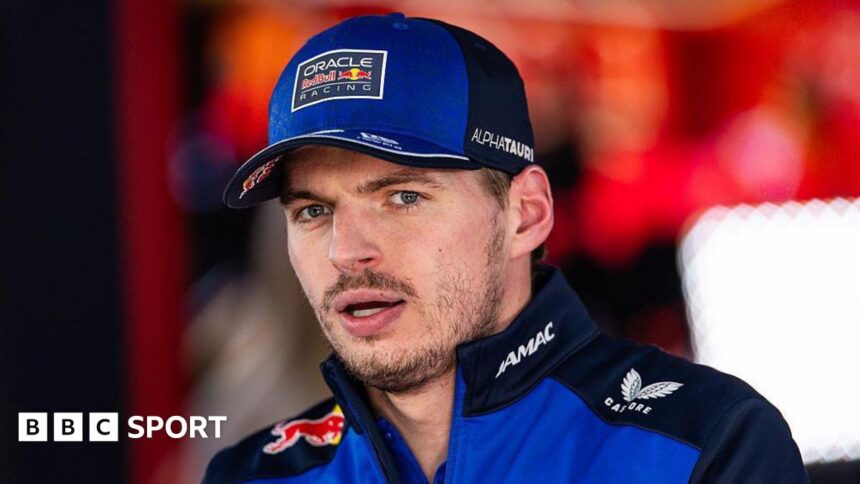
The image of Max Verstappen standing on a Grand Prix podium, drenched in champagne and bathed in the roar of adoring fans, has become a familiar sight in modern Formula 1. The three-time World Champion has built an era of dominance with Red Bull, a relentless winning machine seemingly programmed for perpetual success. Yet, after a surprisingly uncharacteristic eighth-place finish at the Japanese Grand Prix, a race where he clawed from 11th on the grid, it wasn’t the result that shocked the paddock—it was his words. In a moment of startling candor, Verstappen revealed he is actively questioning his future in the sport, forcing the F1 world to ask: if the most successful driver on the grid is pondering an exit, what does that say about the state of the championship?
The Suzuka Sigh: More Than Just a Bad Race
Finishing eighth is a rarity for Verstappen in the current Red Bull era, but it wasn’t the position that fueled his introspection. It was the culmination of a feeling, a growing dissonance between his private happiness and his professional grind. “Privately I’m very happy,” he told BBC Sport. “You also wait for 24 races. This time it’s 22. But normally 24. And then you just think about is it worth it?” This existential question, posed in the shadow of Honda’s iconic Suzuka circuit, cuts to the heart of modern F1’s demanding reality. For Verstappen, the issue isn’t a lack of competitiveness—Red Bull remains the car to beat—but a profound dissatisfaction with the “whole formula” under the latest engine regulations.
His comments point to a specific grievance with the current power unit formula, which emphasizes complex energy recovery systems and a heavy reliance on electrical deployment. Many drivers have criticized these cars for being too heavy and less visceral to drive. For a pure racer like Verstappen, whose joy is derived from the raw challenge of driving on the edge, a formula that dulls that sensation for the sake of road-relevant technology can feel like a betrayal of the sport’s core appeal. The relentless expansion of the F1 calendar, now regularly exceeding 23 races, amplifies this feeling, transforming a passion into a perpetual, globe-trotting marathon.
Weighing the Scales: The Champion’s Dilemma
Verstappen’s contemplation presents a fascinating modern athlete’s dilemma: the balance between unparalleled professional achievement and personal fulfillment. He has achieved the ultimate success in his field, yet he is openly weighing it against the simple pleasures of life outside the paddock bubble.
- The Professional Pinnacle: He is at the peak of his powers, with a contract through 2028 reportedly worth over $50 million per year, driving for the most dominant team. Walking away would mean leaving unprecedented success and wealth on the table.
- The Personal Cost: The F1 calendar is a relentless beast. The travel, media commitments, simulator work, and sponsor events create a lifestyle where “home” is a temporary concept. Verstappen’s question—”do I enjoy being more at home with my family? Seeing my friends more when you’re not enjoying your sport?”—highlights a universal trade-off.
- The Sporting Integrity: Verstappen has never been one to pay lip service. If he feels the technical regulations are compromising the sporting contest or the driving experience, his threat to leave is his ultimate form of protest. It’s a powerful statement from the sport’s biggest star.
This is not the first time a dominant champion has questioned the grind. Legends like Niki Lauda, Alain Prost, and Nico Rosberg walked away at or near their peaks, citing the immense personal sacrifice. Verstappen’s comments suggest he is cut from a similar, pragmatically honest cloth. His happiness is not solely defined by winning; it’s defined by the quality of the challenge and the balance in his life.
Ripple Effects: What Verstappen’s Doubts Mean for F1
A potential early exit by Max Verstappen would send seismic shockwaves through Formula 1. The sport has invested heavily in building its global brand around rivalries and superstar drivers. Losing its reigning champion and most dominant force in his prime would be a monumental blow.
For Red Bull, it would trigger a crisis. The team is built around Verstappen’s extraordinary talent. While they have a star-in-waiting in Liam Lawson and a solid #2 in Sergio Pérez, replacing Verstappen’s speed, feedback, and sheer winning mentality is impossible. It would instantly level the playing field and could destabilize the team’s long-term project.
For the FIA and Liberty Media, Verstappen’s comments are a direct challenge. The driver market’s biggest name is publicly stating that the product—the racing formula and its schedule—is making him reconsider his career. This puts immense pressure on the rule-makers to ensure the 2026 engine regulations, currently being finalized, address driver concerns about engagement and weight. Verstappen’s stance is a powerful bargaining chip for the Grand Prix Drivers’ Association (GPDA) in advocating for a more sustainable calendar and better racing product.
Predictions: Will He Stay or Will He Go?
Predicting Verstappen’s next move is fraught with difficulty. He is famously his own man, guided by instinct rather than convention. However, a logical analysis provides a path forward.
The most likely scenario is that Verstappen sees out his current Red Bull contract, which runs through the 2028 season. His comments serve as a stark warning to the sport’s authorities and perhaps even to his own team about his limits. He will use his influence to push for change from within. The key factor will be the direction of the 2026 regulations. If they deliver a more engaging, driver-centric car, his passion could be reignited.
The wildcard scenario is a shock exit after 2025 or 2026, especially if he secures a fourth or fifth title. If the calendar continues to balloon and the technical rules fail to inspire him, he may decide his legacy is secure and his time is better spent elsewhere—potentially in endurance racing like the 24 Hours of Le Mans, which he has expressed interest in, or simply stepping away from top-level competition entirely.
One thing is certain: his threat is credible. This isn’t contract negotiation posturing; it’s the introspection of a man who has won everything and is now auditing the cost.
The Final Lap: A Wake-Up Call for the Sport
Max Verstappen’s moment of doubt in Japan is more than just a headline. It is a profound wake-up call for Formula 1. When the sport’s most successful driver, in the fastest car, questions whether the sacrifice is “worth it,” every stakeholder must listen. It underscores that even in a world of glamour and glory, the human element remains fragile. The relentless expansion and technical complexity risk burning out the very stars the spectacle relies upon.
For now, Verstappen will continue to race, and he will continue to win. But a seed has been planted. His future in Formula 1 is no longer a given until he retires at 40; it is an active choice he will reassess season by season, based on his enjoyment of the craft. The ball is now in F1’s court to ensure that the formula—both sporting and commercial—is compelling enough to keep its fiercest competitor not just contracted, but captivated. The value of winning must outweigh the cost of the grind, even for a champion who has nothing left to prove.
Source: Based on news from BBC Sport.