Resilient Ireland Grind Past Spirited Wales to Set Up Grand Slam Showdown
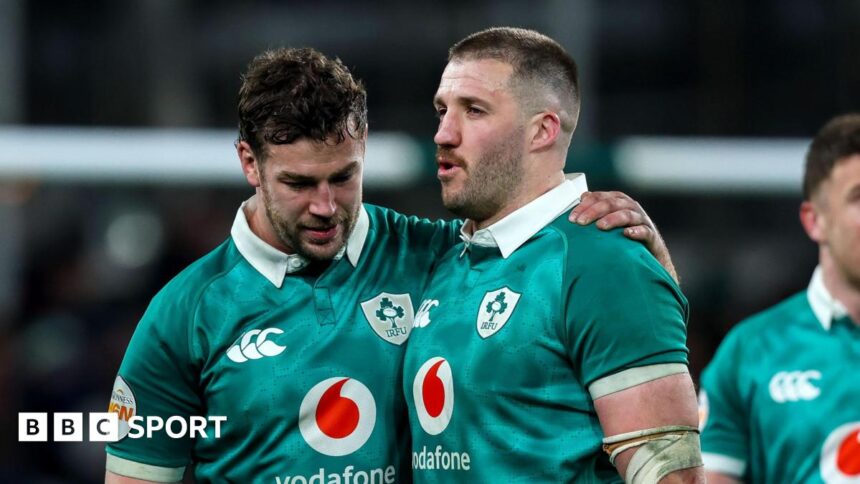
The Aviva Stadium exhaled a collective, ragged breath of relief long before the final whistle. This was not the procession many had anticipated. In a bruising, nerve-shredding contest that tested their championship credentials to the core, Ireland’s resilience proved the decisive factor in a hard-fought 31-15 bonus-point victory over a tremendous Wales side. The scoreline flatters the hosts, masking a night of frayed tempers and stubborn resistance that ultimately sets up a seismic final weekend in the Six Nations.
A False Dawn and the Fraying of Nerves
For a fleeting moment, it appeared the script was being followed perfectly. Jacob Stockdale’s try, a cathartic finish after a five-year international drought, ignited Dublin. When Jack Conan powered over just minutes later, the Aviva braced for a rout. Yet, the TMO’s intervention—ruling out Conan’s score for a Tom O’Toole knock-on—acted as a circuit breaker. The euphoria from Twickenham evaporated, replaced by a palpable tension.
Wales, written off by many, grew an armory with every minute. Their defensive line speed was ferocious, their breakdown work disruptive. Ireland’s attack, so fluid against England, became staccato, forced, and error-strewn. The post-England euphoria was officially over. This was now a dogfight, a test of patience and problem-solving against a Welsh side playing with nothing to lose and a fearsome amount of pride.
The Forwards’ Grueling Battle: Where the Game Was Won
With the backline magic temporarily muted, Ireland’s victory was forged in the furnace of the forward pack. The set-piece became a critical battleground.
- Lineout Dominance: James Ryan and Tadhg Beirne provided immaculate service, stealing key Welsh throws and securing Ireland’s own ball under immense pressure.
- Scrum Resilience: After early Welsh pressure, the Irish scrum stabilized and began to earn crucial penalties, providing the territory and platform they desperately needed.
- Carrying Meterage: Caelan Doris and Bundee Aki took on the role of human battering rams, making relentless, tough yards to puncture the gain line and slowly bend the Welsh defense.
This was not pretty, but it was profoundly effective. It was the gritty, unglamorous work that drained Welsh spirit and created the precious few openings Ireland would eventually exploit. The bonus-point win was a testament to this grinding physicality, secured in the final moments through a typical forward drive.
Wales’ Valiant Stand: Moral Victory in Defeat
To focus solely on Ireland’s performance would be to discredit a monumental Welsh effort. Written off after a difficult campaign, Warren Gatland’s young side delivered their best performance of the championship by a considerable distance. Their stubborn and spirited display was built on a foundation of defiant defense and opportunistic attack.
Rio Dyer’s brilliant individual try was a warning shot, while the relentless work of players like Tommy Reffell at the breakdown tormented Ireland all night. This was a Wales performance that spoke of a brighter future, a blueprint of grit and ambition that will restore belief. They asked questions of the world’s number two side that few teams have managed this season, proving that the gap, on this evidence, is far narrower than the table suggests. They were, in a word, tremendous.
The Road to Murrayfield: A Triple Crown for the Grand Slam
The equation is now starkly simple, yet overwhelmingly complex. Ireland’s win, coupled with England’s dramatic victory over France, leaves the championship landscape crystal clear. Ireland sits one point behind France, but with destiny in their own hands.
Next week’s clash with Scotland in Edinburgh is no longer just a Triple Crown shootout; it is now the definitive Grand Slam decider. A win of any kind secures back-to-back Six Nations championships. A victory by eight points or more, while securing the title, would also require France to slip up against England to claim the Grand Slam—a scenario that remains alive.
The challenge is monumental. Murrayfield has been a house of horrors for Irish ambitions in recent years. Scotland, with their own potent attack and pride on the line, will relish the role of spoiler. Ireland must be better. The handling errors, the moments of indiscipline, and the periods of attacking stagnation seen against Wales will be punished severely by the Scots.
Conclusion: Championship Pedigree Proven in the Crucible
Great teams find a way to win when they are not at their best. For all the talk of Ireland’s exhilarating attacking philosophy, Friday night was a showcase of a different, equally vital championship quality: grit. They were confronted by a Welsh hurricane of passion, disrupted at the source, and forced into a tactical arm-wrestle. Yet, they never panicked. They leaned on their leaders, trusted their systems, and ground out the result that mattered.
This resilient Ireland performance may, in the final analysis, be more valuable than the Twickenham triumph. It proved they can win ugly, win under pressure, and win when the weight of expectation threatens to become a burden. The Triple Crown shootout against Scotland now awaits, with the grandest prize of all still shimmering on the horizon. After navigating the Welsh storm, Ireland knows the final, and greatest, test of their resolve is just one week away.
Source: Based on news from BBC Sport.