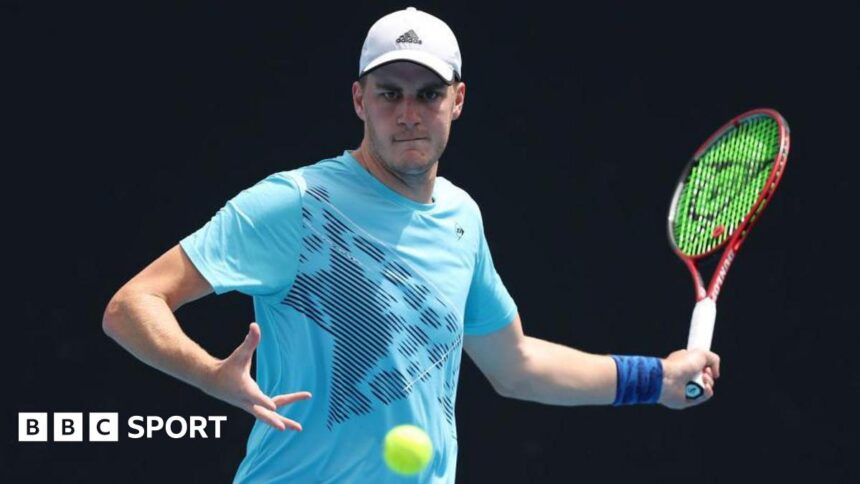
‘I Saw a Drone Hit the US Consulate’: Inside Henry Patten’s Harrowing Escape from Dubai
The life of a professional tennis player is built on a foundation of meticulous routine: precise practice, scheduled flights, and the quiet focus before a match. For Britain’s Henry Patten, that familiar world shattered not with the crack of a racket, but with the roar of fighter jets and the distant thud of explosions. The newly minted Grand Slam doubles champion found himself trapped in a war zone, his athletic pursuit abruptly replaced by a desperate quest for safety. This is the story of his extraordinary escape from Dubai, a journey that led him to witness the unthinkable and ultimately forced him to abandon the prestigious Indian Wells tournament.
A Final Interrupted: From Centre Court to Conflict Zone
Last Saturday should have been a career highlight. Patten, 29, and Finnish partner Harri Heliovaara were moments from walking onto Dubai’s centre court for the ATP Tour doubles final. Instead, the air shook with the deafening scream of fighter jets flying low over the stadium. “It was incredibly loud, right above us,” Patten recounted. The display was a stark, real-time escalation of regional tensions, as the United Arab Emirates came under attack from Iranian missiles and drones amid the broader Middle East conflict. The match proceeded, with the pair finishing as runners-up, but the real game had already changed—from tennis to survival.
In the aftermath, the reality of their situation crystallized. Airspace was closed. Flights were grounded indefinitely. Patten, Heliovaara, and a group of roughly 40 players, officials, and media were stranded. The player hotel, a supposed sanctuary, became a front-row seat to a conflict. “You could hear explosions in the distance,” Patten said. The psychological toll was immense, transforming a luxury sports destination into a landscape of anxiety. The Dubai lockdown was in full effect, and the tennis circuit’s normal exit strategies had evaporated.
The Failed Border Run and a Chilling Eyewitness Account
Determined to find a way out, Patten and his team embarked on a risky, 14-hour overland attempt to cross from the UAE into Oman. It was a grueling drive through the desert, a testament to the lengths athletes were forced to go to reclaim their safety. Yet, at the border, hope was dashed. “The border was shut,” Patten explained. The political and security situation was too volatile; the escape route was closed.
Returning to Dubai, the scenes became more intense. In a statement that underscores the profound danger he was in, Patten shared a chilling eyewitness account of the Dubai attacks. “I saw a drone hit the US consulate,” he revealed. The image is jarring: a top-tier athlete, celebrated just days prior for his skill on the court, now a firsthand observer of a military strike. This moment transcends sports journalism, placing Patten’s experience within a far graver global narrative. It was the final confirmation that this was no mere travel disruption, but a active conflict zone.
- Stranded Athletes: A 40-strong group of tennis professionals and staff with no way home.
- Overland Gamble: A 14-hour car journey to the Omani border, ending in refusal.
- Direct Witness: Patten visually confirms a drone strike on a diplomatic compound.
- Psychological Strain: The constant sound of explosions erodes any sense of normalcy.
Expert Analysis: The Unraveling of the Athletic Bubble
Sports psychologists often speak of the “athletic bubble”—a controlled environment that allows competitors to focus solely on performance. Patten’s ordeal demonstrates how catastrophically that bubble can burst. The sudden transition from the highly regulated stress of a final to the existential stress of a conflict is a jarring cognitive shift few are prepared for.
“This isn’t just travel fatigue; this is acute trauma exposure,” explains Dr. Eleanor Vance, a specialist in sports crisis management. “The brain’s threat detection system is pushed into overdrive. For an athlete, recovering from this isn’t about shaking off jet lag. It requires a deliberate, managed process to separate the trauma from the competition environment they must return to.” Patten’s subsequent decision to withdraw from Indian Wells is, in this light, not a sign of weakness but a critically intelligent act of self-preservation. Forcing competition while in a heightened state of alertness risks not only poor performance but long-term psychological harm.
Furthermore, this incident exposes the vulnerability of the global tennis tour. Unlike team sports with chartered travel, individual athletes and small teams often navigate complex international logistics independently. In a crisis, there is no centralized evacuation plan. Patten’s saga was a DIY escape, highlighting a significant gap in the duty of care within the sport’s current structure.
Predictions: The Ripple Effect on the Tour and Player Welfare
The immediate consequence is Patten’s absence from the California desert. The Indian Wells withdrawal is a direct competitive and financial hit for him and Heliovaara, disrupting their momentum after a deep Dubai run. But the implications run deeper.
First, we can expect a serious review of player safety protocols at tournaments in geopolitically sensitive regions. The ATP and WTA Tours pride themselves on a truly global footprint, but this event will force difficult conversations about contingency planning and real-time risk assessment. Will players or their associations demand guaranteed evacuation clauses or dedicated crisis support?
Second, the player psyche has been altered. The tour’s locker rooms will buzz with Patten’s story. A sense of invulnerability that often accompanies world travel has been pierced. For future events, players and their teams will be more vigilant, perhaps more anxious. The trust in a tournament’s ability to be a safe haven has been challenged.
Finally, for Henry Patten, the path forward is two-fold. Professionally, he must reconnect with the joy and focus of the game, likely with the support of mental performance experts. Personally, he carries the weight of a profound experience. How he processes being both a tennis champion and an eyewitness to war will define his comeback.
Conclusion: More Than a Match—A Lesson in Resilience
Henry Patten’s week in Dubai began with the promise of a trophy and ended with the grim reality of survival. His story is a stark reminder that athletes are not just performers; they are human beings navigating an often-unpredictable world. His harrowing escape, marked by a failed border run and the indelible image of a drone strike, forced a champion to make his most important call: prioritizing his well-being over his profession.
His decision to skip Indian Wells is a powerful statement in a culture that often glorifies “playing through pain.” It underscores that some events transcend sport, and that true strength sometimes lies in recognizing when not to compete. As the tennis world moves on to its next event, the echoes of explosions over centre court and the sight of a closed border will linger. Patten’s greatest victory in 2024 may not be on any court, but in his resilient journey back to one.
Source: Based on news from BBC Sport.