Why the Miami Dolphins Are Making the Unprecedented Move to Release Tua Tagovailoa
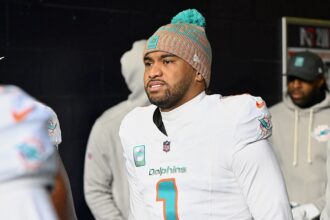
The Miami Dolphins are poised to make the most staggering financial decision in NFL history. According to a report from ESPN’s Adam Schefter, the franchise is releasing quarterback Tua Tagovailoa with a post-June 1 designation, a move that will trigger a cataclysmic $99.2 million dead-cap charge. This isn’t just a roster move; it’s a seismic event that will reshape the franchise’s future and redefine the economics of the league. The decision to absorb such historic dead money signals a profound philosophical shift in Miami, one that prioritizes a complete reset over incremental progress. The Tua Tagovailoa era, marked by statistical brilliance and playoff disappointment, is over.
This report originally appeared on The Sporting News. For more in-depth coverage, add The Sporting News as a Preferred Source.
The Staggering Cost of a Fresh Start
To understand the magnitude of this decision, one must first grasp the concept of “dead money.” In the NFL’s salary cap system, dead money is a charge against the cap for players no longer on the roster, representing prorated bonuses that have yet to be accounted for. It is the anchor of past decisions. The Dolphins, by cutting Tagovailoa, are voluntarily strapping a $99 million anchor to their salary cap for the 2026 season, a figure that shatters all previous records.
This financial torpedo is the direct result of the massive contract extension Tagovailoa signed just last offseason. The deal, rich in fully guaranteed money and signing bonuses, was a bet on Tagovailoa’s ascension to elite, championship-caliber status. By moving on now, new General Manager Jon-Eric Sullivan and Head Coach Jeff Hafley are declaring that bet lost. The post-June 1 designation provides minor relief, allowing the cap hit to be split over two years, but the pain is unprecedented. It is a clear statement: no player, and no contract, is too big to move on from if the football evaluation demands it.
Key Financial Implications:
- Record-Shattering Dead Cap: The $99.2 million hit dwarfs any previous dead-money charge in NFL history.
- Cap Flexibility Sacrificed: This move severely limits Miami’s ability to sign high-impact free agents or retain their own stars for the 2026 season.
- A Two-Year Purge: The split charge ensures the Dolphins’ cap sheet will bear this scar through 2026, making the next two seasons a true building period.
The Football Reasons Behind the Historic Gamble
Why would a franchise willingly incur such a punitive cap charge? The answer lies in a fundamental disconnect between regular-season production and postseason reality. Under Tagovailoa, the Dolphins’ offense was a regular-season dynamo, leading the league in passing yards and other key metrics. However, this success consistently crumbled against elite competition and in the cold glare of the playoffs.
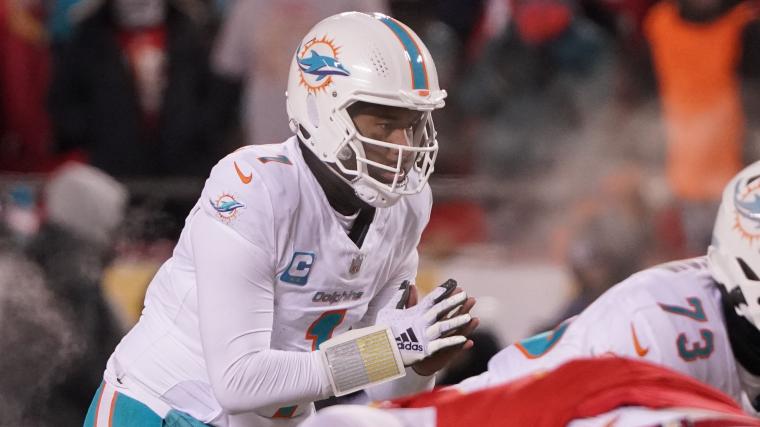
The arrival of a new GM and head coach creates a natural inflection point. Jeff Hafley, a defensive-minded coach, and Jon-Eric Sullivan, building his own legacy, have no allegiance to the previous regime’s franchise quarterback. Their evaluation likely centered on a few critical, unresolved questions about Tagovailoa: his durability, his arm strength against top-tier defenses, and his ability to elevate a team when the scheme is taken away. The Dolphins’ late-season collapses, including a devastating loss to the Kansas City Chiefs in the playoffs where the offense froze in the cold, became the defining narrative.
By making this move, Sullivan and Hafley are signaling a desire to build a different kind of team. Absorbing the dead money now allows them to completely clear the decks for 2027 and beyond. They are choosing short-term cap hell for long-term roster-building purity, aiming to find a quarterback who better fits their vision—perhaps one with a different physical profile or a proven clutch gene.
What’s Next for the Dolphins and Tua Tagovailoa?
The immediate fallout from this decision creates two compelling storylines: the future of the Dolphins’ quarterback position and the next chapter for Tua Tagovailoa himself.
For Miami, the 2025 season becomes an audition. With limited cap flexibility to chase a veteran star, the Dolphins are likely to turn to a bridge quarterback—possibly a veteran like Jacoby Brissett or a draft pick—to steward the team through this transitional phase. All eyes will be on the 2026 NFL Draft, where Miami will presumably have the capital and the imperative to select their new franchise signal-caller, entering the 2027 season with a clean financial slate and a QB on a cost-controlled rookie deal.
For Tua Tagovailoa, this release is a shocking but potentially liberating moment. He immediately becomes the most intriguing free agent on the market. Teams like the Las Vegas Raiders, Seattle Seahawks, or New Orleans Saints, who are a quarterback away from contention, will likely see immense value in a proven, accurate passer coming off a career year. While his market may not reach the stratospheric level of his Miami extension, Tagovailoa will have a chance to rewrite his narrative with a new franchise, free from the weight of expectations that grew overwhelming in South Florida.
A Watershed Moment for NFL Team Building
The Dolphins’ decision to release Tua Tagovailoa is more than a simple roster transaction. It is a landmark case study in organizational conviction. It proves that in today’s NFL, even a quarterback coming off a historic statistical season is not untouchable if the front office believes a ceiling has been reached.
This move will be debated for years. Was it a brave, forward-thinking purge necessary to escape mediocrity? Or was it a reckless, ego-driven gamble that will set the franchise back half a decade? The success or failure of the post-Tua quarterback search will be the sole determinant. For new GM Jon-Eric Sullivan, his legacy begins with this unprecedented calculus. He has bet his tenure on the idea that a fresh start, no matter the cost, is more valuable than clinging to a known quantity.
In the end, the Dolphins have chosen pain today for hope tomorrow. They have looked at a Pro Bowl quarterback and seen a limitation. They have looked at a $99 million cap charge and seen opportunity. The Tua Tagovailoa era in Miami ends not with a whimper, but with the loudest financial explosion the league has ever seen. The reset button has been pressed, at a price no team has ever paid before.
Source: Based on news from Yahoo Sports.