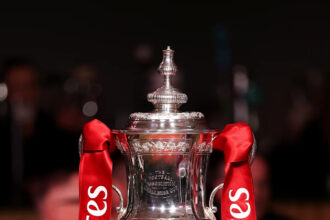
The Great FA Cup Leveller: Should Lower-Ranked Teams Always Play at Home?
The magic of the FA Cup isn’t just a cliché. It’s a tangible, often muddy, and beautifully chaotic force that manifests in specific conditions. This past weekend, we felt its full voltage. Port Vale shocking Sunderland. Premier League giants like Arsenal and Chelsea hauled into uncomfortable, bruising battles against lower-league opposition. The formula for this enchantment is no secret: a ramshackle, rain-soaked pitch, a febrile home crowd packed into a tight ground, and millionaire footballers taken far beyond their polished comfort zones. It begs a radical, heretical question: to preserve the competition’s soul, should the lower-ranked team always be granted home advantage?
The Case for the Underdog’s Fortress
Tradition dictates the draw is random, home and away. But the FA Cup’s unique appeal is its capacity for drama, not its adherence to sporting parity. Forcing elite teams to travel to hostile, unfamiliar environments is the competition’s greatest equalizer. It’s not just about the 11 players on the pitch; it’s about the entire experience.
Consider the elements that define a classic cup upset:
- The Pitch as a Great Leveller: A heavy, uneven surface negates technical superiority. It favors grit, heart, and direct play—the native tongue of many lower-league sides.
- The Proximity of Passion: A packed, non-segregated stand roaring inches from the touchline creates an atmosphere of palpable pressure. It can intimidate officials and rattle the composure of even the most seasoned stars.
- The Disruption of Routine: Premier League teams are creatures of luxury and habit. A long coach trip to a modest ground, cramped changing rooms, and a lack of familiar amenities is a psychological hurdle before a ball is kicked.
The Port Vale shock Sunderland narrative is amplified because it happened at Vale Park. Imagine that tie at the Stadium of Light. The dynamic shifts entirely. The Championship side becomes the expected aggressor, the pressure mounts differently, and the magic dissipates. The away tie is the crucible where cup legends are forged.
The Counter-Argument: Tradition, Finance, and Fairness
Opponents of a fixed “lower-rank at home” rule would cite several critical flaws. First, it brutally punishes higher-ranked clubs, stripping them of a significant reward for their season’s success. The financial windfall of a home draw, especially in the latter stages, can be transformative for a club’s budget.
Furthermore, the randomness of the draw is itself a sacred tradition. It provides narrative symmetry—the chance for a small club to earn a lucrative away day at a cathedral of the game. The pilgrimage of thousands of fans to Old Trafford or Anfield is a rite of passage and a financial bonanza for the visiting club’s coffers.
There’s also a sporting integrity argument. Would the competition feel as legitimate if the path to the final was artificially skewed? A fixed rule could lead to accusations of the Cup being “too gimmicky,” undermining the genuine achievement of a lower-league side winning away at a giant, which is the ultimate testament to a team’s character.
Finally, logistics. If every tie involving a pyramid gap defaulted to the smaller ground, it could create severe safety and capacity issues for historically massive fixtures. The magic can quickly turn to mismanagement.
Expert Analysis: The Psychological Battlefield
From a tactical and psychological perspective, mandatory home advantage for minnows would fundamentally alter team preparation. Premier League managers, masters of controlling every variable, would be forced into a reactive mindset. The focus would shift from imposing their game to surviving the occasion.
As one former League Two manager told me anonymously: “You get one shot. At home, you can set the trap. You can let the grass grow, you can pack the midfield, you can use the crowd as your 12th man. Away, you’re just hoping to hang on. It’s a different type of pressure.” Conversely, top-flight managers would treat every early-round away tie with the seriousness of a European knockout in Istanbul. The shock factor would be reduced, but the intensity would skyrocket.
The dynamic also changes for the players. A lower-league squad playing at home truly believes the impossible is possible. That collective belief, transmitted from the stands, is a potent fuel. Take that away, and the task often feels insurmountable from the start.
Predictions and The Future of the Magic
While a blanket rule change is unlikely and arguably too radical, the FA Cup must actively protect the ingredients that make it special. The financial gulf between the Premier League and the rest is widening into a chasm, making upsets rarer. The competition’s governance must be mindful of this.
We may see a compromise: a rule guaranteeing home advantage for teams separated by, say, two or more divisions in the early rounds. This would protect the giant-killing ethos while maintaining randomness among clubs of relatively equal stature.
Another prediction is the continued emphasis on broadcasters showcasing these atmospheric away days. The cameras linger on the muddy kits, the raucous stands, and the stunned faces of elite players. This storytelling consciously sells the “magic” narrative—a narrative built almost exclusively on the lower-league home fixture.
The future of the Cup’s allure depends on these moments remaining possible. If every minnow must travel to a Premier League palace, the competition becomes a predictable procession. The magic needs its natural habitat to survive.
Conclusion: Protecting the Soul of the Competition
The FA Cup at its best is a glorious anachronism. In an era of football defined by financial fair play (in name, at least), super-clubs, and homogenized, perfect pitches, it remains a bastion of chaos and romance. That romance is geographically specific. It blooms in towns like Port Vale, on pitches churned by winter, and in stands shaking with collective hope.
While mandating home advantage for every lower-ranked team may be a step too far, the question forces us to confront what we value. Do we prize absolute sporting fairness, or the preservation of a unique sporting drama? The FA Cup was at its very best at the weekend precisely because the conditions for upsets were met. The competition’s custodians must ensure those conditions are not eroded by commercial or sporting convenience.
The answer, perhaps, is not a rigid rule but a sacred understanding. The magic is not in the draw itself, but in the journey it forces the giants to make—away from their comfort zones, into the heart of football’s raw, unforgiving, and utterly beautiful reality. That is a journey worth protecting at all costs.
Source: Based on news from BBC Sport.