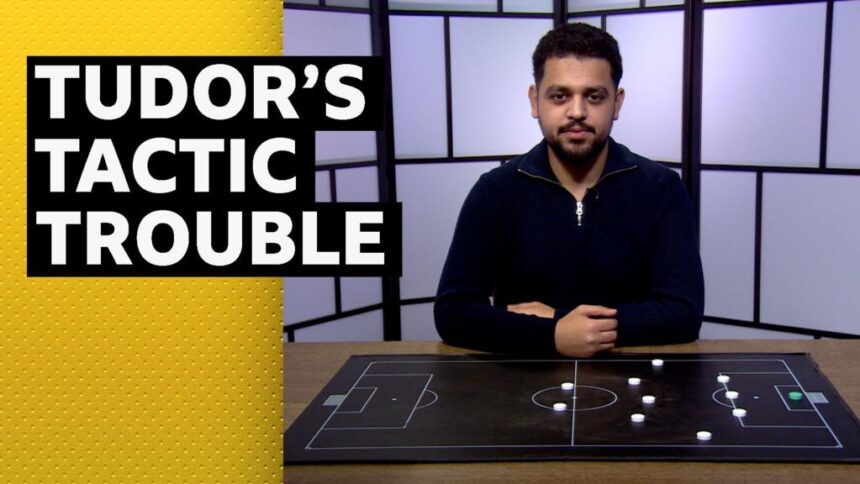
Igor Tudor’s Tactical Rigidity: Why Spurs’ Interim Era is Stalling
The appointment of Igor Tudor as Tottenham Hotspur’s interim manager was met with a curious blend of intrigue and apprehension. Known for his intense, disciplined approach, the Croatian was seen as a potential circuit-breaker for a squad accused of defensive frailty and a lack of steel. However, as a poor run of form persists, a troubling pattern has emerged. Far from solving Spurs’ problems, Tudor’s uncompromising tactical principles appear to be exacerbating them, stifling the squad’s inherent strengths and creating a system that feels fundamentally at odds with the players at his disposal. The issue isn’t effort, but a profound tactical mismatch.
The High-Press Paradox: Energy Without End Product
Igor Tudor’s footballing philosophy is built on a foundation of aggressive, man-oriented pressing and extreme physical commitment. He demands his teams win the ball high up the pitch, suffocating opponents through sheer force of will. On paper, this addresses a long-standing Tottenham complaint: a passive defensive shape. In practice, however, it has created a debilitating paradox.
Spurs’ squad, particularly in the attacking and midfield ranks, is not engineered for sustained, high-octane pressing. The system requires every player to be an elite athlete, capable of relentless sprints and quick recoveries. What we are witnessing is a team expending colossal energy to force turnovers, only to be too physically depleted or tactically constricted to capitalize. The high-press system is creating chances, but the execution in the final third is consistently rushed or imprecise. This leads to a vicious cycle: immense effort, a turnover, a wasted opportunity, and then vulnerability to the counter-attack as players are caught out of position.
Key symptoms of this failing system include:
- Frontline Fatigue: Creative players are gassed by the 60th minute, killing attacking fluidity late in games.
- Predictable Attacks: Forced transitions often result in hurried, low-percentage shots rather than crafted opportunities.
- Defensive Exposure: The high defensive line, a necessity for the press, is brutally exposed by pacey forwards when the press is bypassed.
The Squeezed Midfield: Where Creativity Goes to Die
Perhaps the most glaring tactical casualty under Tudor has been the midfield. Tottenham’s historical identity and recent successful eras have been built around dynamic, creative midfield hubs. Tudor’s rigid 3-4-2-1 formation and his emphasis on verticality and direct play have effectively marginalized this area of the pitch.
The system relies heavily on wing-backs for width and the two advanced attacking midfielders (or “number 10s”) for chance creation. This leaves the two central midfielders with a brutally limited brief: win the ball, and play it forward immediately. There is no room for a metronomic passer to dictate tempo, nor for a player to carry the ball through the lines with dribbling. The midfield is a pressing and recovery zone, not a creative incubator.
This tactical choice nullifies the strengths of players who thrive with the ball at their feet. It asks technicians to become tacklers and asks playmakers to operate in congested spaces without a link to the base of midfield. The result is a disconnected team: a defensive unit, a hard-working midfield, and a stranded forward line, with no fluid connection between the three. The lack of creative freedom is palpable, turning previously fluid attacks into a staccato series of hopeful balls and individual battles.
Man-Marking Mayhem: Disorganization in Defense
Ironically, Tudor’s methods, designed to solidify the defense, have made it more chaotic. His insistence on man-to-man marking across the pitch, even in defensive phases, is a high-risk, high-reward strategy rarely seen at the elite level. While it can disrupt build-up play, it is a recipe for disorganization against tactically astute opponents.
For Spurs, it has led to consistent defensive breakdowns. Players are pulled out of position as they doggedly follow their assigned man, creating huge gaps for opponents to exploit. Set-piece marking, a perennial weakness for Tottenham, becomes even more fraught under this system. The zonal safety net is removed, leaving one-on-one physical duels as the only option—a matchup nightmare against taller, stronger sides.
This man-marking dogma directly contradicts the need for defensive structure and spatial awareness. It places immense pressure on individual defenders to win every duel and makes the team horrifically vulnerable to simple decoy runs and rotations. The consequence is a defense that often looks more confused and panicked than it did before Tudor’s arrival, despite the increased collective work rate.
Predictions and the Path Forward: Adaptation or Stagnation?
As the interim period stretches on, the trajectory is clear if changes are not made. The squad’s morale, already fragile, risks breaking under the strain of a system that doesn’t suit them. Player fatigue will lead to more injuries, and results are unlikely to improve sustainably.
The critical question is one of flexibility. Can Igor Tudor, a manager known for his unwavering belief in his philosophy, adapt his principles to the tools he has? The path forward requires pragmatic concessions:
- Introduce Hybrid Pressing: Shift from a relentless man-to-man press to a more situational, zonal-based trigger. Preserve energy and maintain shape.
- Liberate the Midfield: Adjust the formation or roles to allow at least one midfielder to operate as a deep-lying playmaker, bridging the defensive and attacking units.
- Return to Zonal Basics: Abandon strict man-marking in defensive phases, especially in the box, to restore organizational solidity.
If Tudor cannot or will not make these adjustments, his tenure will be remembered as a well-intentioned but misguided experiment that left the squad more broken than it found it. The players are clearly giving effort, but they are being asked to perform roles that contradict their instincts and abilities.
Conclusion: A Square Peg in a Round Hole
The analysis of Igor Tudor’s impact at Tottenham Hotspur points to a fundamental truth in football: the finest tactics are useless if they do not suit the personnel. Tudor’s tactical rigidity is hurting Spurs not because his ideas are inherently flawed, but because they are being applied to the wrong canvas. He is trying to implement a militaristic, physically demanding system on a squad built for technical flair, attacking transitions, and creative expression.
The interim period has exposed a painful mismatch. The team is working harder but playing worse. The defense is more committed but more vulnerable. The attack is more intense but less potent. For Spurs to salvage anything from this season and build a stable foundation for the next permanent manager, either Tudor must demonstrate a previously unseen tactical flexibility, or the club must endure a period of painful attrition. Currently, the tactics are not just failing to get results—they are actively undermining the confidence and core competencies of a talented squad. The damage, if unchecked, could last far longer than any interim appointment.
Source: Based on news from BBC Sport.