Draper’s Indian Wells Defence Ends in Controversy as Medvedev Benefits from Pivotal Hindrance Call
The pristine courts of Indian Wells are no stranger to high drama, but rarely does it erupt from the murky, subjective depths of the hindrance rule. In a quarter-final clash that will be remembered for a contentious mid-rattle interruption, Daniil Medvedev advanced to the semi-finals over a furious Jack Draper, whose title defence dissolved in a storm of boos and a protracted, tense net-side debate.
A Rally Interrupted: The Moment That Changed the Match
With the score poised at a knife-edge 5-5 in the second set, Medvedev leading by a set and a break point looming at 0-15 on Draper’s serve, the match reached its explosive turning point. Medvedev struck a forehand that Draper, in real-time, believed had sailed long. The Briton instinctively stretched his arms out wide, a universal signal of a ball out. Crucially, he did not stop playing.
The rally continued for another seven grueling shots before Medvedev eventually netted a backhand. Draper moved to the service line, believing he had secured the point. Instead, chair umpire Mohamed Lahyani announced a hindrance call against Draper, awarding the point—and a critical 0-30 lead—to Medvedev. The stadium, firmly behind the young Briton, erupted in disapproval.
Key Elements of the Controversy:
- Visual vs. Verbal Hindrance: The rule states a player may not make any action that could hinder an opponent. Draper’s gesture was silent and instantaneous.
- Continuous Play: Draper did not halt the point; he immediately re-engaged, and Medvedev won the subsequent seven-shot exchange.
- Timing of the Call: The umpire’s decision came after the rally concluded, not during it, adding to the perceived injustice.
The psychological blow was devastating. Draper, visibly rattled, lost the next two points to surrender the break. Medvedev, the ultimate competitor, coolly served out the match 7-5, sealing a 6-1, 7-5 victory amidst a chorus of boos directed at the outcome, if not at him personally.
Expert Analysis: Dissecting the Rule and Its Application
From a pure rulebook perspective, Lahyani’s call resides in a grey area. The hindrance rule is designed to prevent intentional or unintentional disruption. The central question here is: did Draper’s instinctual, split-second gesture actually hinder Medvedev? The Russian played seven more shots and lost the rally on his own error.
“This is where officiating requires feel for the moment,” says a former ATP tour official. “The gesture was reactive, not a tactic. Medvedev was not physically impeded, nor did he stop playing. To award the point after winning the extended rally feels like a double punishment for Draper. It robs the sport of a natural, competitive conclusion to the point.”
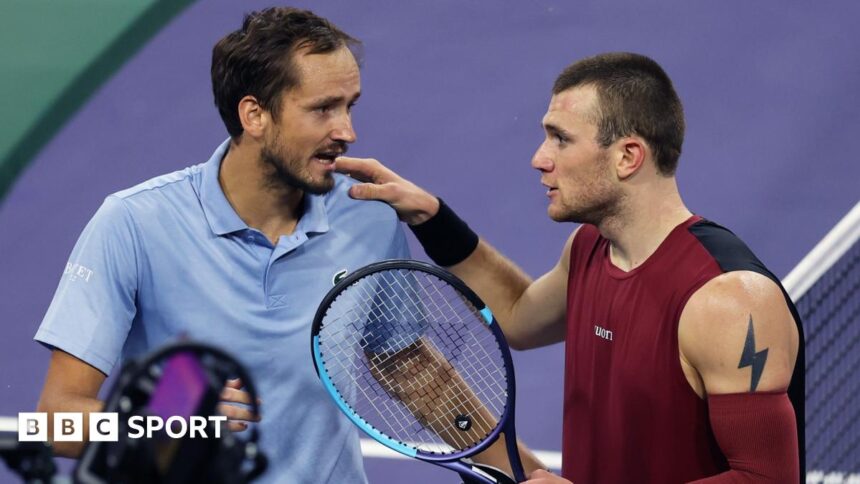
Medvedev’s own history adds a layer of irony. He is a player known for his own vocal and physical expressions during points. The decision, while within the letter of the law, seemed stark against the spirit of a ferociously contested rally. The lengthy conversation at the net after the match underscored the mutual respect but also the raw feeling surrounding the incident. Draper sought clarification, Medvedev likely explained his perspective, but the result was irrevocably etched.
This incident highlights a growing tension in modern tennis. As players’ physicality and court coverage increase, these instinctive, in-play reactions are more common. The rule, designed for clear-cut shouting or obstruction, now grapples with millisecond gestures in an ultra-high-speed sport.
Fallout and Future: What This Means for Draper and Medvedev
For Jack Draper, this is a brutal lesson in the harsh theatre of elite sport. His Indian Wells run, which solidified his status as a top-15 force and a legitimate threat on hard courts, ended not with a whimper but a controversial bang. The mental fortitude to shake off such a setback is now his next test. The positive takeaway is undeniable: his game is championship-calibre. The power, the improved serve, and the tactical maturity were all on display until the moment of controversy. How he channels this frustration will define his upcoming clay season.
For Daniil Medvedev, it is another example of his relentless, pragmatic will to win. He absorbed the crowd’s hostility and closed out the match with ice-cool efficiency. While some may question the sportsmanship of accepting the call in such a manner, Medvedev operates within the rules as they are presented. This win reinforces his reputation as the ultimate hard-court gatekeeper and a player who thrives in mentally chaotic environments. The controversy, however, may linger as an asterisk on an otherwise professional victory.
Predictions for the Season Ahead:
- Draper’s Trajectory: Expect a motivated response. This experience, while painful, adds a layer of grit. He will be a dangerous floater in any draw and is poised to target deep runs at the Masters 1000 events and beyond.
- Medvedev’s Campaign: The Russian moves forward with momentum. A title here would loudly announce his re-emergence as a prime threat to the very top of the game, particularly with the hard-court summer ahead.
- The Hindrance Rule Debate: This incident will fuel calls for greater clarity or even a revision of the hindrance rule, potentially advocating for the use of “let” calls in such non-malicious, instinctive scenarios.
Conclusion: More Than Just a Lost Point
The quarter-final at Indian Wells was not decided by a single call. Medvedev’s superior consistency in the first set and clutch play at the end were pivotal. Yet, the controversial hindrance call irrevocably shifted the axis of the match. It robbed fans of a pure contest, overshadowed Draper’s valiant effort to force a decider, and placed umpire Mohamed Lahyani in the unforgiving spotlight.
Ultimately, this match serves as a stark reminder that tennis is a game of inches and milliseconds, governed by rules that sometimes struggle to keep pace with human instinct. Jack Draper lost a point, a match, and his title defence. But in the court of public opinion, he may have won the argument. The image of the two competitors locked in a lengthy conversation at the net after the final handshake speaks volumes—a moment of shared understanding that the conclusion felt unsatisfactory. The controversy will fade, but the question remains: when does a player’s instinct become a hindrance, and when is it simply part of the game’s raw, unfiltered emotion?
Source: Based on news from BBC Sport.