Scotland’s Redemption Arc: From ‘Hell and Back’ to Six Nations Contenders
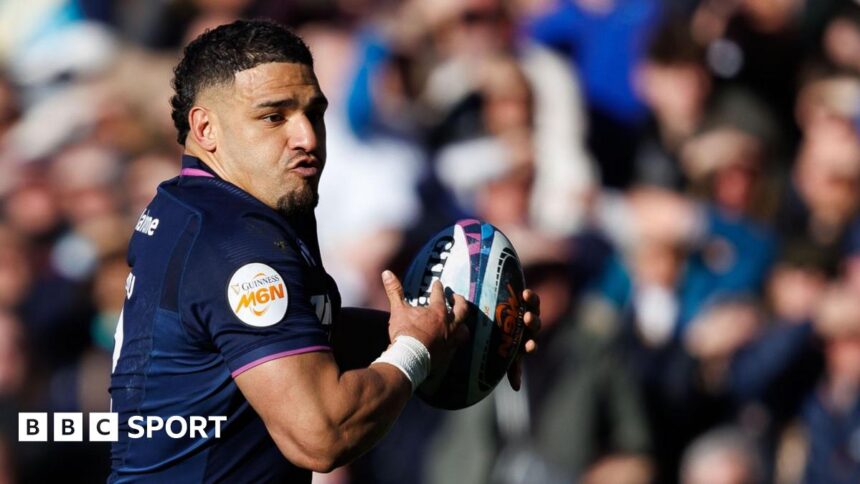
The scent of silverware is a rare and intoxicating perfume for Scottish rugby. For 27 long years, since the final Five Nations in 1999, the nation has been a spectator in the final act of the championship narrative, its fate long sealed before the ultimate weekend. That agonizing exile ends now. As the Six Nations reaches its crescendo in Dublin, Scotland, against all pre-tournament odds, stride into the Aviva Stadium not as spoilers, but as genuine contenders. For co-captain Sione Tuipulotu and a battle-hardened squad, this moment is the culmination of a journey through the fire—a path he succinctly describes as having been to “hell and back.”
The Weight of History and the Scars of Progress
To understand the magnitude of Saturday’s fixture, one must first appreciate the depth of the scars Tuipulotu references. The 27-year gap since Scotland last played for the title on the final day is a timeline littered with near-misses, heartbreaking collapses, and periods of profound irrelevance. While Tuipulotu’s five-year international career has only sampled this history, he has lived its modern chapter: the galling late defeat to Wales in 2022, the World Cup agony against Australia in 2015, and the perennial “nearly” team tag.
These scars, however, are no longer symbols of failure but badges of resilience. Under the guidance of Gregor Townsend, this Scottish generation has been systematically hardened. They have learned to win in Paris and at Twickenham, feats once considered mythical. They have developed a squad depth that can withstand injuries to key stars. The psychological fragility that once saw leads evaporate has been replaced by a steely, pragmatic edge. The journey through hell, it seems, was a necessary crucible to forge a team capable of withstanding the inferno of a title decider in Dublin.
The Dublin Decider: A Three-Way Title Tussle
This final weekend presents a deliciously complex puzzle, with three nations still in mathematical contention. The equation is clear, yet daunting for Scotland:
- Ireland: The defending champions need only a single match point—a draw or losing bonus point—to secure back-to-back titles. They are formidable at home, riding a historic winning streak at the Aviva Stadium.
- Scotland: To claim the Championship, they must achieve a monumental victory in Dublin. A win by eight points or more would also secure the Triple Crown, a historic double that would etch this team into legend.
- France: Waiting in the wings, Les Bleus need a heavy Scottish victory and a big win of their own against England to sneak in via points difference.
For Scotland, the mission is singular and Herculean: beat an Irish team that has dominated this rivalry, winning the last nine meetings. The “Fortress Aviva” stands as the ultimate test of their claimed transformation. Can a team known for brilliant flashes sustain the intensity, discipline, and tactical precision required for 80 minutes against the world’s best-drilled side? This is the question upon which their redemption rests.
Tuipulotu’s Leadership and a New Scottish Identity
At the heart of this new Scottish resolve is the leadership of Sione Tuipulotu. His words this week were not those of a man just happy to be involved. They were the pronouncements of a believer. “We want to be the first of our kind”, he declared, a powerful statement that acknowledges the past while boldly seeking to break from it. This isn’t about emulating the 1999 Grand Slam winners; it’s about a modern, multicultural Scotland writing its own legacy.
Tuipulotu, alongside fellow co-captain Rory Darge, embodies a new Scottish spine—one that blends granite-tough Scottish grit with a more expansive, creative Southern Hemisphere flair. His centre partnership with Huw Jones has become the most potent in the tournament. His leadership is less about fiery rhetoric and more about calm, relentless execution. In acknowledging the opportunity without being consumed by the weight of it (“it’s not the be all and end all”), he has struck the perfect tone for a squad that must be both fearless and focused.
Expert Analysis and Prediction: Can the Miracle Happen?
The analytical view is stark. Ireland are rightful favorites. Their system is a machine, their bench impact profound, and their hunger after the World Cup quarter-final setback is palpable. Johnny Sexton’s absence has been seamlessly managed by Jack Crowley, and the pack remains a relentless force. History, form, and location all point green.
Yet, sport is not played on spreadsheets. Scotland possesses the specific tools to cause chaos:
- Finishers in the Back Three: Duhan van der Merwe, Kyle Steyn, and Kyle Rowe offer game-breaking try potential from anywhere.
- Midfield Mastery: The Tuipulotu-Jones axis can puncture the most organized defence.
- Set-Piece Solidarity: The Scottish scrum and lineout have been largely excellent, providing a crucial platform.
The prediction here is not for the faint of heart. Ireland will start fast, aiming to break Scottish spirit early. Scotland must absorb this and stay within seven points at the hour mark. If they can, the pressure will shift seismically onto the Irish. The mental hurdle of “here we go again” will transform into “this is our time” for Scotland.
Verdict: Scotland will cover the spread and push Ireland to the absolute limit in a titanic, nerve-shredding contest. However, Ireland’s experience in these high-stakes moments and their incredible home record will likely see them find a way. A narrow Irish victory, by 1-5 points, securing the title, but a Scottish performance that finally proves they have arrived as consistent top-tier contenders, likely with a losing bonus point and the respect of the rugby world.
Conclusion: A Legacy Secured, Regardless of Result
When Sione Tuipulotu speaks of a journey through hell and back, he speaks for every Scottish player, fan, and administrator who endured the barren decades. That journey reaches its most pivotal crossroads in Dublin. Win, and they become immortal, the team that shattered a 27-year curse in the most dramatic fashion imaginable. Lose, and yet, something profound has still shifted.
By being in this fight, on this day, with this much at stake, they have already altered Scottish rugby’s trajectory. They have proven they belong in the championship conversation not as outsiders, but as equals. The scars of the past are now the foundation for a more ambitious future. On Saturday, Scotland plays not just for a trophy, but for the ultimate validation of their painful, necessary, and ultimately transformative voyage back from the brink.
Source: Based on news from BBC Sport.