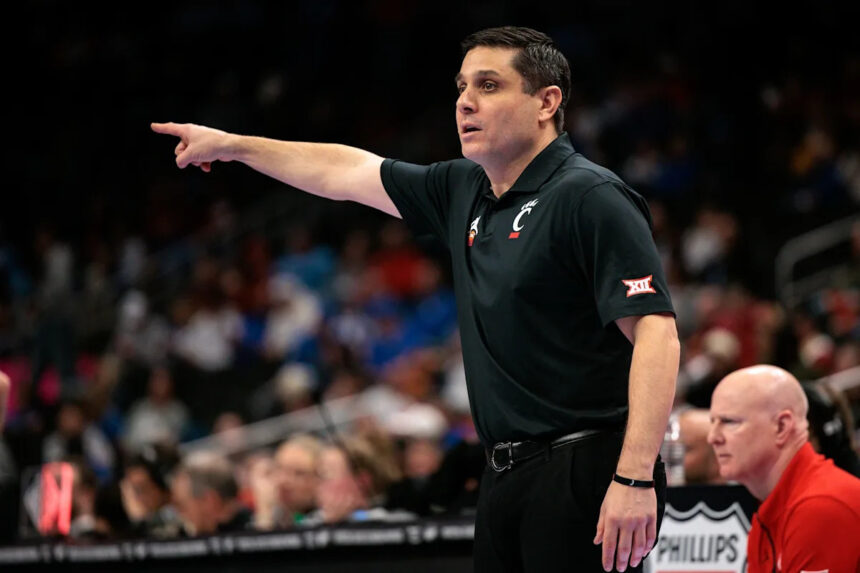
Cincinnati Makes a Change: Bearcats Part Ways with Head Coach Wes Miller After Five Seasons
The relentless pressure cooker of Power Conference basketball has claimed another coach. Just 48 hours after the Cincinnati Bearcats’ season ended with a thud in the Big 12 Tournament, the university has fired head coach Wes Miller, ending his five-year tenure at the helm. The swift decision, first reported by On3’s Pete Nakos, underscores a stark reality in modern college sports: solid is no longer sufficient when the ultimate benchmark is March Madness.
Miller, who arrived in 2021 with the pedigree of a rising star, compiled a respectable 100-74 record in Cincinnati. However, the absence of a single NCAA Tournament appearance across those five seasons proved to be the ultimate failing grade. This move signals a pivotal, high-stakes moment for a Bearcats program navigating the treacherous waters of the Big 12 and yearning to reclaim its place among the nation’s elite.
The Miller Era: A Promise Unfulfilled in the Queen City
When Wes Miller was hired away from UNC Greensboro, the narrative was compelling. Here was a young, energetic coach with a proven track record of building a winner at the mid-major level. At UNCG, Miller transformed the Spartans into a Southern Conference powerhouse, securing four regular-season titles and punching two NCAA Tournament tickets (2018, 2021). His teams were known for their defensive tenacity and disciplined play—a identity that seemed a perfect fit for Cincinnati’s hard-nosed basketball tradition.
The transition to the American Athletic Conference and then the monumental jump to the Big 12 presented unique challenges. Miller’s teams showed flashes of competitiveness, most notably this past season with a 9-9 conference record in the nation’s toughest league. Yet, the final chapters were consistently defined by near-misses and late-season fades:
- No March Madness Magic: The zero in the NCAA Tournament column became an increasingly heavy burden.
- Big 12 Growing Pains: While competitive, the Bearcats lacked the consistent high-end victories to build a tournament-worthy resume.
- Recruiting Questions: Despite some strong transfers, the program struggled to land the transformative, conference-altering talent needed to rise in the Big 12 hierarchy.
The 2025-26 campaign, finishing 18-15 overall after the Big 12 tournament loss to UCF, epitomized the frustration. It was a season of “good, but not great,” a recurring theme that athletic director John Cunningham decided he could no longer abide.
Anatomy of a Decision: Why Cincinnati Pulled the Trigger Now
The timing of the firing—immediately after the season—is a clear indicator that the decision was likely made well before the team boarded the plane to Kansas City for the conference tournament. In the hyper-competitive Big 12 conference, where every game is a brutal battle, Cincinnati’s leadership saw the program plateauing.
“This wasn’t about one game or one season,” a source close to the program suggested. “It was about trajectory. In the Big 12, you’re either climbing or you’re falling behind. The assessment was that we had stalled.”
Cunningham and the administration are betting that the program’s assets—a passionate fanbase, a storied history, and now the platform of the Big 12—are more attractive than the prospect of more years of middling results. They join a growing list of power programs, including Georgia Tech, Boston College, and Kansas State, in making a change this cycle, highlighting the cutthroat nature of the sport’s current landscape.
The financial commitment to compete is immense, and with the expanded NCAA Tournament field not providing a safety net, the tolerance for missing the Big Dance has evaporated for many schools. For Cincinnati, the calculation became simple: the cost of buying out Miller’s contract was less than the perceived cost of another year outside the national spotlight.
What’s Next for Cincinnati? Navigating a Critical Coaching Search
The Cincinnati job is now one of the most intriguing openings in the country. It is a classic “sleeping giant” role with both significant advantages and clear challenges. The search committee must answer a fundamental question: what is the profile of the coach who can win in the Big 12 at Cincinnati?
Potential candidate profiles will likely fall into three categories:
- The Proven Winner: Targeting a sitting head coach with a strong record at a high-major or successful mid-major. Names like Utah State’s Danny Sprinkle or Drake’s Darian DeVries could fit here, though their buyouts may be steep.
- The Ace Recruiter: Prioritizing a coach with deep ties to talent-rich areas like the Midwest or the South, capable of instantly elevating the roster’s athleticism. A top assistant from a blueblood program or a coach with a strong recruiting reputation could be targeted.
- The Cincinnati “Fit”: Seeking someone who embodies the gritty, defensive identity the program’s fanbase cherishes. This could lead to a coach with ties to the Cronin-era or a similar hard-nosed basketball philosophy.
The administration must also grapple with the realities of Name, Image, and Likeness (NIL) collectives and the transfer portal. The next coach must be a CEO who can manage a roster in constant flux and ensure the program’s NIL war chest is competitive with Big 12 rivals. This is no longer just about X’s and O’s; it’s about roster construction and fundraising.
Wes Miller’s Legacy and What Lies Ahead for Both Sides
To label Wes Miller’s tenure a failure would be an oversimplification. He steadied the program during conference realignment, recruited likable players who competed hard, and navigated the unprecedented jump to the Big 12. He leaves with a winning record, a feat not to be dismissed given the schedule strength. His legacy will be one of a good coach who was perhaps a step slow in adapting to the seismic shifts in the sport and the heightened expectations of a Power 5 job.
For Miller, his stock remains relatively high. He is still a young coach with a successful mid-major rebuild on his resume. He will undoubtedly be a candidate for other power conference openings or could return to a top mid-major job where his player development skills can again shine. This setback is unlikely to be career-defining.
For the Cincinnati Bearcats, the stakes could not be higher. This hire will define the next decade of the program. Get it right, and they can become a perennial Top 25 team and a tough out in the Big 12. Get it wrong, and they risk becoming a permanent fixture in the league’s bottom half, watching from home every March. The pressure is now on John Cunningham to find the leader who can translate Cincinnati’s immense potential into tangible, tournament-bound success. The clock on the next era starts today.
Source: Based on news from Yahoo Sports.