Formula 1 Forced to Cancel Bahrain and Saudi Arabia Grands Prix Amid Regional Escalation
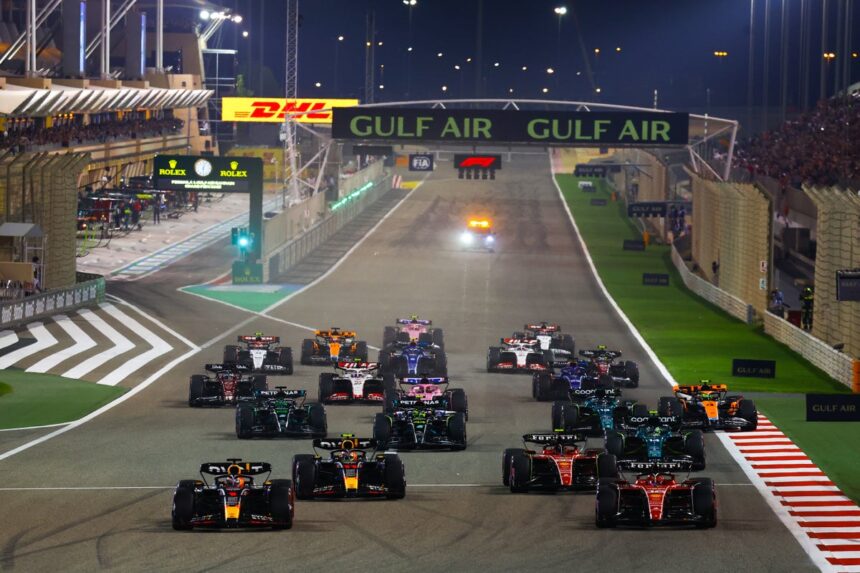
The high-octane world of Formula 1 has collided with the harsh reality of geopolitics. The Independent can reveal that the sport is set to cancel the 2026 Bahrain and Saudi Arabian Grands Prix, a seismic decision driven by the immediate and severe security risks of an escalating Middle East conflict. Rounds four and five of the championship, scheduled for April, are to be formally removed from the calendar within the next 48 hours, multiple sources have confirmed. This unprecedented move underscores the profound challenges of staging a global sporting spectacle in a region on a knife’s edge.
The decision, while drastic, follows a series of alarming events that made the races untenable. As recently as Monday, Iranian missiles struck locations including the Bahraini capital of Manama, a stark reminder of the proximity of the Sakhir circuit to active conflict. Similar attacks have targeted sites in Saudi Arabia since the war ignited two weeks ago. For Formula 1, a sport that meticulously plans for every variable from tire wear to pit-stop timing, the uncontrollable variable of regional warfare has forced its hand.
The Imminent Threat: Security Trumps All
Formula 1’s primary covenant is the safety of its personnel, drivers, and fans. While the sport routinely navigates complex political landscapes, the recent direct military strikes within the host nations represented an unacceptable and immediate threshold. The logistics of an F1 event are staggering: the movement of thousands of personnel, hundreds of tons of sensitive equipment, and the concentration of global media and VIPs creates a sprawling, high-profile target.
Key security concerns that led to the cancellation:
- Direct Military Action: Missile and drone attacks on Manama and other locations eliminated any buffer of perceived regional stability.
- Unpredictable Escalation: With conflict dynamics shifting daily, F1 could not guarantee a safe environment for a event still weeks away.
- Personnel Welfare: Teams, already operating under immense pressure, would be reluctant to send staff into a potential war zone, regardless of official assurances.
- Insurance and Liability: The risk became uninsurable, creating a financial and legal impossibility for the FIA and FOM.
“The calculus is simple,” a senior team principal, speaking on condition of anonymity, stated. “You cannot ask mechanics, engineers, and hospitality staff to work under the threat of aerial bombardment. The glamour of a night race disappears when the sky is a genuine threat.”
Logistical Gridlock: Why Replacement Races Failed
In the wake of the cancellations, the immediate question from fans was: can other circuits step in? The sport explored the possibility of replacing both events with European circuits. Historic venues like Portimão in Portugal or Istanbul Park in Turkey, both with recent F1 experience, were informally discussed. However, the idea was quickly shelved due to insurmountable hurdles.
Organizing a Grand Prix is a year-long endeavor, not a matter of weeks. The challenges of a last-minute swap are monumental:
- Track Licensing and Preparation: Circuits require FIA Grade 1 certification, which involves rigorous safety inspections and potential facility upgrades that cannot be completed in a month.
- Freight Nightmare: F1’s sea freight, containing everything from garage equipment to hospitality suites, was already en route to the Middle East. Diverting it to Europe in time would be a costly and chaotic impossibility.
- Local Organizer Capacity: Hosting a race requires massive local infrastructure: security, medical services, traffic management, and staffing. Mobilizing this without years of planning is not feasible.
- Commercial Contracts: Existing sponsorship and broadcasting agreements are tied to specific calendars and locations, creating a legal quagmire.
- Consequently, F1 has decided to wipe the events from the 2026 calendar, reducing the championship to a 22-race season. It is considered highly unlikely they will be rescheduled for later in the year.
The 2026 Calendar Shockwaves and Championship Impact
The cancellation creates a dramatic and unusual hole in the heart of the season. The schedule now features a five-week gap between the Japanese Grand Prix on 29 March and the Miami Grand Prix on 3 May. This extended pause will have significant ramifications for the championship rhythm and the business of the sport.
From a sporting perspective, the break will act as an elongated winter test for some, and a frustrating momentum killer for others. A team that starts the season strongly, like a dominant Ferrari or a resurgent Mercedes, will see their hard-earned momentum frozen. Conversely, a struggling team like Red Bull or McLaren faces a long month to implement major upgrades and recalibrate their approach. The break could become a development war fought in the factories, potentially resetting the competitive order by the time cars hit the track in Miami.
Financially, the loss of two fee-paying host nations represents a substantial hit to Formula One Management’s revenue. Furthermore, the extended gap presents a challenge for broadcasters who rely on consistent content and for sponsors whose branding is sidelined during the unscheduled hiatus. The logistical challenges of this reshaped season will now test the flexibility of the F1 machine like never before.
Expert Analysis: The Future of F1 in the Middle East
This decision is not merely about 2026; it casts a long shadow over Formula 1’s long-term strategy. The Middle East has been a cornerstone of the sport’s expansion, with Bahrain pioneering the region’s entry in 2004, followed by Abu Dhabi, Saudi Arabia, and Qatar. These nations have offered lucrative hosting fees, state-of-the-art facilities, and a vision of F1 as a tool for global image-building and tourism.
“This is a watershed moment,” says Dr. Livia Lantini, a geopolitical analyst specializing in sport. “Formula 1 has always operated on the principle that sport and politics can be separated. The events of the past fortnight have violently disproven that theory in this region. The sport’s dependence on these volatile markets is now its greatest vulnerability.”
The future now hinges on the duration and resolution of the broader conflict. While the financial incentives to return will remain powerful, the reputational risk for F1 has been permanently elevated. Can the sport, in good conscience, return to a region where conflict can erupt so decisively? The ongoing conflict in the Middle East has moved from a background concern to a central, calendar-altering force.
Predictions for the road ahead:
- F1 will face intense scrutiny over its future dealings with host nations in active conflict zones.
- Contracts will likely be re-examined with stronger force majeure clauses related to regional instability.
- The sport may begin to prioritize geographic and political diversification in its calendar planning, potentially reviving interest in traditional European venues.
- The 2027 calendar negotiations, already underway, will be profoundly influenced by this crisis.
Conclusion: A Season Redefined by Forces Beyond the Track
The cancellation of the Bahrain and Saudi Arabian Grands Prix is a sobering reminder that for all its speed, wealth, and global appeal, Formula 1 is not immune to the world’s fractures. The 2026 season will now be forever marked by the five-week silence in April, a gap filled not by the roar of engines but by the echoes of distant conflict. This is more than a scheduling headache; it is a fundamental test of the sport’s identity and resilience.
As teams pack away their Middle East freight for a different season, the paddock is left to contemplate a new reality. The pursuit of victory, the engineering marvels, and the driver rivalries all continue, but they now unfold under the stark recognition that the map of Formula 1 is drawn not just by commercial ambition, but by the immutable and often perilous realities of global politics. The race for the 2026 championship will go on, but its path has been irrevocably altered by a truth far greater than sport.
Source: Based on news from Yahoo Sports.