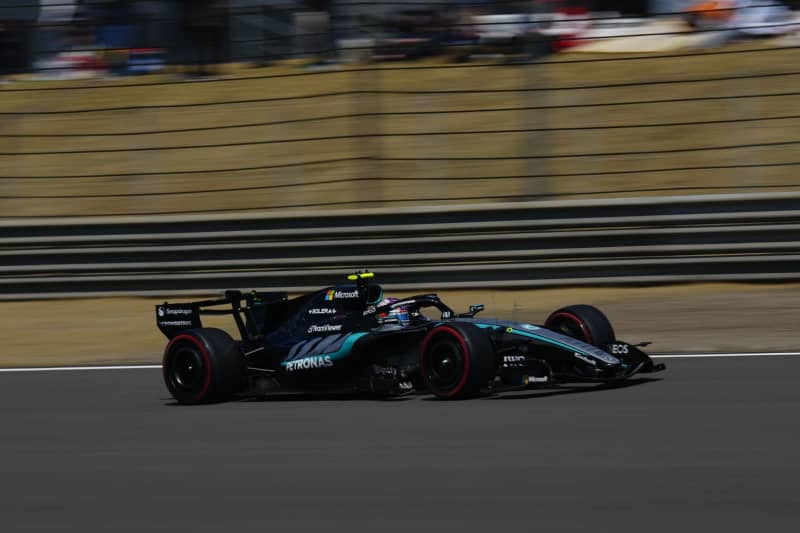
F1’s Middle East Pause: Bahrain and Saudi Arabian Grands Prix Scrapped Amid Regional Conflict
The high-octane world of Formula 1 has been forced into a sobering pit stop. In a move anticipated yet impactful, the sport’s governing body announced the postponement of the 2025 season’s Bahrain and Saudi Arabian Grands Prix, citing the escalating conflict involving Iran. This decision rips the opening act from the F1 calendar, upending team logistics, fan plans, and the commercial rhythm of the sport, while casting a long shadow over the delicate relationship between global sport and geopolitical instability.
A Difficult Decision in Unprecedented Times
The announcement, made official on Saturday, confirms the worst fears that had been circulating in the paddock for weeks. The back-to-back races, which were set to ignite the new season under the desert lights in April, are now off the immediate schedule. Formula One president and CEO Stefano Domenicali framed the call as a necessary, if regrettable, step. “While this was a difficult decision to take, it is unfortunately the right one at this stage considering the current situation in the Middle East,” he stated. His words, careful and diplomatic, underscore the immense pressure facing an organization that navigates the interests of teams, sponsors, host nations, and a global audience numbering in the hundreds of millions.
The logistical domino effect is immense. Teams had begun shipping their intricate car builds and sprawling hospitality units toward the Gulf. Now, those complex operations are in reverse. More critically, the decision prioritizes the safety and security of all personnel—from star drivers to mechanics, media, and traveling staff—above spectacle and revenue. It is a principle F1 has been forced to reckon with more frequently in recent years.
Reading Between the Lines: A Postponement, Not a Cancellation?
What sets this announcement apart from a simple cancellation is its deliberate phrasing. The F1 statement did not permanently erase the events. Instead, it explicitly left the door ajar for a potential rescheduling later in the year, “if the circumstances allow us to do so.” This is a crucial distinction with significant implications.
This wording reveals several key strategic positions:
- Commercial Preservation: Bahrain and Saudi Arabia represent two of the most lucrative races on the calendar, with massive hosting fees and strategic importance for F1’s expansion into new markets. Writing them off entirely would be a severe financial blow.
- Geopolitical Navigation: It maintains crucial relationships with the Gulf kingdoms, affirming F1’s commitment to its partners there while acknowledging the current impossibility of proceeding.
- Calendar Flexibility: It introduces a rare and complex variable: the potential for inserting two major races into an already packed 22-race schedule later in the year.
“We cannot wait to be back with them as soon as possible,” Domenicali added, a clear signal to the event promoters that this is a pause, not a termination. The 2025 F1 season now ostensibly begins with the Australian Grand Prix in Melbourne, a shift that alters the competitive narrative and preparation cycles for every team.
The Ripple Effect: Teams, Logistics, and the Sporting Calendar
The cancellation of these two early-season flyaways sends shockwaves through the F1 ecosystem. For teams, the Bahrain test—a critical, official pre-season shakedown held at the Sakhir circuit—is now in limbo. Finding a suitable, available, and weather-reliable alternative at such late notice is a monumental challenge. This deprives teams of vital data on their new cars under consistent conditions, potentially levelling the competitive field in unexpected ways for the opening races.
Furthermore, the Middle East motorsport strategy of both F1 and the teams is disrupted. The region has become a cornerstone of the sport’s commercial engine, with Abu Dhabi hosting the traditional season finale. This trio of Gulf events created a strategic and logistical cluster. The absence of the first two acts fractures that model.
Looking at the packed calendar, the question of where Bahrain and Jeddah could potentially slot in later is a puzzle. The summer break is sacred, and the latter part of the season is a brutal stretch of long-haul travel. Potential slots could emerge only if the conflict de-escalates rapidly, requiring other promoters to agree to date shifts—a historically contentious process.
Expert Analysis: The New Normal for Global Sport?
This decision is not an isolated incident but part of a growing trend where global sporting events are directly impacted by international conflicts. F1, with its explicitly global and apolitical brand aspirations, finds itself particularly vulnerable. The sport’s recent expansion into new frontiers, while commercially successful, inherently increases its exposure to regional volatility.
The Iran war impact on global sports is now being measured in cancelled flights and revised schedules. F1’s choice is a stark reminder that the “show must go on” mentality has hard limits defined by security assessments and corporate duty of care. It also places the sport in a delicate diplomatic position, as it must balance its relationships with host nations across the entire geopolitical spectrum.
From a sporting perspective, losing Bahrain—a track that is a true barometer of car performance due to its mix of corners and abrasive surface—robs fans and analysts of early championship clues. The night race in Jeddah, with its blindingly fast street circuit, is a pure adrenaline rush and a major fan favorite. Their absence creates a palpable void at the start of the season.
Predictions and the Road Ahead
So, what happens next? The immediate future is one of recalibration. The 2025 championship will likely be a 22-race season, as widely reported. The focus will pivot sharply toward Melbourne, with teams scrambling to adapt their early-season development and logistics.
Looking further ahead, several predictions can be made:
- Late-Season Return is a Long Shot: The practical hurdles of rescheduling two grands prix mid-season are enormous. While the desire is there, the probability remains low unless a swift and stable peace is achieved.
- Increased Scrutiny on Future Calendar Decisions: The FIA and F1 will face tougher questions about the resilience and risk assessment of future host destinations, particularly those in regions of latent tension.
- Financial Repercussions: Insurance claims, contract renegotiations, and lost revenue will be a complex backdrop to the season, potentially affecting the Concorde Agreement and future budget cap considerations.
- A Reset for 2026: The most likely outcome is that both events return, stronger than ever, for the 2026 season, which will also introduce new technical regulations, making for a clean slate in multiple respects.
Conclusion: A Championship Forced to Downshift
The postponement of the Bahrain and Saudi Arabian Grands Prix is more than a calendar change; it is a moment of profound recalibration for Formula 1. It demonstrates that even the most powerful and wealthy sports are not immune to the harsh realities of global conflict. The sport’s leadership has made the only responsible call, prioritizing human safety over spectacle.
While the roaring engines will fall silent in the Gulf this April, the statement’s careful language offers a thread of hope for a return to normalcy. For now, the 2025 season will begin under the different skies of Albert Park, carrying with it the weight of a world hoping for peace. The true cost of this conflict is measured not just in geopolitical terms, but in the postponed dreams of drivers, teams, and fans, waiting for the day when sport, once again, can be just that.
Source: Based on news from Yahoo Sports.