End of an Era: LIV Golf Set to Announce Saudi PIF Funding Ends After 2026 Season
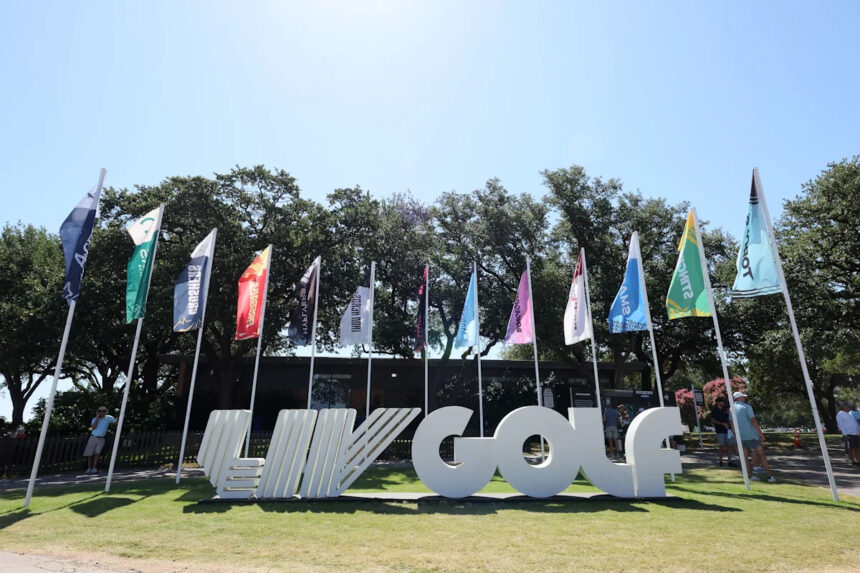
In a seismic shift that could redefine the landscape of professional golf, LIV Golf is poised to officially inform its staff and players that the Saudi Arabian Public Investment Fund (PIF) will terminate its financial backing at the conclusion of the 2026 season. According to exclusive reporting from the Wall Street Journal, the formal announcement is scheduled for Thursday, effectively ending the sovereign wealth fund’s unprecedented experiment in disrupting the PGA Tour.
The news, while anticipated by insiders for weeks, marks a dramatic pivot for the renegade league that launched in 2022 with the explicit goal of competing with—and potentially surpassing—the established PGA Tour. Since its inception, LIV Golf has reportedly hemorrhaged more than $5 billion, failing to secure a sustainable television audience despite splashy signings and a controversial format.
This development clears the path for LIV Golf CEO Scott O’Neill to aggressively seek alternative funding sources. O’Neill, who took the helm in early 2025, has been publicly candid about the league’s precarious financial runway. In an interview that aired during the LIV Mexico tournament on April 17, O’Neill stated, “The reality is you’re funded through the season and then you work like crazy to create a business plan to keep us going.”
The $5 Billion Question: Why PIF is Pulling the Plug
The decision by the PIF to withdraw funding after 2026 is not a sudden impulse but the culmination of years of staggering losses and underwhelming returns on investment. LIV Golf, which lured stars like Phil Mickelson, Dustin Johnson, and Brooks Koepka with guaranteed contracts worth hundreds of millions, has failed to translate star power into mainstream relevance.
Key factors behind PIF’s exit include:
- Abysmal TV Ratings: LIV Golf initially aired on the CW Network, where viewership rarely cracked 200,000 for regular-season events. A subsequent broadcast deal with Fox Sports failed to reverse the trend, with ratings continuing to languish far below PGA Tour events, even those without major stars.
- Lack of U.S. Market Penetration: Despite heavy investment in production and player amenities, the league never gained a foothold in the American sports consciousness. The 54-hole, no-cut format, while innovative to some, failed to resonate with casual golf fans accustomed to traditional four-day tournaments.
- Unresolved Merger Talks: The framework agreement between the PIF, the PGA Tour, and the DP World Tour, announced in June 2023, remains stalled. The lack of a definitive merger or investment deal from the PGA Tour has left LIV Golf in a state of perpetual limbo, making continued funding difficult to justify to PIF leadership.
O’Neill’s public statements have reflected a dual reality: projecting confidence while acknowledging existential risk. “LIV Golf is in the best shape it’s ever been in its history, period, end of sentence,” he declared during the Mexico broadcast. Yet, in the same breath, he admitted, “But that’s not different from any other private equity-funded business in the history of mankind.” The contradiction was not lost on analysts, who saw it as a clear signal that the PIF’s patience had run out.
Scott O’Neill’s ‘Work Like Crazy’ Mandate: Can LIV Survive Without Saudi Money?
With the PIF exit now official, all eyes turn to Scott O’Neill’s ability to secure alternative investment. The CEO has positioned himself as a pragmatic dealmaker, but the task ahead is daunting. LIV Golf’s current business model—paying players exorbitant appearance fees, operating a global schedule, and subsidizing travel and hospitality for teams—is not designed for profitability without a massive capital injection.
Potential paths forward for LIV Golf include:
- Private Equity or Venture Capital: O’Neill could court U.S.-based sports investment firms. However, the league’s negative cash flow and uncertain future make this a difficult sell. Most PE firms demand a clear path to profitability within 5-7 years.
- Team-Based Ownership Model: LIV has already experimented with selling franchises to individual owners. Expanding this model—whereby team owners assume financial responsibility for player salaries and operations—could reduce the league’s central cost burden. However, finding buyers willing to invest in a league with no guaranteed future is a high-risk proposition.
- Merger or Acquisition by the PGA Tour: The stalled merger talks could be revived under new terms. The PGA Tour has expressed interest in integrating some aspects of LIV’s team concept, but only under its own control. A scenario where LIV Golf is absorbed into the PGA Tour ecosystem, with PIF taking a minority stake in a new commercial entity, remains the most likely long-term outcome.
- Downsizing and Niche Survival: LIV could shrink its schedule, cut player salaries, and reposition itself as a niche, high-end exhibition tour. This would require massive restructuring and likely alienate its biggest stars, who signed contracts based on the promise of a full global league.
O’Neill’s comment that he will “work like crazy” to keep LIV going suggests a recognition that the next 18 months are critical. The 2025 and 2026 seasons will essentially be a transition period, during which the league must prove it can operate without PIF’s blank check.
What This Means for Players, the PGA Tour, and the Future of Golf
The announcement that Saudi funding ends after 2026 sends shockwaves through every level of professional golf. For LIV players, the immediate future is uncertain. Many signed long-term contracts that are guaranteed by the PIF, but those guarantees may be tested if the league folds or is restructured.
For the PGA Tour, this development removes the primary existential threat that has dominated headlines for three years. Without PIF’s unlimited budget, LIV Golf loses its ability to poach top talent. The Tour can now focus on finalizing its own investment deal with Strategic Sports Group (SSG) and potentially re-engaging with the PIF on more favorable terms. Commissioner Jay Monahan may now have the leverage to dictate terms rather than negotiate from a position of vulnerability.
For the sport of golf as a whole, the end of the LIV-PIF era could lead to consolidation. The fractured landscape—where top players compete in separate leagues and major championships are the only unifying events—may finally heal. However, the wounds are deep. Trust between players, tours, and fans has been eroded, and rebuilding will take years.
Expert analysis suggests that the most likely scenario is a phased dissolution of LIV Golf after 2026. “The PIF has essentially been funding a loss leader to gain influence in global sports,” says sports finance analyst Dr. Rebecca Hartman. “Once they achieved that goal—forcing the PGA Tour to the table—the rationale for continuing to burn $1 billion a year on a golf league disappears. O’Neill’s job now is to find a graceful exit or a buyer, but the odds are stacked against him.”
Strong Conclusion: The Final Round for LIV Golf
Thursday’s official announcement will not be the final word, but it is the beginning of the end for LIV Golf as we know it. The league that promised to “grow the game” and disrupt the status quo is now fighting for its own survival. Scott O’Neill’s mandate to find new funding is a Herculean task, made nearly impossible by the league’s massive debt and lack of organic revenue.
For the players who bet their careers on LIV, the next two years will be a period of uncertainty. For the PGA Tour, it is a chance to reclaim its dominance. And for the fans, the spectacle of a $5 billion experiment collapsing may be the most dramatic story of all.
One thing is certain: the era of unlimited Saudi investment in golf is ending. Whether LIV Golf can reinvent itself without that lifeline—or whether it will simply fade into history as the most expensive failed startup in sports—remains the defining question of the decade. As O’Neill himself admitted, “You work like crazy.” In the end, that may not be enough.
Source: Based on news from Yahoo Sports.