American Supremacy Continues: USA Edges Canada in WBC Thriller, Extends Winter of Canadian Discontent
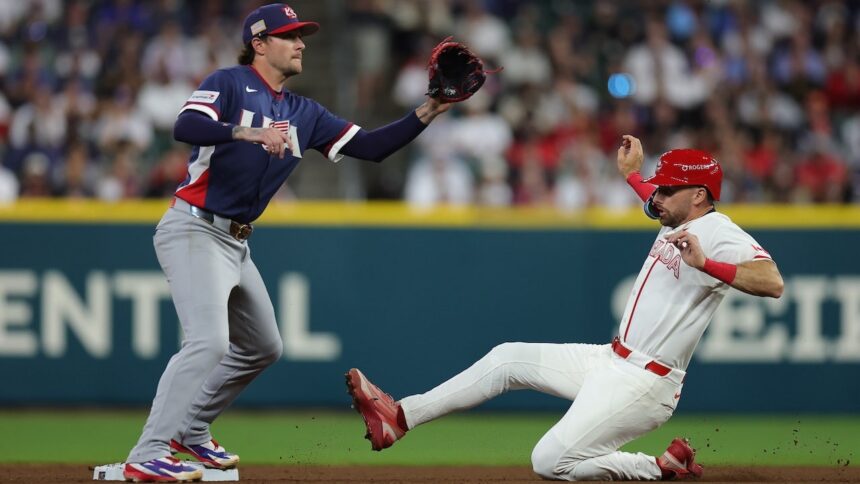
HOUSTON — The crack of the bat, the roar of the crowd, the tension of a ninth-inning showdown—it’s a scene that has become hauntingly familiar to Canadian sports fans in 2026. For the third time in a span of weeks, a dream of international glory was extinguished by their southern neighbors. This time, it was on the diamond. With a searing 102-mph fastball from flame-throwing closer Mason Miller, Team USA struck out Canada’s Otto Lopez with the tying run on base, securing a nail-biting 5-3 victory in the World Baseball Classic quarterfinals and sending a clear message: the era of American athletic dominance over Canada is in full, unforgiving swing.
The victory at Daikin Park propels the United States into the WBC Semifinals, keeping their quest for a second consecutive Classic title alive. But the story transcends a single baseball game. It is the latest chapter in a stunning, month-long narrative of American triumphs in the most consequential moments, a psychological and competitive sweep that has shifted the tectonic plates of the North American sports rivalry.
A Winter of American Triumph, A Spring of Canadian Agony
To understand the weight of this WBC loss for Canada, one must rewind to the frozen ponds of the Winter Olympics. There, in two of the most dramatic hockey games in recent memory, Team USA authored a devastating double feature.
- In the men’s gold medal game, a last-minute goal and an overtime winner shattered a generation of Canadian expectation, handing the USA its first men’s hockey gold in over two decades.
- In the women’s gold medal game, a legendary rivalry saw the American women reclaim supremacy with a gritty, come-from-behind victory, denying Canada a repeat Olympic title.
These were not just losses; they were cultural events that resonated deeply in two hockey-obsessed nations. The WBC quarterfinal, therefore, was never just a baseball game. It was Canada’s chance for redemption, for stopping the bleeding, and for proving their athletic prowess extends beyond the rink. Instead, it became a painful extension of the same story, this time under the Texas sun.
The image of Canada’s Denzel Clarke, helmet off, staring blankly into the distance after a crucial strikeout in the fifth inning, captured the collective frustration. It was a look seen on the faces of Canadian hockey stars just weeks prior.
Miller Time: The New Ace of American Clutch
While the narrative is built on team success, individual brilliance defines it. Enter Mason Miller. The Oakland Athletics’ closer, whose ascent has been as meteoric as his fastball, was summoned in the eighth inning with the game on a knife’s edge. His assignment: navigate the heart of Canada’s order and protect a precarious two-run lead.
What followed was a masterclass in high-leverage pitching. Miller’s fastball, which sat at a terrifying 101-103 mph, seemed to defy physics. His slider was a devastating complement, leaving even seasoned professional hitters flailing. He recorded four critical outs, culminating in the final showdown with Lopez.
“This is why you play,” Miller said post-game, still buzzing with adrenaline. “Olympics, WBC, it doesn’t matter. When you put ‘USA’ across your chest, these games mean more. We knew what happened in hockey, and we knew they were coming for us. We had to answer.” Miller’s performance wasn’t just a save; it was a statement that the USA’s bullpen possesses a weapon of mass disruption, a pitcher built for the brightest lights and the most pressurized moments.
Key Moments That Sealed Canada’s Fate
- Early Answer: After Canada took a first-inning lead, the USA responded immediately in the bottom half, showcasing the lineup’s relentless depth.
- Bullpen Bridge: Middle relievers from the US staff worked crucial scoreless innings, a often-unsung key to the win, setting the stage for Miller.
- Clutch Hitting: Timely two-out hits from the bottom of the American order proved the difference, a testament to the roster’s construction.
- The Final Blow: Miller’s strikeout of Lopez was a fitting climax—pure power versus desperate contact, with American sports dominance hanging on every pitch.
Analysis: What This Means for the USA and the WBC Moving Forward
This victory does more than advance the United States in the tournament; it solidifies the program’s identity. Once considered reluctant participants, the current generation of American stars now treats the World Baseball Classic with the reverence it deserves. The win over Canada demonstrated a blend of superstar power and strategic grit, a team that can win in multiple ways.
For Canada, the loss is a bitter pill but also a sign of progress. To push a USA roster, considered by many the tournament favorite, to the absolute limit in a knockout game speaks volumes about the growth of baseball north of the border. Their team, laden with MLB talent, is no longer an underdog but a legitimate contender. Yet, the “close but no cigar” narrative is now compounded, creating a mental hurdle that future Canadian national teams, across all sports, will have to clear.
The rivalry itself has been elevated. No longer confined to ice hockey, the USA-Canada sporting clash is now a multi-sport, year-round phenomenon with genuine stakes. This WBC game had the intensity of a playoff atmosphere, fueled by the recent history between the nations. Fans and players alike are now fully invested in this burgeoning cross-border feud.
Predictions: Semifinal Outlook and the Legacy of 2026
As Team USA marches to the semifinals, they do so with immense momentum and a tested resolve. Surviving a high-pressure game against a motivated rival like Canada is the perfect preparation for the final stages of the WBC. The target on their backs is larger than ever, but the experience gained in this quarterfinal is invaluable.
Look for the USA to rely heavily on its bullpen strength, a clear advantage, and for its deep lineup to continue applying constant pressure. The confidence gained from winning a “must-win” game against a familiar foe cannot be overstated.
Beyond the tournament, the legacy of this American victory—and the trifecta of wins over Canada—will be profound. It has:
- Reinforced the United States’ position as a dominant force in international team sports.
- Created a new layer of psychological pressure in the USA-Canada rivalry.
- Proven the World Baseball Classic’s ability to generate passion equal to any traditional sport rivalry.
Conclusion: A Defining Period in North American Sports
The final out in Houston was more than a baseball play. It was the punctuation mark on a stunning, unprecedented period of American athletic dominance over Canada. From the Olympic ice in winter to the spring clay of the baseball diamond, Team USA has delivered a masterclass in clutch performance, winning when it matters most and in the sports that matter most to their rivals.
For Canada, this winter and spring of 2026 will be remembered as a season of agonizingly narrow defeats. For the United States, it is a testament to a winning culture that has permeated across different sports and different rosters. The message is clear: in the biggest moments, on the world’s biggest stages, the American team is finding a way. As the World Baseball Classic continues and new rivalries await, one truth has been firmly established—the road to international sports glory for Canada, in any season, now runs directly through the United States.
Source: Based on news from Fox Sports.