‘Not the Week I Wanted’: Could a Poor Players Championship Derail Rory McIlroy’s Masters Plans?
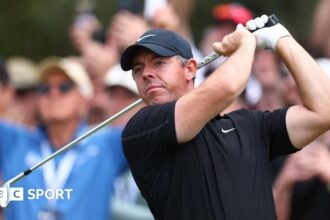
The walk from the 18th green at TPC Sawgrass is usually reserved for champions, a victory march through the roaring amphitheater. For Rory McIlroy last Sunday, it was a quiet, contemplative trudge. A title defence at The Players Championship that began with such promise had dissolved into a weekend of frustration, culminating in a tie for 19th. In its wake, the four-time major champion dropped a bombshell that sent ripples through the golf world: his meticulously laid plan for the Masters might now be up for debate.
The Sawgrass Setback: A Plan Unraveled
Rory McIlroy arrived at Ponte Vedra Beach as the defending champion and a man with a clear, publicized roadmap to Augusta National. His schedule was set: a focused run through the Florida Swing, culminating at The Players, followed by a three-week hiatus before the year’s first major. The logic was sound—peak at the right time, arrive in Georgia rested, sharp, and mentally fresh. The execution, however, faltered.
After opening with a solid 69, McIlroy’s game showed alarming cracks. A second-round 73 was salvaged by a late birdie to make the cut on the number. The weekend never provided the spark he sought. Wayward drives, uncharacteristic misses with the wedge, and a putter that cooled at the worst moments defined his play. His post-round admission was starkly honest: “Not the week I wanted,” McIlroy stated. But the more telling comment followed: “I’ll go home and contemplate the next few weeks and what I need to do.” With those words, the golf world’s attention shifted from the trophy ceremony to McIlroy’s impending decision.
To Play or Not to Play: The Schedule Dilemma
McIlroy’s original plan to skip the Valero Texas Open, the final event before the Masters, was a classic pre-Masters strategy employed by many top players seeking to avoid competitive burnout. Now, that strategy is in question. The core of the dilemma is twofold: competitive reps versus mental reset.
Arguments for Adding a Tournament:
- Search for Rhythm: Competitive golf is the only true simulator for major championship pressure. An extra start could help McIlroy find the driving accuracy and scoring touch that abandoned him at Sawgrass.
- Band-Aid Removal: Playing through the frustration allows him to “play his way” into form, potentially fixing technical flaws under fire rather than on the practice range.
- Distraction from History: The constant narrative surrounding his quest for the career Grand Slam at Augusta only intensifies during a quiet week. Tournament play forces a focus on process, not legacy.
Arguments for Sticking to the Plan:
- Trust the Process: McIlroy and his team crafted the original schedule based on deep data and historical performance. One poor week, even at a big event, may not warrant a panic change.
- Physical and Mental Freshness: Augusta National is a marathon. Arriving drained from a last-minute grind in Texas could be more detrimental than arriving slightly undercooked.
- Quality Practice: Targeted work at his home base, with coach Michael Bannon, on specific Augusta-centric shots (right-to-left ball flight, delicate chips) could be more valuable than 72 holes on a non-Augusta-like layout.
The Psychological Weight of the Grand Slam Quest
This is no ordinary schedule tweak. Every decision Rory McIlroy makes between now and April 11th is filtered through the immense pressure of completing the career Grand Slam. The Masters is the only major eluding him, a gap in his resume that has grown from a quest to an obsession in the public eye. His recent performances at Augusta—including top-10 finishes in five of the last six years—prove he can play the course. But the Sunday charges have fallen short, often preceded by a single catastrophic hole.
The Players Championship disappointment isn’t just about rankings or prize money; it’s a blow to the momentum and confidence he desperately wants to carry into Georgia. Golf is a game of feel, and McIlroy is a player who thrives on swagger. The question he must answer is: where is that swagger most likely to be rebuilt? In the heat of San Antonio, or in the solitude of the practice ground, away from the spotlight?
Expert Analysis: What History and Form Tell Us
Examining McIlroy’s history offers clues. In 2022, after a missed cut at The Players, he finished 2nd at the Masters. In 2019, a disappointing Players result (T56) was followed by a T21 at Augusta. The correlation is inconsistent. More telling is his pattern of winning majors after showing form earlier in the season. His last major victory, the 2014 PGA Championship, was preceded by a win at The Open. The current season, while strong with a win in Dubai and consistent play, lacks a statement performance on U.S. soil.
Golf psychologists often note that elite athletes perform best when they feel in control. A reactive, fear-based schedule change could subtly signal a loss of control. Conversely, a proactive, confident adjustment could demonstrate adaptability. The intent behind the decision is as important as the decision itself.
Key factors McIlroy is likely weighing:
- The specific nature of his “miss” at Sawgrass—was it a correctable technical glitch or a deeper focus issue?
- His physical energy levels after a demanding stretch of golf.
- The advice of his inner circle, including caddie Harry Diamond and manager Sean O’Flaherty.
Prediction: The Road Rory Will Take
Based on McIlroy’s history as a player who values rhythm and his recent comments about managing energy, the smart money is on a modified preparation plan, but not necessarily a tournament start. We predict Rory McIlroy will stick to his original schedule and skip the Valero Texas Open. However, his “three weeks off” will look dramatically different than initially planned.
Expect an intense, Augusta-specific boot camp. He will likely make a quiet scouting trip to Augusta National to rehearse shots and rebuild positive vibes. His practice will be hyper-focused, simulating the exact pressures he felt at Sawgrass. He may even arrange high-stakes matches with other top players to mimic tournament intensity. This hybrid approach addresses the need for competitive simulation while preserving the strategic rest and targeted work his original plan afforded.
Conclusion: A Crossroads of Confidence
Rory McIlroy’s admission after The Players was more than a comment on a bad week; it was a window into the mind of a champion at a career crossroads. The Masters plans are not just about logistics, but about psychology. Will he react to adversity, or will he reaffirm his belief in a carefully constructed process? While the golf world speculates on a last-minute entry into Texas, the true work will happen away from the cameras.
The path to the green jacket and the completion of his Grand Slam was never going to be a straight line. This latest detour at TPC Sawgrass is merely another test. Rory McIlroy’s response—whether measured in a schedule change or in the ferocity of his private preparation—will reveal much about his readiness to finally conquer Augusta. One thing is certain: all eyes will be on the first tee at Augusta National, waiting to see which version of Rory McIlroy arrives—the one shaken by Sawgrass, or the one steeled by it.
Source: Based on news from Sky Sports.
Image: CC licensed via www.rawpixel.com