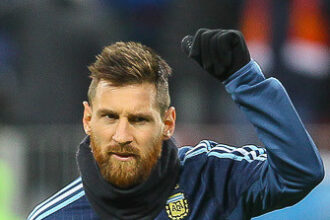
Geopolitical Tensions Force Finalissima Cancellation, Not Messi’s Influence
The beautiful game, so often a unifying global spectacle, has once again found itself at the mercy of the world’s harsh geopolitical realities. The highly anticipated “Finalissima” clash between European champions Spain and South American kings Argentina, scheduled for March 27 in Qatar, has been officially canceled. While initial whispers in the digital echo chamber speculated about player influence, the truth is far more sobering: the decision was driven by escalating conflict in the Middle East, with Lionel Messi having no role in the call. This cancellation is a stark reminder that even the grandest sporting events cannot outrun the shadows of international instability.
- The Official Verdict: Security Over Spectacle
- Dispelling the Messi Myth: A Champion’s Mentality
- The Lost Narrative: Yamal vs. Messi and Tactical What-Ifs
- Analysis: The Fragile Intersection of Sport and Global Politics
- Predictions: What’s Next for the Finalissima and the World Cup Contenders?
- Conclusion: A Sobering Reminder of Football’s Place in the World
The Official Verdict: Security Over Spectacle
UEFA’s announcement on Sunday was concise and unequivocal. The governing body, alongside CONMEBOL and local organizers, concluded that the continued conflicts in the Middle East rendered Qatar an unsuitable host for the marquee match at this time. This decision came directly on the heels of recent U.S.-Israeli strikes on Iran and the subsequent regional unrest, creating a security landscape too volatile for an event of this magnitude. Organizers prioritized the safety of players, staff, and traveling fans above all else, a principle that, while disappointing, is ultimately non-negotiable.
Attempts were made to salvage the event. Sources confirm that a concerted effort was undertaken to find an alternative host nation or a later date. However, the logistical complexities of aligning the calendars of two champion national teams, securing a suitable venue at short notice, and ensuring commercial viability proved insurmountable. The window for a pre-World Cup showcase simply closed, leaving fans and federations alike empty-handed.
Dispelling the Messi Myth: A Champion’s Mentality
In the vacuum of the official announcement, a baseless narrative briefly gained traction: that Lionel Messi, the iconic Argentinian captain now playing for Inter Miami, had influenced the cancellation. This speculation has been firmly and authoritatively debunked. ESPN reported, citing sources close to the player, that Messi not only had no role in the cancellation, but he was actually looking forward to the match. For the 38-year-old maestro, the Finalissima represented two key opportunities:
- Another Major Title: Adding the Finalissima trophy to Argentina’s cabinet, following their 2022 victory over Italy, was a clear objective.
- Critical World Cup Preparation: Facing the tactical rigor and high pressure of a Spain side in full flight was viewed as the perfect, final competitive test before Argentina’s World Cup defense.
This clarification underscores Messi’s enduring competitive fire. The notion that he would avoid a clash with a rising force like Spain, and specifically a generational talent like Lamine Yamal, contradicts the very mentality that has defined his legendary career.
The Lost Narrative: Yamal vs. Messi and Tactical What-Ifs
Beyond the trophy, the cancellation robs the football world of a poignant and symbolic passing-of-the-torch moment. The match was poised to be the first-ever on-pitch meeting between two players bookending football’s current era: 18-year-old Spanish sensation Lamine Yamal and the 38-year-old Lionel Messi. Yamal, a left-footed wizard cutting in from the right wing for Barcelona, is the most direct heir to Messi’s stylistic throne. The imagery alone—Messi, the established king, facing the prodigious prince in his ancestral club colors—would have been historic.
From a tactical standpoint, the loss is equally significant. For Spain coach Luis de la Fuente, it was a chance to measure his evolving, youth-infused side against the world’s best. For Argentina’s Lionel Scaloni, it was a final diagnostic against elite European opposition to fine-tune his World Cup plans. This was not a friendly; it was a competitive, trophy-on-the-line benchmark that both teams desperately needed. Its absence leaves a gap in their preparation timelines that no ordinary friendly can fill.
Analysis: The Fragile Intersection of Sport and Global Politics
This incident is not an isolated one. It highlights the increasing vulnerability of international football’s calendar to geopolitical shocks. The modern game is a global enterprise, with matches scheduled years in advance across continents. When instability flares, as it has in the Middle East, the ripple effects are immediate. Host nations become untenable, insurance costs skyrocket, and federations face impossible choices.
The 2022 Finalissima in London was a resounding success, a model of how these inter-confederation clashes can capture the global imagination. Its intended sequel in Qatar was meant to build on that legacy. Instead, it becomes a case study in disruption. The message to UEFA, CONMEBOL, and other organizing bodies is clear: geopolitical risk assessment must now be as crucial as venue inspections and broadcast deals when planning these showcase events. The era of assuming stable conditions in any given region is over.
Predictions: What’s Next for the Finalissima and the World Cup Contenders?
Looking ahead, the future of the Finalissima concept itself is now under a cloud. The commercial and sporting incentive remains strong, but finding a “safe” window and host in an unpredictable world is a formidable challenge. We may see a shift towards embedding it within existing FIFA international windows in pre-determined, politically stable venues, even if it sacrifices some of the event’s rotational glamour.
For the teams, the focus now violently pivots to the World Cup.
- Argentina: Scaloni must now engineer a high-intensity preparation match elsewhere. The loss of a Spain-level test is a blow, forcing him to simulate that pressure in training or seek another top-tier opponent, which is logistically difficult at this late stage.
- Spain: De la Fuente’s young squad, brimming with talents like Yamal, Pedri, and Gavi, misses a monumental opportunity to gain confidence by facing the world champions. Their path to World Cup maturity just became steeper.
Ultimately, the canceled clash may add a subtle layer of intrigue to a potential Argentina-Spain meeting deep in the World Cup knockout stages. The unfinished business, the lost duel between Messi and Yamal, and the missing tactical preview would all fuel the narrative of that hypothetical match to fever-pitch levels.
Conclusion: A Sobering Reminder of Football’s Place in the World
The cancellation of the 2025 Finalissima is a profound disappointment, but for reasons far more consequential than missed entertainment. It is a sobering lesson in priority. Football, for all its wealth and global influence, remains a guest in a world shaped by larger, often tragic, forces. While the false narrative around Messi’s involvement has been corrected, the central truth remains: not even Lionel Messi, the sport’s greatest star, can control the tides of international conflict. The beautiful game will go on, and both Spain and Argentina will enter the World Cup as favorites. But their journeys there have been altered by a reminder that sometimes, the most formidable opponent is not on the pitch, but in the unstable world beyond its touchlines.
Source: Based on news from Deadspin.
Image: CC licensed via commons.wikimedia.org