James Vowles’ Williams Gamble: How an April F1 Hiatus Could Spark a Season-Saving Turnaround
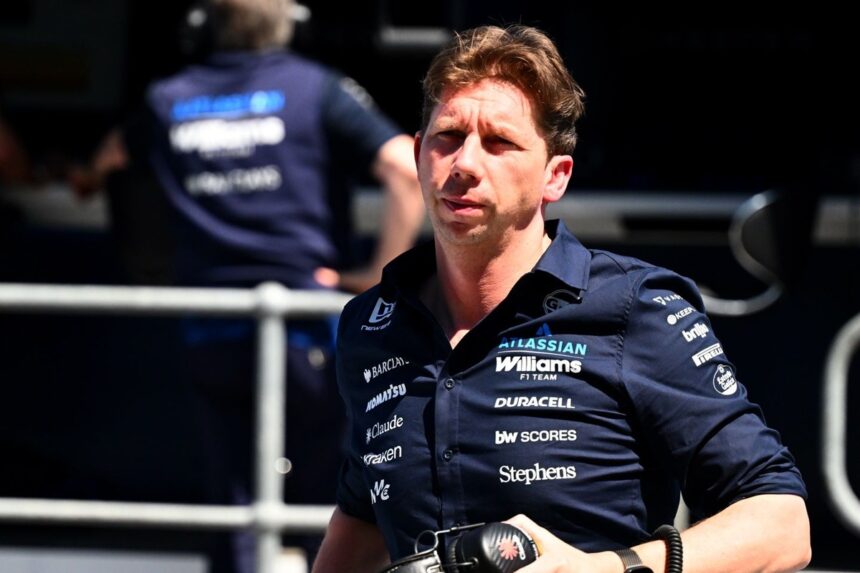
The relentless, globe-trotting circus of Formula 1 rarely hits the pause button. For a team in crisis, the calendar is a merciless foe, offering little reprieve to diagnose terminal issues. For Williams Racing, a squad mired in a profoundly difficult start to the 2026 season, an unexpected lifeline has emerged not from a wind tunnel breakthrough, but from geopolitical realities. Team Principal James Vowles, the architect of Williams’ long-term revival, has made a startling admission: his car is overweight, underperforming, and desperately needs a break.
The Vowles Verdict: A Candid Admission of Early-Season Struggles
During his regular debrief, The Vowles Verdict, the typically analytical team principal stripped away the usual veneer of paddock optimism. The message was stark. “Clearly, we haven’t started the season where we wanted to,” Vowles stated, addressing the team’s points deficit and lack of competitiveness. The core issue? A fundamental overweight Williams chassis that is sapping performance at every corner. In the hyper-competitive world of modern F1, where gains are measured in thousandths of a second, carrying excess weight is a cardinal sin. It compromises acceleration, braking, and cornering—the holy trinity of lap time.
Vowles revealed that the team’s focus has been trapped in a vicious cycle of attrition and repair from early incidents, preventing any forward development. “Without attrition,” Vowles explained, “we can count on the fact that production can be moved towards future performance.” This is the crux of Williams’ current paralysis: they have been building parts to survive, not to compete. The scheduled April races in Bahrain and Saudi Arabia were cancelled, creating an unplanned, extended gap in the calendar. For Vowles, this isn’t a holiday; it’s a critical operational window.
The April Break: A “Golden Hour” for Williams’ Recovery
F1’s unexpected April hiatus has transformed from a scheduling oddity into what Vowles frames as a season-critical intervention. His words left no room for ambiguity: “Every single hour of that break we need in order to get ourselves back on the front foot by the time we come back to Miami.” This period is now a dedicated “stress test” and recovery mission for the Grove-based outfit. The objectives are clear and monumental:
- Weight-Shedding Surgery: Engineers will embark on an aggressive program to lighten the FW48 chassis. This involves scrutinizing every component, from suspension elements to bodywork, for potential weight savings, likely through redesigned, lighter parts.
- Production Pivot: The factory floor will shift from a reactive stance—producing replacement parts for crashes—to a proactive one. The focus will be manufacturing new, performance-oriented upgrades that were stuck on the drawing board.
- Strategic Recalibration: Vowles indicated this time is for “taking stock of what we actually really can change.” This suggests a deep dive into strategy, operations, and perhaps even driver feedback loops to optimize every off-track element.
This concentrated burst of work at the factory, free from the logistical drain of a race weekend, is a rare gift of time. For a team with Williams’ historical resource constraints compared to giants like Red Bull and Ferrari, efficient use of time is as valuable as financial capital.
Expert Analysis: The Weight of Expectation at Grove
Vowles’ candidness is a double-edged sword. It fosters transparency and manages expectations, but it also publicly underscores the scale of the challenge. The overweight car issue is particularly damning in a sport governed by a strict cost cap. It represents a fundamental miscalculation in design or material specification, an error that top teams rarely make. Recovering from it requires spending precious budget cap allowance on fixing a problem, rather than on gaining an advantage.
However, this crisis also tests the very culture Vowles was hired to instill. His background from the championship-winning Mercedes operation is rooted in relentless preparation and operational excellence. This April break is the first real-world, high-pressure test of whether he has successfully embedded that “no-stone-unturned” mentality into the Williams fabric. Can the team execute a complex, multi-faceted upgrade package under immense time pressure? The answer will define their 2026 season.
Furthermore, the driver dynamic between the experienced Alex Albon and the promising, but currently overshadowed, Logan Sargeant will be under a microscope in Miami. A significantly improved car is the best catalyst for unlocking performance from both sides of the garage and stabilizing the team’s points-scoring potential.
Predictions: Can Williams Salvage 2026 After the Reset?
The Miami Grand Prix, the first race after the break, will be a revealing moment. Expectations must be tempered; Williams will not leap from the back to the podium. The success of the April “crash program” will be measured in incremental but crucial steps:
- Immediate Goal (Miami & Imola): A clear reduction in the lap time deficit to the midfield. The car should look more planted, and more importantly, both drivers need to have a clean, competitive weekend to gather data.
- Mid-Season Ambition (European Summer): Consistent Q2 appearances and points-scoring finishes when opportunities arise—capitalizing on races with high attrition or inclement weather.
- Season-Long Benchmark: Overtaking at least one direct competitor in the Constructors’ Championship, proving the development trajectory is positive and steeper than rivals’.
The ultimate prediction hinges on execution. If Williams utilizes this break effectively, they can transform from a backmarker into a feisty midfield irritant by season’s end. If they fail to unlock significant performance, it will raise serious questions about the team’s technical direction and its ability to climb the mountain back to relevance under the current regulations.
Conclusion: A Defining Moment for the Vowles Project
James Vowles’ admission of an overweight Williams needing the April break is more than a tactical assessment; it is a strategic manifesto. It acknowledges failure not as a final verdict, but as a diagnostic starting point. The cancelled races have inadvertently provided Williams with a fighting chance to stop the bleeding and reset their campaign.
The coming weeks at Grove will be among the most important in the team’s recent history. The silence in the factory will be filled with the intensity of a race weekend, channeled into engineering solutions. When the freight lands in Miami, the world will see if Williams has used its “golden hours” wisely. For Vowles and his team, the 2026 season starts now. The first four races were a painful prologue; the true test of their character and capability begins with the green light in Florida. The break is their chance to ensure that light isn’t at the end of a tunnel, but the start of a new lap.
Source: Based on news from Yahoo Sports.