March Madness History: The Origins, Records, and Unforgettable Madness
Every spring, a singular phenomenon grips the American sports landscape. Offices grind to a halt, productivity plummets, and a nation becomes collectively obsessed with a 68-team bracket. While the live coverage of buzzer-beaters and Cinderella stories dominates the airwaves, the true magic of the NCAA Men’s Basketball Tournament is woven into its rich, chaotic history. The event we call March Madness is more than a three-week sprint; it’s an 85-year tapestry of innovation, dominance, and heart-stopping moments that forged a cultural institution. Let’s step off the bracketology rollercoaster and delve into the origins, records, and legendary teams that define this madness.
From Humble Beginnings: The Seed of an Idea
The spectacle we know today bears little resemblance to its modest origins. The tournament was born in 1939, not in a massive domed stadium, but on the campus of Northwestern University in Evanston, Illinois. Conceived by the National Association of Basketball Coaches, the inaugural event featured just eight teams competing for a national championship. The field was so small that the Oregon Webfoots (now the Ducks) played only two games, defeating Ohio State 46-33 in the final. The trophy was presented by Dr. James Naismith himself, the inventor of the game. This small-scale experiment, however, planted the seed for what would become the most unpredictable and captivating event in sports.
The journey to the iconic name “March Madness” is a story of accidental branding. The phrase was first coined not for the college game, but for the Illinois high school basketball tournaments by an official named Henry V. Porter in 1939. It perfectly captured the frenzied excitement of a state consumed by basketball. The term lay dormant at the national level for decades until CBS broadcaster Brent Musburger, familiar with the Illinois tournaments, used it during the 1982 NCAA coverage. As Musburger later noted, its adoption was “accidental. Obviously, it stuck.” And stick it did, becoming the official trademark of a billion-dollar event.
By The Numbers: Records and Dominance in the Madness
The history of the tournament is written in its staggering statistics and records, a testament to the players and programs that rose to the occasion under immense pressure.
- Most Championships: UCLA stands alone with 11 national titles, a dynasty primarily built under Coach John Wooden, who won 10 in a 12-year span (1964-1975).
- Upset Central: The biggest point-spread upset belongs to UMBC’s 2018 victory over No. 1 Virginia by 20 points (74-54). A 16-seed had never beaten a 1-seed until that historic night.
- Individual Brilliance: Christian Laettner (Duke) holds the record for most total points scored in tournament history (407). His 1992 Elite Eight game-winner against Kentucky remains the sport’s most replayed moment.
- Team Supremacy: The 1996 Kentucky Wildcats are considered by many analysts as the greatest single tournament team, dominating their six opponents by an average of 21.5 points.
- State of Champions: California leads all states with 16 national championships won by its schools (UCLA, Stanford, Cal, USF), followed by North Carolina with 13 (UNC, Duke, NC State).
Icons of the Tournament: The Greatest Teams to Ever Dance
While championships are the ultimate metric, true greatness in March is measured by dominance and legacy. A few teams have transcended their era to become the gold standard.
The UCLA Dynasty (1967-1973): Anchored by legends like Lew Alcindor (Kareem Abdul-Jabbar) and Bill Walton, this stretch of Wooden’s run represents pure invincibility. They won seven consecutive national titles, a record that may never be challenged. Their system of fundamentals and teamwork became the blueprint for success.
The 1992 Duke Blue Devils: This team is the personification of March drama. Featuring Christian Laettner, Grant Hill, and Bobby Hurley, they survived an epic overtime battle against Kentucky in the Elite Eight—a game often called the greatest ever played—before claiming back-to-back titles. They combined talent with an unshakable clutch gene.
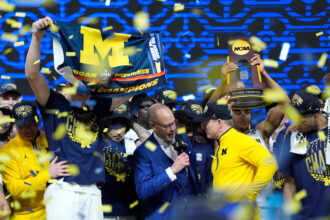
The 2018 Villanova Wildcats: A modern masterpiece of offensive efficiency. Coach Jay Wright’s squad bulldozed through the tournament, setting a record for total points scored (529 in 6 games) and winning each game by an average of 17.7 points. Their victory over Michigan in the final was a clinical display of team basketball.
What History Tells Us About the Future
Analyzing eight decades of March Madness history provides clues, but never guarantees, for what comes next. The trend toward player mobility (transfers) and the rise of the “super team” through NIL collectives suggests we may see fewer Cinderella stories reaching the Final Four, but the first-weekend upsets will remain a constant. The parity in college basketball is at an all-time high, meaning the gap between a 5-seed and a 12-seed is thinner than ever. History also teaches us to never count out the blue bloods—programs like North Carolina, Kansas, and Kentucky have the institutional memory and resources to win in any era. The future of the Madness will be a fascinating blend of its chaotic tradition and the evolving modern athlete.
The Eternal Dance: Why the Madness Endures
The history of March Madness is not merely a chronicle of champions and stats. It is the story of Lorenzo Charles’ dunk at the buzzer for NC State in 1983. It is the image of Villanova’s perfect game against Georgetown in 1985. It is the shock of UMBC making history in 2018. The tournament’s power lies in its single-elimination format, a brutal and beautiful mechanism that guarantees nothing and promises everything. It connects generations—the eight-team field of 1939 to the 68-team spectacle of today—through a shared experience of anticipation, heartbreak, and jubilation. As long as there is a bracket to fill, a underdog to cheer, and a net left to cut, the madness born in an Illinois high school gym will continue to captivate the world every March.
Source: Based on news from Deadspin.
Image: CC licensed via www.rawpixel.com