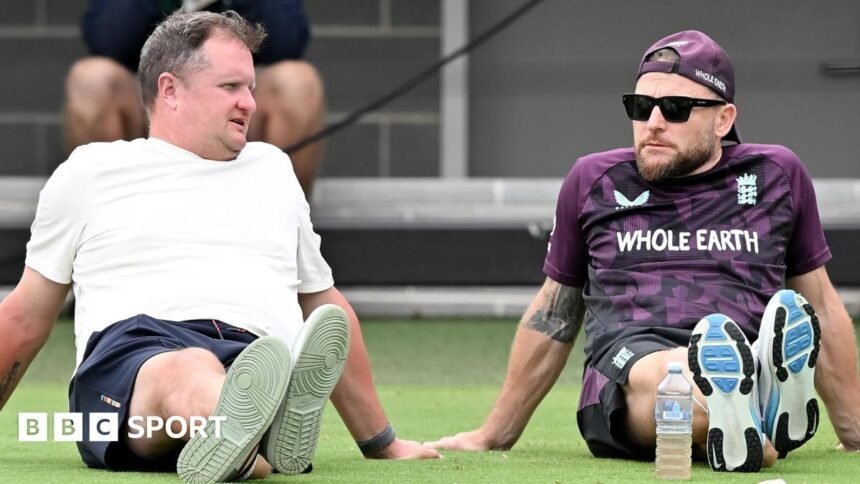
Vaughan’s Verdict: Why Key and McCullum Were “Very Lucky” to Survive Ashes Fallout
The dust has settled on England’s bruising 4-1 Ashes defeat in Australia, the post-mortem has been conducted, and the verdict from the England and Wales Cricket Board (ECB) is one of continuity. Ben Stokes, Brendon McCullum, and Rob Key will all remain in their roles, tasked with building from the rubble of a tour plagued by poor play and planning. But according to one of their most illustrious predecessors, that continuity represents a significant escape. Michael Vaughan, the 2005 Ashes-winning captain, has declared Key and McCullum “very lucky” to have kept their jobs, casting the ECB’s review as an act of leniency rather than logic. In the high-stakes world of international cricket, where leadership is often the first casualty of failure, why did the axe not fall?
The Case for the Prosecution: A Tour Plagued by Mismanagement
Vaughan’s assertion isn’t mere punditry for effect; it’s rooted in a catalogue of errors that defined England’s Australian campaign. This was more than a simple defeat by a superior team. It was a systemic failure in preparation and execution that critics argue started at the top.
The tour was characterized by a palpable lack of readiness. From the controversial, rain-affected preparation in Gold Coast to the baffling selection gambles—most notably the omission of a frontline spinner for the first Test at the Gabba—England seemed to be playing catch-up from the moment they landed. Off-field issues, including Jonny Bairstow’s controversial stumping at Lord’s (which spilled over into public acrimony) and questions over the squad’s focus, further painted a picture of a touring party not entirely in control.
For Vaughan, the responsibility for this environment lies with the leadership duo appointed in 2022: Managing Director Rob Key, who oversees the entire men’s cricket structure, and Head Coach Brendon McCullum, the architect of the ‘Bazball’ philosophy. Their approach, which had revitalized English Test cricket at home, was found brutally wanting in the most pressurised away arena.
- Inadequate Ashes planning and preparation left players undercooked.
- Questionable tactical rigidity saw the aggressive ‘Bazball’ approach become a straitjacket in unsuitable conditions.
- Off-field distractions suggested a lack of tight managerial control.
In any other era, or indeed in most other major sporting nations, such a comprehensive failure in the flagship series would have demanded sacrificial lambs. As Vaughan sees it, Key and McCullum were the obvious candidates.
The ECB’s Defence: Stability Over the “Easy Thing to Do”
So why did the ECB stay its hand? The public reasoning, articulated by Chief Executive Richard Gould, provides a fascinating insight into the board’s long-term thinking. Gould stated that removing Key and McCullum would have been the “easy thing to do,” implying that the harder, more valuable path was to maintain faith in a long-term project.
This defence hinges on two key pillars. First, the undeniable success of the Stokes-McCullum partnership prior to the Ashes. They had won 10 out of 12 series, transforming the mood, mentality, and entertainment value of the Test team. The ECB is effectively betting that the Ashes was a painful but correctable blip, not a fundamental indictment of their philosophy.
Second, there is a clear desire for structural stability under Rob Key. His tenure has seen the introduction of central contracts, a more defined schedule, and a concerted effort to align the white and red-ball setups. Dismantling this nascent structure after one failed tour, however significant, could be seen as reactionary and damaging to long-term progress.
The board is making a calculated gamble: that the lessons from Australia—chiefly, the need for smarter preparation and tactical flexibility—can be absorbed without a change in leadership. They are backing the characters of Key and McCullum to learn, adapt, and evolve. In essence, the ECB reviewed the tour and decided the problem was not the pilots, but the flight plan.
Vaughan vs. The Board: A Clash of Cricket Philosophies
The divergence between Vaughan’s view and the ECB’s action represents a deeper philosophical clash about accountability and modern sport. Vaughan’s perspective is rooted in a traditional, results-based paradigm, especially for the Ashes. In this view, the buck stops with the leaders, and a 4-1 defeat, delivered in the manner it was, is a fireable offence. It upholds a clear, brutal standard: fail in the biggest event, and you carry the can.
The ECB, conversely, is operating in a modern, project-oriented framework. It views the Ashes cycle as one chapter in a longer narrative. Their investment is in a cultural reset, a brand of cricket, and a leadership trio they believe can deliver sustained success. They fear that restarting the cycle with new faces could plunge the Test team back into the volatility and fear that defined the pre-‘Bazball’ era.
Vaughan would likely counter that such projects cannot be immune to the demands of elite performance. The very “luck” he identifies is the luxury of being judged on potential and past glories, rather than the most recent, glaring evidence. The danger for the ECB is that their decision could be perceived as a lowering of standards, setting a precedent where Ashes failure does not carry ultimate consequence.
The Road Ahead: Redemption or Reckoning?
The reprieve for Key and McCullum is conditional. It has bought them time, but it has also magnified the scrutiny on their every future move. The coming 18 months are no longer just about building; they are about vindication.
The immediate schedule offers a chance for redemption, with high-profile series against the West Indies, Sri Lanka, and a visit from a transitional Australia in 2025. However, the real examination will come on the next major overseas tour. The lessons from Australia must be visibly applied. This means:
- Meticulous, condition-specific tour planning that goes beyond blanket aggression.
- Developing tactical nuance within the aggressive mindset, knowing when to press and when to consolidate.
- Building a deeper, more resilient squad capable of winning in all environments, not just English clouds.
If England continue to play thrilling cricket but falter against the very best in their backyards, Vaughan’s words will ring louder. The ECB’s gamble will be seen as misplaced loyalty, and the pressure will become intolerable. Conversely, if this experience forges a smarter, more adaptable England that can conquer away shores, the board’s decision will be hailed as visionary stability.
Conclusion: A Stay of Execution, Not an Acquittal
Michael Vaughan has shone a stark light on the privileged position Rob Key and Brendon McCullum find themselves in. In labelling them “very lucky,” he has articulated the view of a significant portion of the cricket-watching public who believe accountability should be swift and clear. The ECB, in choosing the harder path, has tied its own reputation to the success of this leadership trio.
This is not an acquittal. It is a stay of execution. The review may be over, but the trial by performance is perpetual. Key and McCullum have been handed the rare gift of learning from a catastrophic defeat without losing their jobs. Their task now is to prove that this wasn’t luck, but a shrewd investment in the future. The Ashes defeat was their lowest point; their legacy will be defined by how convincingly they rise from it. The stakes for the next chapter of ‘Bazball’ could not be higher.
Source: Based on news from BBC Sport.