FIFA Faces Formal Complaint as World Cup Ticket Pricing Sparks Fan Fury
The beautiful game is facing an ugly confrontation. With the global showpiece of the 2026 FIFA World Cup on the horizon, a battle is brewing not on the pitch, but in the ticket office. The Football Supporters’ Association (FSA), a leading voice for fans in England and Wales, has launched a formal complaint against FIFA, accusing football’s world governing body of “abusing its monopoly position” through what it deems “excessive ticket prices” for the tournament. This move escalates a simmering dispute into a direct challenge, putting FIFA’s commercial strategy under intense scrutiny and raising fundamental questions about who the World Cup is truly for.
The Heart of the Complaint: Monopoly Power and Dynamic Pricing
At the core of the FSA’s grievance is a simple, powerful argument: FIFA, as the sole organizer of the World Cup, holds an uncontested monopoly. There is no alternative supplier for match tickets. This unique position, the FSA contends, comes with a responsibility to ensure accessibility. Instead, they argue, FIFA has leveraged this power to implement a pricing model that prioritizes profit over people.
The most contentious tool in this model is dynamic pricing. Similar to strategies used by airlines and concert promoters, this system allows ticket prices to fluctuate in real-time based on algorithmic assessments of demand. A ticket for a high-profile knockout match could skyrocket as soon as two footballing giants confirm their place. For fans, this creates a climate of anxiety and unfairness, where the cost of your seat is a moving target dictated by an opaque algorithm.
The FSA’s demands are clear:
- Abandon dynamic pricing for the upcoming April ticket sales phase and for all future releases.
- Freeze prices at their initial rates, providing transparency and certainty for supporters budgeting for an incredibly expensive trip.
- Substantially increase the allocation of genuinely affordable tickets across all matches, not just a symbolic few.
“Fans are not mere customers,” an FSA spokesperson stated. “They are the lifeblood of the sport. Treating access to the World Cup like a commodity on the futures market is a betrayal of the game’s community.”
A Late Concession: Are $60 Tickets Enough?
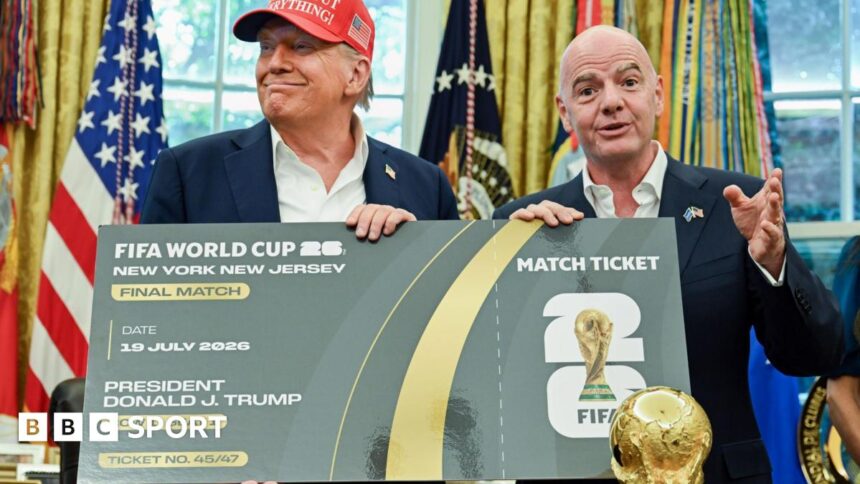
FIFA, feeling the heat from initial waves of criticism, did attempt a partial course correction. In December, it announced a limited number of “more affordable” tickets priced at $60 (approximately £45) for all 104 matches. On the surface, this appeared a welcome gesture. However, critics were quick to dissect the offer.
The devil, as always, is in the details. The number of these budget tickets per match is understood to be extremely small, likely a tiny fraction of the stadium capacity. Furthermore, their availability is often restricted to less desirable categories, such as “obstructed view” seats or matches featuring lower-profile teams in the group stage. For a family or a group of friends hoping to see a marquee fixture, these $60 tickets are virtually a lottery win.
“This wasn’t a meaningful restructuring; it was a PR tactic,” argues sports economist Dr. Liam Carter. “It allows FIFA to point to a headline-grabbing low number while the vast majority of tickets remain subject to premium and dynamic pricing. It’s a classic strategy: offer a minimal concession to deflect from the systemic issue. The arithmetic is simple—if 95% of your inventory is priced high, you haven’t solved the affordability crisis.”
This move has done little to placate the FSA and similar groups worldwide, who view it as a tokenistic effort that fails to address the structural inequity of the pricing model.
The Ripple Effect: Beyond the Ticket Stub
The complaint over ticket prices is not an isolated issue. It is a symptom of a larger trend in modern football that sees the game’s premier events increasingly cater to a corporate and wealthy global elite. Exorbitant ticket costs are just the first financial hurdle for the travelling fan.
Host cities across the United States, Mexico, and Canada have already seen accommodation prices triple or quadruple for the tournament dates. Flight costs are subject to similar inflationary pressures. When combined with soaring ticket prices, the total cost of attending even a single World Cup match becomes prohibitive for the average supporter.
This creates a tangible risk: stadium atmospheres diluted by a passive, tourist-heavy crowd, rather than energized by the passionate, vocal fans who create the iconic moments and spine-tingling ambiance the World Cup is famous for. The spectacle suffers when those who live and breathe the game are priced out of the stadium.
“What we’re witnessing is the gentrification of the live football experience at its highest level,” says Maria Fernandez, a journalist specializing in fan culture. “The complaint from the FSA is a stand for the principle that major tournaments should have a soul, not just a balance sheet. Empty seats in the ‘affordable’ sections during group games would be the ultimate indictment of FIFA’s strategy.”
Predictions and Potential Outcomes
What happens next? The FSA’s formal complaint raises the stakes, but the path forward is uncertain. As we look toward the April ticket release and the tournament itself, several scenarios are possible.
Scenario 1: FIFA Holds Firm. The most likely outcome is that FIFA makes minor, superficial adjustments but retains its dynamic pricing model for the April sale. They may increase the allocation of $60 tickets by a small percentage and improve communication around pricing tiers. The financial imperative—maximizing revenue from its single biggest asset—will likely trump fan pressure in the short term.
Scenario 2: Escalation and Unified Fan Action. The FSA’s complaint could galvanize supporter groups from other powerful football nations—like Germany’s *Unsere Kurve* or Italy’s *Progetto Ultrà*—to file similar grievances or coordinate action. A multinational coalition of fans presents a far more formidable challenge to FIFA’s reputation and could attract the attention of governmental consumer protection agencies in host countries.
Scenario 3: A Legacy of Change for 2030 and Beyond. Even if immediate changes are limited, this complaint sets a crucial precedent. It puts FIFA on official notice that its pricing models are being watched and challenged. The pressure for the 2030 World Cup, likely in Europe and South America, will be immense from the start. This battle may be lost, but the war over the soul of ticket pricing has just begun.
Conclusion: A Defining Moment for Football’s Future
The Football Supporters’ Association’s complaint is more than a squabble over dollars and cents. It is a referendum on the values of the world’s most popular sport. Is the FIFA World Cup a global celebration belonging to everyone, or is it a luxury product for the few? By employing monopolistic dynamic pricing, FIFA risks transforming fans from participants into mere spectators of a commercial operation.
The introduction of a handful of $60 tickets is a Band-Aid on a bullet wound. True reform requires a transparent, fair, and fixed pricing structure that guarantees a significant proportion of tickets are accessible to the loyal supporters who form the bedrock of the game. As the tournament from 11 June to 19 July 2026 draws closer, all eyes will be on FIFA’s response. Will they listen to the roar of the crowd, or just the ring of the cash register? The decision will define not just the atmosphere in the stadiums, but the very relationship between football’s pinnacle event and the people who give it meaning.
Source: Based on news from BBC Sport.