The 65-Game Rule Under Fire: NBPA Demands Change After Cade Cunningham’s Crushing Blow
The relentless pursuit of greatness in the NBA is often measured in accolades: MVP trophies, All-NBA selections, and Defensive Player of the Year honors. These awards define legacies and trigger generational wealth through supermax contract clauses. But a single, fluke injury suffered in the heat of competition has ignited a firestorm, placing the league’s controversial 65-game eligibility rule directly in the crosshairs of the players’ union. The catalyst? Detroit Pistons star Cade Cunningham, whose career-best season may now end with him ineligible for any postseason award.
A Collapsed Lung and a Collapsing Case for Rigid Rules
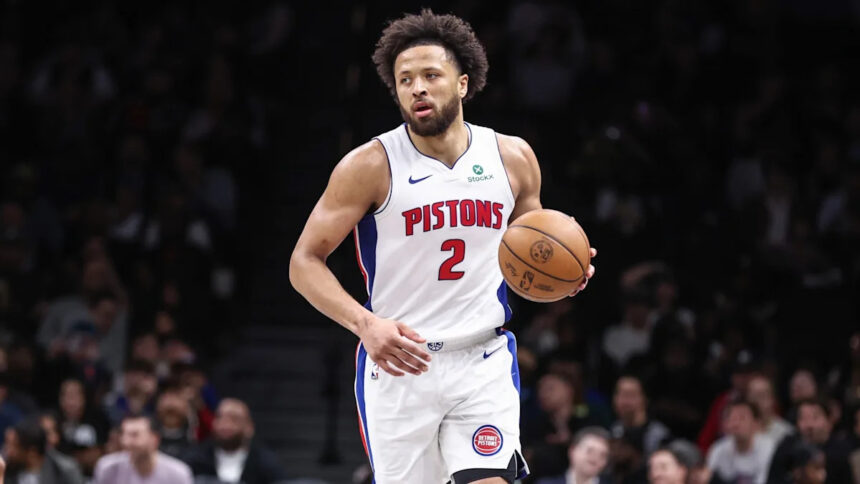
Cade Cunningham was not just having a good season; he was authoring a masterpiece of individual perseverance amid team struggle. Averaging 22.7 points, 7.5 assists, and 4.3 rebounds, he had transformed into the engine of the Pistons’ future. His name had surged to third in ESPN’s MVP straw poll, positioning him for a potential top-five finish and a near-certain spot on an All-NBA team. Then, in a moment emblematic of the hustle the league purports to celebrate, Cunningham dove for a loose ball. The result was a collapsed lung, a serious and unpredictable injury with no clear timetable for return.
With only five games needed to hit the NBA’s 65-game threshold for award eligibility, Cunningham’s season—and his chance at formal recognition—hangs by a thread. This incident was the breaking point for the National Basketball Players Association (NBPA). In a forceful statement, the union declared Cunningham’s potential ineligibility “a clear indictment of the 65-game rule,” arguing it “must be abolished or reformed to create an exception for significant injuries.” The NBPA labeled the rule an “arbitrary and overly rigid quota” that has unfairly disqualified too many deserving players.
Expert Analysis: The Unintended Consequences of a Well-Intentioned Rule
Implemented for the 2023-24 season, the 65-game rule was designed with two primary goals: to curb “load management” and ensure the league’s biggest stars were on the court for marquee national broadcasts. On the surface, it worked. Star player participation is up. However, the Cunningham case exposes a critical flaw in its design: it makes no distinction between a player resting and a player suffering a significant injury.
“The rule was created to solve one problem—preservation over competition—but it created another, potentially worse one,” says Dr. Alisha Harrison, a sports policy analyst. “It inadvertently punishes the very competitiveness it seeks to promote. Cunningham didn’t get hurt because he was overworked; he got hurt making a hustle play. The rule now tells players: ‘Your all-out effort could cost you tens of millions and your place in history if you get unlucky.’ That’s a dangerous psychological line.”
The financial stakes are monumental. An All-NBA selection can make a player eligible for a supermax contract extension, which can be worth over $50 million more than a standard max deal. For a young franchise cornerstone like Cunningham, this isn’t just about an award; it’s about generational wealth and team-building flexibility for the Pistons.
- Competitive Integrity vs. Financial Incentive: The rule risks players returning from injury prematurely to chase the 65-game mark, jeopardizing long-term health.
- The “Deserving Player” Dilemma: As the NBPA notes, Cunningham is not alone. Joel Embiid’s MVP defense was derailed by injury this year, and last season stars like Kevin Durant and Stephen Curry hovered near the cutoff.
- Statistical Dominance Ignored: A player’s impact over 62 games is arguably more meaningful than another’s over 65, yet the rule establishes a binary in-or-out threshold.
The Path to Reform: What a Compromise Could Look Like
The NBPA’s public salvo is the opening move in what will be a central issue in the next round of collective bargaining. Abolishing the rule outright seems unlikely, as the league will point to increased star participation. The most probable outcome is a negotiated reform with a medical exception. Here are potential frameworks that could emerge:
The “Significant Injury” Exception: A panel of independent doctors, jointly approved by the league and union, could review cases where a player suffers a season-ending or major injury after playing a minimum number of games (e.g., 55-60). If the injury is verified as acute and significant, the player regains eligibility.
The “Minutes Played” Alternative: Instead of a pure game count, a threshold of total minutes played could be instituted. This would account for players who suit up but are on strict minute limits late in seasons, further discouraging “load management” in disguise.
The “Percent of Season” Compromise: Tying eligibility to a percentage of a team’s scheduled games (e.g., 75-80%) rather than a fixed number could offer slight flexibility for seasons impacted by unforeseen cancellations or personal leave.
Cunningham’s agent, Jeff Schwartz of Excel Sports, underscored the urgency in his statement to ESPN: “When a rule has the unintended consequence of penalizing a player for a legitimate, significant injury suffered in the flow of competition, we have to re-examine its purpose and its fairness.” This sentiment will be the union’s bedrock in negotiations.
Predictions and the Future of NBA Awards
The pressure for change is now immense. The public relations blow of seeing a young star like Cunningham stripped of honors for a fluke injury is a narrative the NBA does not want to repeat. We predict the following:
1. A Medical Exception Will Be Created: By the 2025-26 season at the latest, a formal injury exception process will be added to the 65-game rule. The fiercest negotiations will revolve around defining “significant injury” and the minimum games required to trigger the exception.
2. The “Cunningham Clause”: Much like the “Derrick Rose Rule” for contract extensions, this incident may lead to a provision named for the player who exposed the flaw. Future CBA language will likely cite “acute, season-ending injuries suffered in-game” as a key criterion for exemption.
3. Enhanced Scrutiny on “Return-to-Play”: To counter concerns over players rushing back, the league and union may agree to stricter, league-monitored protocols for players near the awards threshold who are returning from injury.
4. A Shift in Voter Psychology: Even before rule changes, award voters may begin to subtly discount the 65-game mark in extreme cases like Cunningham’s, factoring in the nature of the injury when casting ballots, though his official eligibility would remain the primary barrier.
Conclusion: A Rule That Must Evolve With the Game
The NBA’s 65-game rule was born from a legitimate business and fan-engagement concern. But as Cade Cunningham’s heartbreaking situation proves, no policy can account for the brutal, unpredictable physics of professional basketball. A rule meant to ensure stars play cannot be so inflexible that it punishes them for playing hard. The NBPA’s call for abolition or reform is a necessary correction.
The true spirit of sports awards is to recognize excellence, not just endurance. While availability is a undeniable skill, it should not be the sole gatekeeper when catastrophic injury strikes. The league now faces a simple choice: preserve a rigid quota or protect the integrity of its honors and the players who risk everything to earn them. The smart bet is on evolution. The game, and its players, deserve nothing less.
Source: Based on news from Yahoo Sports.