London Marathon 2027: Could a Historic Two-Day Format Unlock a New Era of Running?
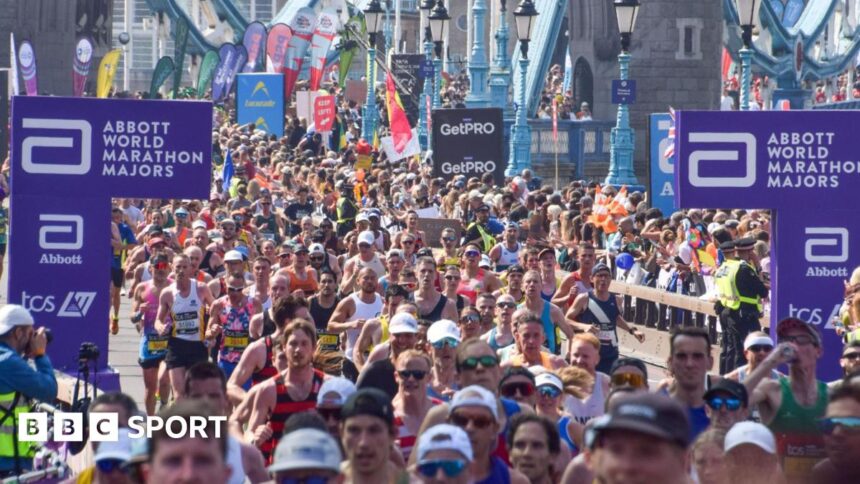
The London Marathon is not just a race; it is a global phenomenon, a pulsing artery of human ambition that courses through the heart of the capital each spring. Having already cemented its place in history by setting the record for the largest number of finishers in a single marathon, the event now stands on the precipice of its most radical evolution yet. In a move that could redefine mass-participation sports, London Marathon organisers are actively considering staging the 2027 event across two days. While no final decision has been made, this seismic shift is a direct response to the event’s staggering, and growing, popularity. The exploration of a two-day marathon format signals a bold ambition to democratize the iconic race, transforming it from a single Sunday spectacle into a weekend-long festival of running.
The Unstoppable Surge: Demand Outstrips Supply
The catalyst for this potential transformation is a tidal wave of public enthusiasm that shows no sign of receding. Following the record-breaking 2024 event, a staggering 1.1 million people entered the public ballot for the 2026 edition—a jaw-dropping 36% increase from the previous year. This number isn’t just a statistic; it represents over a million individual stories of hope, charity, personal challenge, and civic pride. The current single-day model, a logistical masterpiece in its own right, is straining under the weight of this demand. The iconic closed-road route, the finite number of hours in a day, and the immense pressure on London’s infrastructure create a natural ceiling on participant numbers. A spokesperson for London Marathon Events framed the consideration perfectly: “The London Marathon is the world’s most popular marathon, and we are continually exploring innovative ways to enable more people to take part, while delivering positive benefits for London.” The two-day concept is the most innovative solution yet to this happy problem of overwhelming success.
Deconstructing the Two-Day Vision: Benefits and Complex Challenges
Extending the marathon across a weekend is a proposition laden with both extraordinary potential and significant complexity. The benefits for runners, charities, and the city are compelling:
- Doubled Participation: The most obvious advantage is the potential to significantly increase the field size, potentially welcoming tens of thousands more runners. This aligns perfectly with the event’s core mission to inspire activity.
- Enhanced Runner Experience: A less congested course could improve times and safety. It could also allow for more tailored waves—perhaps elite and championship races on one day, and a greater focus on charity and first-time runners on the other.
- Charity Fundraising Bonanza: More bibs mean more fundraisers. The London Marathon is the world’s largest annual fundraising event; a two-day format could propel the lifetime total raised for charity, currently over £1.2 billion, into a new stratosphere.
- Economic and Tourism Boost: A marathon weekend would likely extend hotel stays, increase restaurant and tourism revenue, and amplify global media coverage across 48 hours instead of 24.
However, the hurdles are substantial. The operational footprint would be immense, essentially requiring the execution of two world-class marathons back-to-back. Key considerations include:
- Volunteer and Service Strain: Mobilizing enough medical staff, volunteers, and security for two consecutive days is a monumental task.
- Elite Athlete Parity: Would elite fields run on both days? If not, ensuring one day retains the prestige and competitive depth of a World Marathon Major is crucial.
- Community Impact: Extending road closures and disruption for residents and businesses across London for an entire weekend requires sensitive negotiation and mitigation.
- Protecting the “Magic”: Organisers must ensure the unique, unified energy of Marathon Sunday isn’t diluted. The challenge is to expand the event without fragmenting its soul.
The Global Precedent and the Future of Marathon Majors
While unprecedented for a World Marathon Major, the concept of multi-day major running events is not without precedent. The Berlin Marathon hosts a skate and inline marathon on the Saturday before the main running event. Other major city marathons have ancillary 5K or 10K events. However, splitting the classic 26.2-mile race itself across two days would be a first at this elite level. This move could trigger a domino effect across the global running calendar. If London successfully pioneers the model, other majors facing similar demand pressures—like New York or Tokyo—may be forced to reconsider their own formats. It positions the London Marathon not just as a participant, but as the innovator and pace-setter in the sport’s future. The decision will be closely watched by every major event director worldwide, as it could redefine what a modern, inclusive, and sustainable city marathon looks like.
Predictions for 2027 and Beyond: A Weekend Festival of Running
Based on the trajectory of demand and the organisers’ innovative history, the implementation of a two-day London Marathon by 2027 appears a strong possibility. We predict a model that could look something like this:
- Day 1 (Saturday): Potentially focused on the mass participation field, including a large contingent of charity runners and international participants. This day could feature its own elite race, perhaps for emerging talents or non-championship categories, ensuring a competitive spectacle.
- Day 2 (Sunday): Reserved for the elite championship races, featuring the world’s best athletes chasing records and Olympic qualifying times, alongside a separate wave of mass participants. This would preserve the global TV spectacle on the traditional day.
This evolution would likely be branded as “The London Marathon Weekend,” transforming it from a race into a comprehensive festival. Expect an expanded running expo, community fun runs, and live entertainment hubs across the city, creating a deeper, more immersive experience for runners and spectators alike. The core identity of the event—its iconic route from Greenwich to The Mall, its unparalleled crowd support, and its charitable heart—would remain sacrosanct, but its scale and impact would be magnified exponentially.
Conclusion: A Bold Stride Towards Inclusivity
The contemplation of a two-day London Marathon is far more than a logistical workaround; it is a visionary statement about the future of mass participation sport. It acknowledges that the desire to be part of this life-changing event has outgrown the constraints of a single calendar day. By seriously exploring this format, the organisers are reaffirming a commitment to their founding principle: to “show how the marathon can change lives.” Unlocking more bibs means unlocking more personal transformations, more charitable giving, and more stories of triumph. While the challenges are real and the details will be fiercely debated, the direction of travel is clear. The London Marathon has always been a beacon in the running world. In 2027, it may well illuminate a new path, proving that even the most storied traditions can evolve, not by shrinking their ambitions, but by daring to dream bigger across two extraordinary days.
Source: Based on news from BBC Sport.