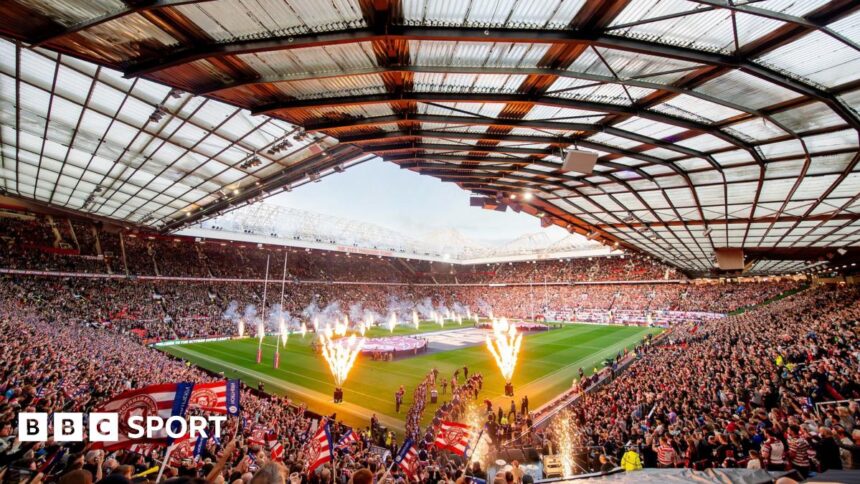
Super League at 30: The Revolution, The Reality, and The Road Ahead
Three decades ago, British rugby league tore up its own calendar and script. In the seismic spring of 1996, a sport steeped in northern tradition and winter mud launched itself into the bright, uncertain light of a summer era. The creation of Super League was more than a rebrand; it was a radical reinvention, a high-stakes gamble fuelled by television money and a vision of a national future. As it marks its 30th season, we examine the legacy of that gamble: what changed irrevocably, what challenges endure, and what the next generation must tackle to secure another thirty years.
The Murdoch Mandate: Cash, Summer, and Cultural Shock
The 1990s were a period of tectonic plates shifting across British sport. The Premier League’s 1992 breakaway had redrawn football’s financial and cultural map. Rugby league, fearing being left in the commercial dark ages, found its own catalyst in Rupert Murdoch. The media mogul’s vision for a global rugby league competition to feed his nascent Sky Sports empire required alignment with the Australian game. The price of his welcome cash was a total overhaul.
The switch from a winter to a summer sport was the most visceral change. It altered the very fabric of the game. Gone were the gluepot pitches and attritional forward battles. In came harder, faster tracks encouraging a more expansive, athletic style. This wasn’t merely a scheduling shift; it was a fundamental philosophical rebranding of the product on the field. Alongside it came a neon-infused, American-inspired presentation—the Paris Saint-Germain experiment, cheerleaders, and team names like “Broncos” and “Hunter.” The faces of this new dawn, like Wigan’s electric Martin Offiah, Bradford’s dynamic Robbie Hunter-Paul, and Castleford’s stalwart Lee Crooks, became symbols of a sport trying to bridge its proud past with a glossy future.
The Lasting Legacy: What the Super League Era Truly Wrought
Thirty years on, the dust has settled on the initial frenzy, allowing a clearer view of Super League’s indelible impact. The transformation can be measured in several key areas:
- Professionalism and Athleticism: The influx of Sky’s money, while modest compared to other sports, professionalised the top tier. Players became full-time athletes. The shift to summer accelerated this, producing faster, fitter, and more skilful players. The game’s physical and technical standards have risen exponentially.
- The Stadium Revolution: The era catalysed a move away from crumbling, traditional grounds. Bradford’s Odsal redevelopment, Huddersfield’s John Smith’s Stadium, and the modern homes of Wigan and St Helens stand as physical testaments to the ambition of the age, improving the spectator experience immeasurably.
- International Dimension: Super League broke the UK-Australia axis. It brought an influx of southern hemisphere stars, not just from Australia and New Zealand, but from the Pacific Islands, enriching the competition’s quality and diversity. The World Club Challenge gained a firmer foothold in the calendar.
- The Persistent Challenge: Yet, the grand ambition of becoming a truly national competition remains unfulfilled. London’s journey has been fraught, while ventures in Wales, Scotland, and the Midlands have struggled for sustainability. The heartland clubs remain the undeniable core, a tension between expansion and tradition that defines the league’s identity.
The Modern Landscape: Navigating a Crowded Sporting Marketplace
Today’s Super League operates in a ferociously competitive environment. The financial might of the NRL has created a talent drain, with top British stars and coaches increasingly lured Down Under. The sporting marketplace in the UK is saturated, with the Premier League’s dominance more absolute than ever. Rugby league’s challenge is to carve out a distinct, compelling niche.
Recent innovations like the shot clock, 20/40 kicks, and the move to a two-referee system show a continued willingness to tweak the product for pace and excitement. The introduction of promotion and relegation via the IMG grading system marks another philosophical shift—prioritising sustainable, well-run clubs over purely on-field volatility. This focus on commercial health, stadium quality, and digital presence is the new frontier of competitiveness.
Predictions: The Next Decade’s Defining Battles
As Super League looks to its fourth decade, its trajectory will be shaped by how it confronts several critical questions.
First, financial equity and competitive balance. The gap between the top two or three clubs and the rest must be narrowed to preserve suspense. Creative solutions around salary caps, marquee player rules, and centralised commercial strategies will be paramount.
Second, digital engagement and broadcast strategy. The next TV deal is always crucial, but the growth of direct-to-consumer digital platforms offers a chance to own the relationship with fans, tell the sport’s stories, and unlock new revenue streams beyond traditional broadcasting.
Finally, and most fundamentally, the development pathway. The health of the England national team is a direct barometer of the sport’s vitality. Investing in youth development, strengthening the academy system, and creating a clear pathway from community clubs to the Super League stage is the essential long-term work. The production of the next Offiah, Hunter-Paul, or Crooks—but as homegrown superstars who are household names—is the ultimate goal.
Conclusion: A Game Transformed, A Future to Be Won
The Super League revolution of 1996 was an act of necessary audacity. It dragged a parochial winter sport into the summer glare of the modern media age, gifting it better athletes, better stadiums, and a faster, more spectacular product. The legacy of that summer switch is a professional sport that can thrill with the best of them.
Yet, as it stands at 30, the league is a maturing entity facing mid-life questions about its scale, its finances, and its place in the world. The initial flood of cash has receded, leaving the hard graft of sustainable growth. The next chapter won’t be written by a single media mogul’s decree, but through the collective, strategic grind of building a broader base, nurturing talent, and innovating in how the game is presented and consumed. The first thirty years changed rugby league forever. The next thirty will determine whether it can truly thrive.
Source: Based on news from BBC Sport.