Iran’s Sports Ban: World Cup Dreams Collide with Geopolitical Reality
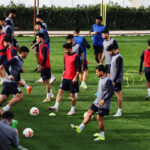
The world of international sport, often celebrated as a unifying force, is once again being tested by the hard lines of geopolitics. In a move that sends shockwaves through global athletics, Iran has officially banned its national and club teams from traveling to countries it deems “hostile,” casting a long and uncertain shadow over its sporting future. This directive, rooted in cited safety concerns for athletes amid regional conflict, places Iran’s coveted participation in the 2026 FIFA World Cup in serious jeopardy and forces a stark confrontation between sport and state.
A Directive Born from Tension: Safety or Strategy?
The announcement, reported by Iranian state media, came directly from the nation’s Sports Ministry. The order is sweeping and unambiguous: the presence of Iranian teams in nations considered hostile—and unable to guarantee security—is now prohibited until further notice. While the ministry did not publish an exhaustive list, the context leaves little room for interpretation. The ongoing war in West Asia, involving Iranian allies and adversaries, with the United States and Israel as primary actors, forms the backdrop.
This is not merely a theoretical stance. The ministry referenced the recent case of Tractor FC, an Iranian club that played a match against a United Arab Emirates team not in the UAE, but on neutral ground in Saudi Arabia. This precedent underscores the immediate, practical implications. The Iranian football federation has been instructed to formally engage with the Asian Football Confederation (AFC) to facilitate the relocation of future match venues for both club and national team competitions.
- Primary Justification: Official statements emphasize athlete safety as the paramount concern.
- Geopolitical Context: The ban arises directly from escalating tensions involving the U.S. and Israel.
- Immediate Impact: All upcoming fixtures in “hostile” territories must be moved or forfeited.
The 2026 World Cup Conundrum: A Qualification in Peril
The most dramatic casualty of this policy could be Iran’s place on the world’s biggest sporting stage. Team Melli, Iran’s national football team, has already qualified for the 2026 FIFA World Cup, a monumental achievement for any nation. However, the tournament is set to be hosted across three nations: the United States, Canada, and Mexico. The inclusion of the United States, a country Iran has not had diplomatic relations with for decades and currently labels as a primary adversary, creates an almost insurmountable diplomatic and logistical hurdle.
If the ban remains in effect, Iran would be prohibited from sending its team to play matches on U.S. soil. While FIFA could, in theory, rearrange group stage fixtures to have Iran play all its matches in Canada or Mexico, this is a complex and politically charged solution. The World Cup 2026 participation is now entangled in a high-stakes game of political brinksmanship. Would Iran relent for the sake of its athletes and fans? Would FIFA make unprecedented accommodations? Or are we witnessing the first steps toward an involuntary withdrawal?
This scenario echoes past boycotts but with a critical difference: this is a pre-emptive travel ban citing security, not a political boycott declared by a sporting body. The onus is now on Iran to navigate between its geopolitical stance and its sporting passions.
Broader Implications for Iranian Sport and Athletes
The fallout extends far beyond the football pitch. This ban affects all national and club teams, across every sport, from basketball and volleyball to wrestling and weightlifting. Iranian athletes, who have long competed with distinction under challenging circumstances, now face a new layer of isolation.
International sporting federations now face a dilemma. Will they consistently agree to relocate events for Iranian teams, potentially setting a costly and complicated precedent? Could persistent venue changes lead to accusations of an unfair competitive advantage or disadvantage? Furthermore, the ban risks creating a “sports exile,” where Iranian teams only compete in a shrinking pool of friendly nations, limiting their exposure to top-tier competition and hindering athletic development.
The human cost is significant. For athletes, whose careers are finite, missing a World Cup or Olympic qualification represents a lifelong dream shattered. The directive, while framed as protective, may be perceived as a sentence to sporting obscurity for a generation of Iranian talent.
Expert Analysis and Predictions: What Comes Next?
Sports analysts and geopolitical experts are parsing the potential outcomes. The immediate future likely involves frantic negotiations behind the scenes.
Short-Term (Next 6-12 months): Expect the AFC and other federations to reluctantly accommodate venue changes for upcoming qualifiers and club tournaments, as seen with Tractor FC. However, patience may wear thin, and points forfeits could become a reality if solutions aren’t found.
Medium-Term (Leading to World Cup 2026): This is the critical pressure point. Several scenarios emerge:
- Diplomatic Thaw: A de-escalation in regional tensions could allow for a face-saving modification or exception to the ban for the World Cup.
- FIFA Intervention: FIFA President Gianni Infantino may engage in high-level shuttle diplomacy, potentially guaranteeing security protocols to facilitate Iran’s participation.
- Forced Withdrawal: If no compromise is reached, Iran may be forced to withdraw, replaced by another nation. This would trigger domestic outrage and international condemnation of politicizing sport.
- Legal Challenges: Iranian athletes, backed by global player unions, could challenge the ban as an unlawful restriction on their right to work.
The ban also serves a domestic political purpose, reinforcing a narrative of a nation under threat and a government standing firm against hostile powers. The sacrifice of sporting glory, if it comes to that, may be framed internally as a necessary price of national sovereignty.
A Stark Conclusion: When the Final Whistle is Political
Iran’s travel ban for its sports teams is more than a logistical headache; it is a potent symbol of how deeply geopolitical fractures can penetrate the arena of sport. While the stated concern for athlete safety is valid in a tense climate, the policy effectively weaponizes athletic participation, using the platform of international sport as both a shield and a statement.
The coming months will test the resolve of sporting bodies, the passion of Iranian athletes, and the flexibility of the Iranian state. The 2026 FIFA World Cup now stands as a looming deadline in this conflict. Will it become a stage for reconciliation and competition, or a monument to a dream sidelined by politics? The world is watching, hoping for a play that leads to a peaceful resolution, but bracing for a geopolitical stalemate where the real losers are the athletes and the fans who cherish the beautiful game, free from the shadows of conflict.
Source: Based on news from India Today Sport.
Image: CC licensed via www.nps.gov