Iran’s Sports Travel Ban: Geopolitics Collides with the Asian Football Pitch
The roar of the crowd, the tension of an away leg, the universal language of sport—all have been abruptly silenced by the stark language of international conflict. In a move that underscores how deeply geopolitical fissures can penetrate the world of athletics, Iran has officially banned its national and club sports teams from traveling to countries it deems “hostile.” This directive, announced by Iran’s Ministry of Sports and reported by state television, immediately disrupts the Asian football calendar and casts a long shadow over the future of Iranian participation in international sport. The ban, issued amidst ongoing regional war, transforms stadiums into political arenas and athletes into potential pawns, signaling a new and volatile chapter where security concerns and diplomatic standoffs trump competitive fixtures.
The Directive: Security, Sovereignty, and a Scheduled Kickoff
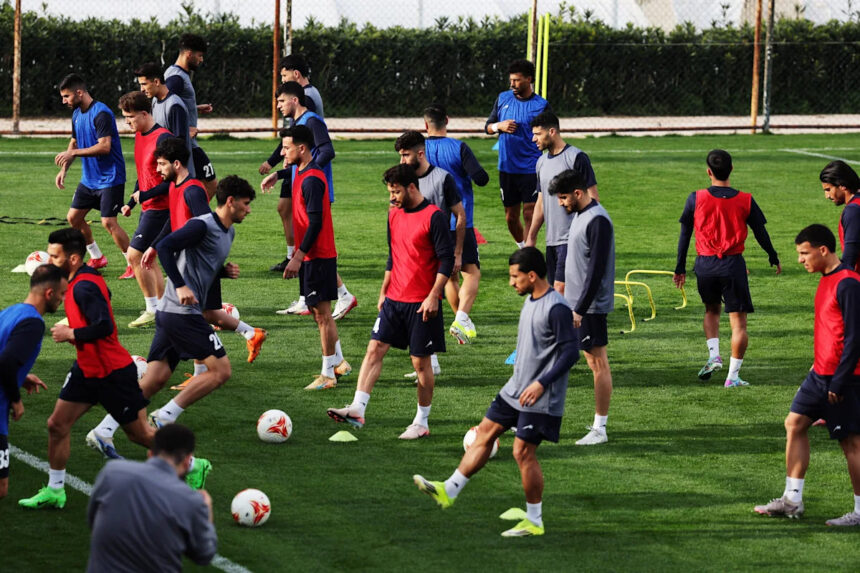
The ministry’s statement was unambiguous and far-reaching. It declared, “The presence of national and club teams in countries that are considered hostile and are unable to ensure the security of Iranian athletes and team members is prohibited until further notice.” This is not a vague advisory but a binding governmental order. The announcement gained immediate urgency as it specifically highlighted an impending high-profile football match: the Asian Champions League playoff between Iran’s Tractor SC and the United Arab Emirates’ Shabab Al Ahli. Crucially, this match was scheduled to be played on neutral ground in Saudi Arabia, a nation with which Iran has had historically strained relations.
The timing is inextricably linked to the ongoing regional war. The ban comes nearly a month after the escalation of conflict, framing the decision as a direct consequence of heightened tensions and perceived threats. The ministry explicitly tasked Iran’s football federation and clubs with notifying the Asian Football Confederation (AFC) to seek relocation of games. This creates an immediate administrative and diplomatic crisis for the AFC, which must now scramble to rearrange fixtures, find neutral venues, or potentially face disqualifications—all while navigating the treacherous waters of Middle Eastern politics.
Beyond the Pitch: A Pattern of Political Sport
While the scale of this blanket ban is significant, the use of sport as an instrument of state policy is not new for Iran. The nation has a history of leveraging athletic participation to make political statements, particularly regarding Israel and, at times, the United States. This latest decree, however, is broader and more formally institutionalized. It institutionalizes a policy of athletic non-engagement based on a country’s perceived hostility, effectively drawing a map of where Iranian athletes can and cannot compete.
This decision raises profound questions about the autonomy of sports federations in Iran. When a government ministry can unilaterally cancel an international fixture governed by AFC rules, it places Iranian sporting bodies in an impossible position. They are caught between their obligations to global governing bodies and their subservience to state directives. The potential consequences are severe:
- Sporting Sanctions: The AFC or international federations could impose points deductions, fines, or even bans on Iranian teams for failing to fulfill fixtures.
- Athlete Isolation: Iranian competitors risk being sidelined from the highest levels of Asian and world sport, damaging careers and diminishing the country’s sporting prestige.
- Financial Repercussions: Clubs like Tractor SC lose out on vital revenue from competition participation and broadcasting rights.
- Erosion of Trust: The reliability of Iranian teams as participants in international leagues and tournaments is thrown into doubt.
Expert Analysis: The Multilayered Fallout
From a geopolitical perspective, this ban is a clear signal of Iran’s escalated threat perception. By publicly stating that certain nations cannot ensure the safety of its athletes, Iran is broadcasting a lack of faith in international diplomatic channels and security guarantees. It frames the regional conflict as an omnipresent danger that follows its citizens even into ostensibly neutral sporting spaces.
Sports analysts point to the devastating impact on Iranian football, which has long been a source of national pride and a rare avenue for positive global engagement. “This moves Iranian sport from a realm of occasional protest into a state of permanent isolation based on foreign policy,” notes a veteran analyst of Middle Eastern sport. “The AFC’s statutes emphasize neutrality and the separation of sport from political interference. Iran’s order is a direct challenge to that principle, forcing the confederation into a corner.”
The human cost is borne by the athletes. For players at Tractor SC and other clubs, years of training culminate in these continental competitions. A government ban, however justified by security concerns, strips them of agency and the pinnacle of their professional aspirations. It also complicates the lives of dual-national athletes and coaches who must navigate these politically imposed boundaries.
Predictions and Pathways Forward
The immediate future is fraught with uncertainty. Several scenarios could unfold from this pivotal moment:
- Short-Term Fixture Chaos: The AFC will likely be forced to hastily relocate Iran’s upcoming away matches to truly neutral third countries, possibly in Oman or Qatar, which maintain relations with all sides. This will be a costly and complex logistical undertaking.
- Escalation to FIFA: If the AFC cannot broker a solution that satisfies its rules and Iranian dictates, the matter may escalate to FIFA. This could trigger a global governance crisis, testing FIFA’s often-stated commitment to keep politics out of football.
- A New Normal for Iranian Sport: Unless there is a dramatic de-escalation in the regional war, this ban may become a lasting policy. This could mean Iranian teams only compete at home or in a shrinking list of “friendly” nations, effectively creating a parallel sporting universe.
- Potential for Boycott Reciprocation: There is a risk that nations labeled “hostile” by Iran could reciprocate with their own bans, further Balkanizing Asian and international sports competitions along political fault lines.
Conclusion: When the Final Whistle is Blown by the State
Iran’s sports travel ban is more than a logistical headache for football schedulers; it is a potent symbol of a world where geopolitical conflicts refuse to remain contained. The beautiful game, often a force for fleeting unity, has been subsumed by the grim realities of war and national security strategy. This decision prioritizes the protection of athletes in a tangible way, yet it simultaneously weaponizes their participation, turning sports delegations into extensions of the state’s diplomatic posture.
The coming weeks will be a critical test for the Asian Football Confederation and the spirit of international sport. Can sporting bodies uphold their principles and rules in the face of direct state intervention? Or will the relentless pressure of real-world conflict force them to accommodate a new, politically-charged reality? For now, the players of Tractor SC wait, their dreams of Champions League glory indefinitely suspended—not by an opponent on the field, but by a confrontation between nations far from the touchline. The ban reminds us that in an unstable world, even the pitch is not neutral ground.
Source: Based on news from Yahoo Sports.