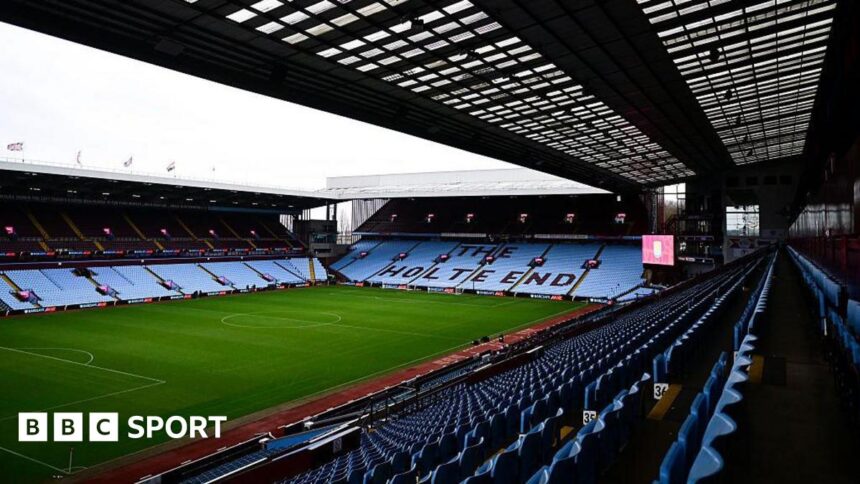
Gloucester’s Bold Gamble: Trading Kingsholm’s Roar for Villa Park’s Grand Stage
The cathedral city of Gloucester is defined by its rugby. The cobbled streets seem to echo with the history of the game, all leading to the hallowed, raucous ground that is Kingsholm. It’s a fortress, a cauldron, and a spiritual home. Yet, this Saturday, the Cherry and Whites will temporarily leave it behind. In a move that signals both ambition and a nod to rugby’s evolving commercial landscape, Gloucester will host Leicester Tigers not at their 15,000-seat stronghold, but at the 45,000-capacity Villa Park, home of Aston Villa. This is more than a venue change; it’s a statement of intent, a calculated experiment in taking a regional passion onto a national stage.
The March of the Premiership’s “Showpiece” Spectacle
Gloucester are not pioneers in this field, but they are keen students of a growing trend. The quest for the blockbuster rugby event has become a central theme for Premiership clubs looking to expand their reach and revenue. Harlequins have turned The Stoop’s derby into the sold-out “Big Game” at Twickenham and now the “Big Summer Kick-Off” at Tottenham Hotspur Stadium, mastering the art of the occasion. Saracens have a long history of filling Wembley and the Olympic Stadium for major fixtures. This very weekend, Bristol Bears are decamping to the Principality Stadium in Cardiff. The logic is inescapable: to grow the game and the brand, you must sometimes step beyond the traditional confines.
For Gloucester, a club with one of the most passionate and geographically concentrated fanbases, the calculation is nuanced. Kingsholm’s atmosphere is legendary, but its size is a natural limiter. “The idea to host a showpiece game has been in the pipeline for a number of years,” explained chief executive Alex Brown. The search for the right venue ended not in London, but in Birmingham. A visit to Villa Park last year was the clincher. “It was really quite compelling,” Brown told BBC Sport. The combination of a central location, superb transport links, a historic football ground with a tight, atmospheric design, and a massive catchment area in the Midlands made it the perfect laboratory for this experiment.
Why Villa Park? The Strategic Calculus Behind the Move
On the surface, swapping home advantage for a neutral ground seems counterintuitive. But the strategy behind Gloucester’s Villa Park venture is multi-layered and extends far beyond the 80 minutes on the pitch.
- Capacity and Revenue: The arithmetic is simple. A sell-out at Kingsholm (even at enhanced ticket prices) cannot compete with the potential gate revenue from filling even two-thirds of Villa Park. This single fixture could generate financial returns equivalent to several home games, providing crucial funds in a challenging economic climate for rugby.
- Brand Expansion: Gloucester is a powerful brand in the South West, but this move is a direct play for the Midlands market. It’s an invitation to casual sports fans in Birmingham, Coventry, and beyond to experience Premiership rugby in a world-class, accessible stadium. It’s about creating new fans, not just catering to existing ones.
- The “Event” Experience: This is positioned as a day out, a spectacle. It’s about transforming a regular league match into a must-attend occasion. The club is leveraging the iconic Villa Park venue to add glamour and scale, hoping the setting itself becomes a draw.
- Testing the Waters: Success here could pave the way for an annual “showpiece” fixture, much like Quins and Saracens have established. It’s a low-risk way to gauge appetite for bigger events without compromising the sanctity of Kingsholm for the bulk of the season.
The Kingsholm Conundrum: Atmosphere vs. Ambition
The most significant risk is intangible: can Gloucester recreate, or even approximate, the intimidating Kingsholm atmosphere at Villa Park? The Shed’s partisan, vocal, and relentless support is a genuine weapon. Leicester Tigers, themselves no strangers to big games, may find a more dispersed, potentially less fervent crowd in Birmingham. This could dilute Gloucester’s home-field advantage.
However, the counter-argument is one of potential. Imagine 30,000 or more Gloucester fans, amplified by the bowl-like structure of Villa Park, creating a wall of noise. The club’s challenge is to mobilise its loyal base to travel and to attract new supporters to fill the seats and replicate that fervour. The pre-match build-up, fan zones, and the sense of participating in a historic club event will be crucial. The Kingsholm atmosphere on the road is the ambition—taking that unique culture and projecting it on a grander canvas.
Matchday Preview and Predictions: Tigers in a Birmingham Jungle
The rugby itself promises a fascinating clash. Leicester, perennial contenders, will relish the opportunity to spoil the party. They possess the forward power and tactical discipline to quieten a big crowd. Gloucester, under George Skivington, have built a robust, physical identity but have sometimes struggled for consistency. The Villa Park factor could be the ultimate motivator or an unsettling distraction.
Key battles will define the occasion:
• The Scrum: Gloucester’s formidable pack versus the Tigers’ set-piece excellence. This will set the tone.
• Fly-Half Duel: The control of Leicester’s Handré Pollard against the game-management of Gloucester’s Adam Hastings or the spark of Santi Carreras.
• The Breakdown: A ferocious contest where the intensity of the occasion will be most physically felt.
Prediction: The novelty and emotional charge of the day will inject a huge surge into the Gloucester players. In a tight, high-stakes affair, we anticipate a performance fuelled by the desire to validate the club’s bold move. Gloucester to win a tense, physical encounter by less than 7 points, in a game remembered as much for the occasion as the result.
Conclusion: A Defining Moment for the Cherry and Whites
Gloucester’s trip to Villa Park is a watershed moment. It is a bold embrace of modern rugby’s demands while trying to honour its traditional soul. The move acknowledges that to compete at the highest level—both on the pitch and on the balance sheet—clubs must think bigger. Success won’t be measured by the win alone, but by the feel of the day, the volume of the crowd, and the stories told afterwards.
This is more than a game; it’s an experiment in ambition. Can the visceral, community-driven passion of Kingsholm be successfully transplanted and scaled up? Can rugby union’s tribal heartland be expanded into new territories with a single fixture? On Saturday, as the chants of “Gloucester, Gloucester” echo around the Holte End, the club will begin to find out. Win or lose, by stepping out of their comfort zone, the Cherry and Whites have already demonstrated a willingness to evolve. The future of club rugby may well be written in these occasional pilgrimages from fortress to coliseum.
Source: Based on news from BBC Sport.