Trump Weighs In on Tiger Woods Crash: A Golfer’s Troubling Pattern Emerges
The worlds of sports, celebrity, and politics intersected once again this weekend as news broke of golf legend Tiger Woods’ latest car accident. The 15-time major champion emerged unscathed from a rollover crash on Jupiter Island, Florida, but the incident has reignited serious concerns about his well-being and judgment. Adding a layer of political commentary, former President Donald Trump offered a succinct, pointed reaction, stating that Woods has “got some difficulty.” This simple phrase from a longtime golf acquaintance underscores a complex and alarming narrative that extends far beyond the fairway.
A Crash with Echoes: History Repeats on a Florida Road
On Friday afternoon, Tiger Woods was involved in a single-vehicle collision, clipping a machinery truck at speed and rolling his Land Rover. While both drivers were unharmed—a fact Martin County Sheriff John Budensiek called fortunate, noting “this could have been a lot worse”—the circumstances are hauntingly familiar. This marks the third major crash in Woods’ life and, more critically, the second DUI arrest stemming from such an incident.
Authorities reported that Woods, who passed a breathalyzer test, was suspected of being impaired by medication. He refused to provide a urine sample, leading to his arrest. This mirrors his 2017 arrest in Florida, where he was found asleep at the wheel of his running car, later attributing his condition to a bad mix of prescription drugs for back pain. That episode led him to check into a clinic. The latest crash suggests a troubling pattern that recovery and management of his physical and pharmaceutical challenges remain an ongoing, and perhaps escalating, battle.
Trump’s Diagnosis: Political Commentary Meets Personal Concern
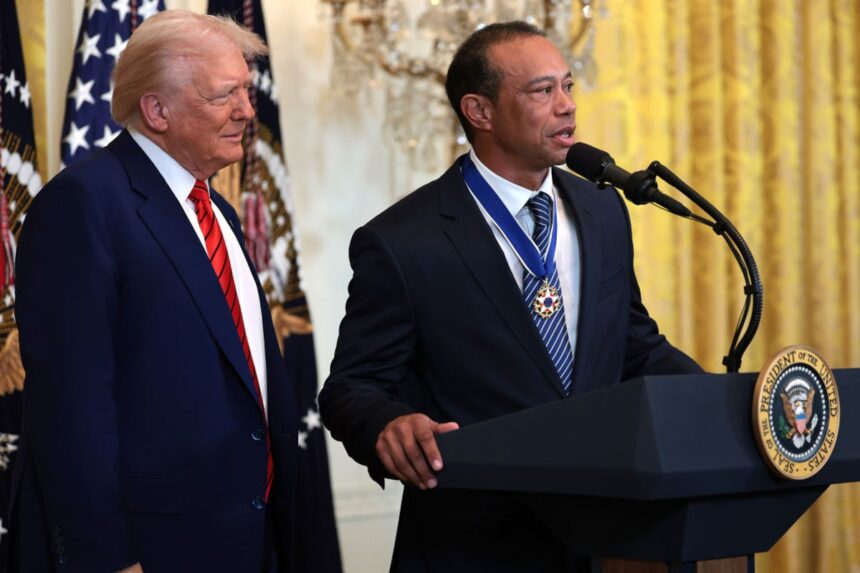
Donald Trump’s reaction, while brief, carries weight from multiple angles. As a former President, his comments automatically garner national attention. As a fervent golfer and owner of multiple courses where Woods has played, he speaks from a position of insider knowledge within the sport’s elite circles. His statement, “He’s got some difficulty,” is a masterclass in ambiguous commentary. It can be interpreted as:
- Personal Empathy: An acknowledgment of Woods’ well-documented physical struggles, including multiple back surgeries and chronic pain.
- Subtle Judgment: A veiled critique of the personal decisions leading to repeated legal trouble.
- Political Distraction: A move to insert himself into a major news cycle, a familiar tactic.
Regardless of intent, Trump’s words publicly frame Woods’ situation not as a simple accident, but as a symptom of a deeper, persistent issue. This external framing from a high-profile figure amplifies the seriousness of the pattern, shifting the conversation from “another crash” to a sustained “difficulty” that demands addressing.
Beyond the Physical Scars: The Anatomy of a Pattern
To view this crash in isolation is to miss the forest for the trees. Tiger Woods’ trajectory reveals a cycle of immense pressure, catastrophic injury, and pharmaceutical reliance. Experts in sports psychology and addiction medicine point to a dangerous nexus for aging athletes.
The cycle often looks like this:
- Peak Performance & Pressure: Decades of world-class competition under a global microscope.
- Traumatic Injury: Multiple knee and back surgeries that would end most careers.
- Chronic Pain Management: A legitimate need for potent prescription medications.
- Dependency Risk: The slippery slope from medicinal use to impairment, especially when mixed with other substances.
- Impaired Judgment: Decisions, like getting behind the wheel, that have severe legal and personal consequences.
Woods’ 2017 clinic visit was a clear acknowledgment of this risk. The recent crash, however, indicates that managing this cycle is a lifelong challenge, not a one-time fix. The refusal of a urine test suggests an awareness of what might be found—a detail that will likely play a central role in the legal proceedings and any potential mandated treatment.
The Road Ahead: Predictions for Legacy and Livelihood
The immediate fallout from this crash will unfold on two fronts: legal and professional. Legally, Woods faces another DUI charge, which could result in stricter penalties than his first, including potential jail time, extended license suspension, and court-ordered rehabilitation. The court will scrutinize his 2017 arrest as precedent.
Professionally, the predictions are more nuanced. His competitive golf career, already limited by his surgically-repaired back, may see no direct impact—he was already playing a severely limited schedule. The greater impact is on his endorsement portfolio and legacy.
- Brand Tiger: His comeback narrative, already tinged with past scandal, now adds a recurring chapter of legal trouble. While core sponsors like Nike have stood by him through worse, the “difficulty” Trump cited becomes a part of his permanent story.
- The Golf Ambassador: His role as a course designer, PGA Tour influencer, and global ambassador for the game suffers a reputational hit. Trust and reliability are key in these roles.
- The Comeback Arc: The miraculous 2019 Masters victory now sits between two DUI arrests. It reframes that triumph not as a storybook ending, but as a brilliant, yet fragile, peak in an otherwise turbulent personal landscape.
The most hopeful prediction is that this very public incident serves as the necessary catalyst for Woods to seek a more comprehensive, long-term solution for pain management and wellness, prioritizing his health over any remaining competitive impulses.
Conclusion: A Stark Warning Signal, Not Just a News Headline
Tiger Woods’ latest crash is more than a celebrity news blip or a topic for political commentary. It is a stark warning signal. Donald Trump’s assessment, however politically motivated, is clinically accurate: Woods does have “some difficulty.” That difficulty is the immense challenge faced by countless individuals dealing with chronic pain and the powerful medications used to treat it. That his struggle plays out on the world stage, with a car as the weapon of potential self-destruction, makes it both a personal tragedy and a public cautionary tale.
The true test now is not whether Tiger can chip out of the rough, but whether he can finally break the dangerous cycle that has now, twice, put his life and the lives of others on the line. The hope for fans, and surely for Woods himself, is that this frighteningly familiar crash becomes the last of its kind, prompting a final, sustained journey toward true health—a victory that would ultimately dwarf any on the golf course.
Source: Based on news from Yahoo Sports.