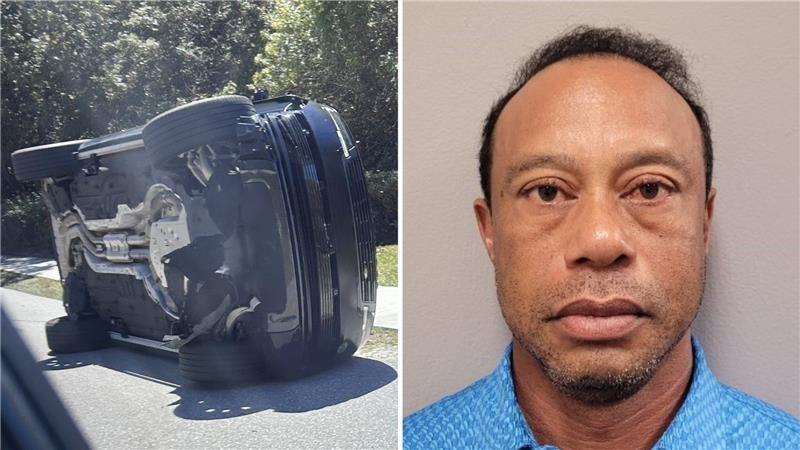
Tiger Woods Mugshot Released: A Shocking Chapter in a Storied Career
The world of sports was jolted by a stark and unfamiliar image: the official mugshot of Tiger Woods. Released by the Martin County Sheriff’s Office, the photo accompanies charges of driving under the influence, property damage, and refusal to submit to a lawful test. This incident, stemming from a single-vehicle rollover crash in Jupiter Island, Florida, marks a profound and troubling moment for the 15-time major champion. It’s a story that transcends sports, weaving together themes of legacy, personal struggle, and the relentless scrutiny faced by global icons.
The Crash and Charges: Unpacking the Official Narrative
According to authorities, the sequence of events began on a Friday afternoon when Tiger Woods, driving his Land Rover, allegedly attempted to overtake a pressure cleaner truck at a high rate of speed. In the process, he clipped the truck, lost control, and rolled his vehicle. Sheriff John Budensiek detailed that Woods had to crawl out of the passenger door to escape. While no one was injured, the scene painted a picture of a violent and frightening ordeal.
The charges that followed created immediate confusion and complexity. Crucially, officers did not suspect alcohol impairment. Woods passed a roadside breathalyzer test. However, the suspicion shifted to potential impairment by an unknown substance. This distinction is legally significant and forms the core of the DUI charge in this case. The golfer’s refusal to submit to a urine test is a separate charge, often interpreted under Florida law as an admission of guilt, and automatically triggers a driver’s license suspension.
- Charge 1: Driving Under the Influence (DUI): Based on observed impairment, not alcohol-specific.
- Charge 2: Property Damage: Related to damage caused to the truck and possibly other property.
- Charge 3: Refusal to Submit to Lawful Test: Following the refusal of the urine test after the breathalyzer.
Beyond the Mugshot: The Context of Injury and Medication
To understand this incident, one cannot ignore the shadow of Tiger Woods’ grueling physical history. His body is a catalog of surgical interventions: multiple back surgeries, including a spinal fusion, and major leg injuries following his 2021 car accident in Los Angeles. Chronic pain has been a constant companion in this later chapter of his life and career.
This context immediately raises questions about prescription medications. It is widely known that Woods has managed significant pain for years. The possibility that prescription medication played a role—whether through improper dosage, adverse interaction, or simply the strong side effects of powerful painkillers—is a central line of inquiry. This is not to excuse the act of driving if impaired, but to frame a critical aspect of the analysis. The “unknown substance” cited by the sheriff could very well be a legally prescribed drug that nonetheless impaired his ability to drive safely. This scenario presents a nuanced and deeply personal health struggle colliding with the absolute laws of the road.
Expert Analysis: Legal Repercussions and Reputational Impact
From a legal standpoint, this incident places Woods in a precarious position. Florida’s DUI laws are stringent. A first-time DUI conviction (assuming this is his first) can result in fines, probation, community service, mandatory DUI school, and vehicle impoundment. The refusal charge carries its own separate penalty. However, given his resources, a plea deal involving diversion programs and substance abuse education is a likely outcome, potentially avoiding a formal DUI conviction on his record if certain conditions are met.
The reputational damage, however, is a different calculus. Tiger Woods has painstakingly rebuilt his public image since the personal scandals of 2009 and through his heroic comeback from injury, capped by his 2019 Masters victory. This mugshot is a devastating counter-narrative. Sponsors, who have been cautiously supportive in his comeback era, will be watching closely. While major partners like Nike have stood by him through past crises, the optics of a mugshot and DUI charge are uniquely damaging. It strikes at the core of his role as a figure for younger golfers and the broader sporting world. The narrative shifts from “resilient champion” to “troubled legend” in the blink of a flashbulb.
Predictions: The Road Ahead for Tiger Woods
Predicting the next steps involves looking at both the short-term legal process and the long-term arc of his career and legacy.
In the immediate future: We can expect his legal team to work diligently behind the scenes. Their focus will be on mitigating the legal consequences and controlling the public narrative, likely emphasizing his health battles and commitment to addressing any underlying issues. A public statement from Woods himself, expressing accountability and outlining steps for personal management, will be crucial.
For his golf career: This incident casts a dark cloud over his already uncertain playing future. His physical recovery was the primary hurdle; now, a significant mental and emotional burden has been added. The focus must shift from “when will he play?” to “in what state of mind and health will he attempt to play?” It may prolong his current hiatus from the PGA Tour indefinitely.
For his legacy: Tiger Woods’ legacy as the greatest golfer of his generation, and perhaps ever, is secure. But his overall life story has become a profoundly human epic of unparalleled triumph, devastating falls, and attempted redemptions. This mugshot is now an indelible part of that story. It serves as a grim reminder of his human vulnerabilities, far removed from the superhuman focus he displayed on the golf course.
Conclusion: A Tragic Intersection of Struggle and Accountability
The release of Tiger Woods’ mugshot is more than a tabloid headline; it is a poignant and tragic milestone. It represents the intersection of a legendary athlete’s documented physical suffering with the absolute requirement of personal accountability when operating a vehicle. The incident underscores that the battles Woods faces extend far beyond the fairways and greens—they are battles with pain, with the side effects of recovery, and with the immense pressure of his own history.
While the legal system will run its course, the broader lesson is a universal one: impairment is not solely about alcohol. It can stem from prescription drugs, fatigue, or emotional distress. For Tiger Woods, this moment is a severe setback in a life marked by spectacular comebacks. Whether he can mount another, not on the golf course but in reclaiming control and stability in his personal life, will be the next, and perhaps most important, chapter the world watches. His legacy as a golfer is stone, but this episode is a stark etching on that monument, reminding us of the fragile human behind the champion’s myth.
Source: Based on news from Yahoo Sports.