Gary Woodland’s Triumphant Return: From Brain Surgery to Houston Open Champion
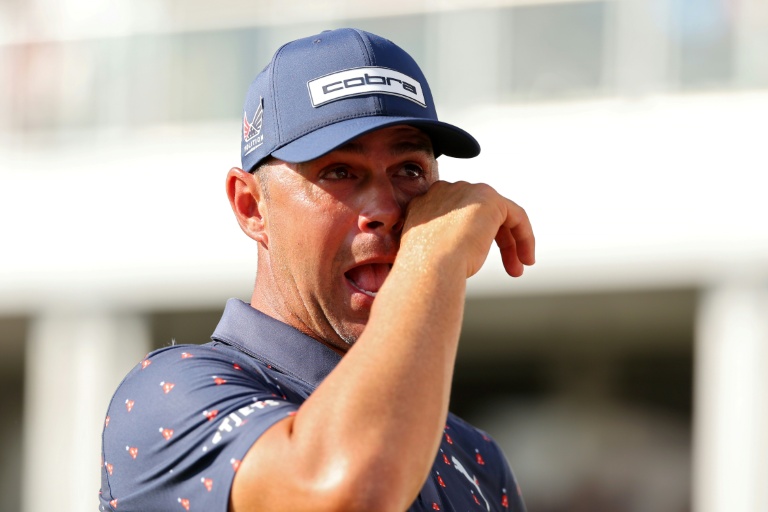
The 18th green at Memorial Park Golf Course was a stage for something far greater than a trophy presentation. As Gary Woodland, his voice cracking and tears tracing lines down his face, looked into the camera, he delivered a message that transcended sport. “Anybody that’s struggling with something, I hope they see me and don’t give up, just keep fighting.” Just weeks after revealing a harrowing, private battle with post-traumatic stress disorder following brain surgery, Woodland authored one of the most inspirational victories in recent PGA Tour memory, capturing the Houston Open for his first win since the 2019 U.S. Open. This wasn’t just a return to form; it was a resurrection of spirit, a testament to resilience written in a tournament-record 21-under par 259.
A Victory Forged in Adversity
To understand the magnitude of Gary Woodland’s win, one must first comprehend the depth of the valley he traversed. The image of the powerful, athletic Kansan hoisting the U.S. Open trophy at Pebble Beach in 2019 was iconic. But the years that followed were a silent struggle. In 2023, Woodland underwent surgery to remove a brain lesion, a physically taxing procedure that was only the beginning of his challenge. In a raw and emotional disclosure earlier this month, the 41-year-old revealed the ongoing psychological battle: the lingering effects of post-traumatic stress disorder, the anxiety, and the fear that shadowed him long after the physical scar had healed.
This context transforms his Houston Open performance from impressive to legendary. Woodland didn’t just hold off a talented field; he conquered internal demons that, by his own admission, had him wanting to “walk off golf courses” during his struggle to rediscover his game. His final-round 67 was a masterclass in control, but the real victory was played out between his ears. Each clutch putt, each towering drive, was a rebuttal to doubt and a step toward reclaiming not just his career, but his peace.
Dominant Performance and Record-Setting Week
While the narrative is profoundly human, the golf was unequivocally dominant. Woodland’s performance was a clinic in ball-striking and strategic precision, rewriting the tournament record books at Memorial Park.
- Tournament Record Score: His 72-hole total of 21-under 259 shattered the previous Houston Open record, showcasing a level of sustained excellence that had eluded him for years.
- Commanding Final Round: Beginning the day with a two-shot lead, Woodland applied immediate pressure with an early birdie. He never wavered, turning a tight contest into a five-stroke rout over Denmark’s Nicolai Hojgaard.
- Elite Ball-Striking: Throughout the week, Woodland ranked near the top of the field in Strokes Gained: Approach and Off-the-Tee. His powerful, accurate driving set up countless opportunities, allowing him to play from positions of strength.
- Mental Fortitude: The key moment came at the par-3 9th. After a rare bogey on the 8th, Woodland faced a treacherous tee shot. He executed a flawless iron to 10 feet and sank the birdie putt, a stunning momentum-killer for the chasing pack and a definitive statement of his renewed mental strength.
This was not a win scraped from the jaws of luck. It was a wire-to-wire assertion that Gary Woodland, at his best, possesses a complete game capable of overwhelming a PGA Tour field. The five-stroke victory margin underscored a dominance that left no doubt about the week’s best player.
Expert Analysis: What This Win Means for Woodland’s Career
From a golf perspective, this victory is a tectonic shift for Woodland’s trajectory. It provides immediate security, granting him a two-year PGA Tour exemption, entry into the remaining Signature Events of 2024, and a coveted spot in next month’s Masters Tournament. But the implications run deeper.
“We often talk about players losing their nerve or their swing,” notes a veteran Tour analyst. “But Gary’s challenge was existential. He had to relearn his game while grappling with the aftermath of a life-altering health scare. The swing changes he made during his recovery are now clearly bedded in. More importantly, winning proves he can manage the competitive pressure that, post-surgery, came with a new layer of anxiety. This isn’t a comeback; it’s a second act.”
The win also recontextualizes Woodland’s legacy. He is no longer just the “2019 U.S. Open champion.” He is now a symbol of perseverance, a player whose career will be defined as much by his resilience as by his powerful swing. This layer of narrative adds a profound weight to his presence in the game and will make him a focal point at Augusta National, a course that demands both mental and physical mastery.
Predictions: The Road Ahead to Augusta and Beyond
The immediate question is: what can Gary Woodland do now? The floodgates of confidence have been opened. Expect to see a more liberated, aggressive player.
- Masters Momentum: Woodland has historically played well at Augusta National (T14 in 2023). Armed with this transformative win, he enters as a legitimate dark horse. His high ball flight and improved short game are perfect for Augusta, but it’s the renewed belief that makes him particularly dangerous.
- Major Contender Again: This victory re-establishes Woodland as a player who can win on the biggest stages. Look for him to be a factor in the major championships, particularly the U.S. Open and PGA Championship where his driving prowess is a major asset.
- Ryder Cup Aspirations: The 2025 Ryder Cup at Bethpage Black is on the horizon. A motivated, healthy, and winning Gary Woodland—a proven team player with a massive heart—is precisely the prototype Captain Keegan Bradley would want on a hostile road team.
The key will be managing the emotional and physical demands of his newfound spotlight. However, having already faced down the greatest challenge of his life, the pressures of tournament golf may now feel like a welcome privilege.
A Triumph of the Human Spirit
Gary Woodland’s victory at the Houston Open will be remembered not for the record score, but for the journey it punctuated. In a sports landscape often focused on rivalry and statistics, this was a pure, unfiltered story of human triumph. Woodland didn’t just defeat Nicolai Hojgaard; he defeated the specter of fear, the uncertainty of recovery, and the daunting shadow of a career in decline.
His tears on the 18th green were the release of four years of frustration, fear, and unwavering hope. They were a powerful reminder that athletes are not merely performers, but people navigating the same profound struggles as anyone else. By speaking openly about his PTSD and then achieving the pinnacle of his profession weeks later, Woodland has given a face to resilience. He has provided a blueprint: acknowledge the struggle, seek help, grind through the darkest days, and never, ever surrender. The trophy he earned in Houston is silver, but the victory he claimed is golden—a win for himself, and a beacon of hope for anyone fighting their own battle, on or off the course.
Source: Based on news from Yahoo Sports.