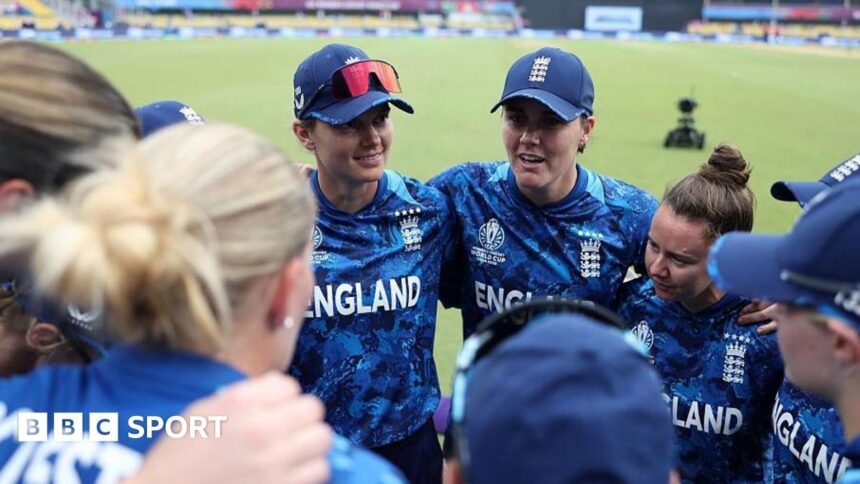
England’s Fitness Rebirth: How Charlotte Edwards Has Forged a World Cup Ready Squad
The shadow of fatigue, the whisper of being outgunned, the sting of public critique—for over a year, a cloud hung over the England women’s cricket team. As they prepare to host the Women’s T20 World Cup this summer, the narrative of physical frailty threatened to undermine their ambitions. Now, head coach Charlotte Edwards has delivered a definitive statement, declaring those pervasive fitness issues categorically “put to bed.” This isn’t just coach-speak; it is the proclamation of a cultural revolution, a shedding of an unwanted skin that has seen England transform from a side questioned for its athleticism to one primed for a home title charge.
The Crucible of Criticism: A Wake-Up Call Heard
To understand the significance of Edwards’ statement, one must revisit the low point. England’s early exit from the Women’s T20 World Cup just under 18 months ago was a sporting failure compounded by internal discord. Former spinner Alex Hartley’s pointed comment that some players were “letting the team down” in terms of fitness was a grenade lobbed into the public domain. It framed the defeat not just as a bad tournament, but as a symptom of a deeper malaise. The issue refused to dissipate, resurfacing sharply during the Women’s Ashes in January 2025. In the face of Australia’s relentless, powerhouse fielding and running between the wickets, England appeared a half-step behind. Former coach Jon Lewis’s analysis pointed to a “cultural difference” in approach to conditioning between the UK and Australia, a tacit acknowledgment of a gap that had become a chasm on the field.
This period created a perfect storm of pressure. The team was underperforming, its physical readiness was a national talking point, and the clock was ticking towards a home World Cup. The appointment of Charlotte Edwards, a legendary figure whose own career was built on relentless professionalism, was the first masterstroke. She inherited not just a team, but a mandate for change.
The Edwards Ethos: Building More Than Athletes
Charlotte Edwards’ approach has been holistic and uncompromising. Moving beyond mere gym metrics, she has instilled a culture of accountability where fitness is non-negotiable, the foundational block upon which all skill is built. Her strategy appears to have focused on several key areas:
- Individualised Conditioning Programs: Moving away from a one-size-fits-all model, strength and conditioning has been tailored to the specific demands of each player’s role—from the explosive power of openers to the repeat sprint efforts of boundary riders.
- Mindset Shift: Edwards has worked to reframe fitness from a chore to a competitive weapon. The focus is on how superior conditioning translates directly to winning moments: stealing that extra run, converting a half-chance into a catch, bowling your fourth over with the same pace as your first.
- Embracing the Australian Standard: Rather than refuting the Ashes comparisons, Edwards has used them as a benchmark. The “cultural difference” cited by Lewis is being addressed by creating a new, demanding English culture—one that matches and seeks to surpass the global gold standard.
“The players have taken full ownership,” Edwards has indicated. This is the critical nuance. This transformation isn’t a case of a coach wielding a big stick; it’s about the squad buying into a collective belief that their physical limits were barriers to their potential. The result is a squad that looks sharper, moves quicker, and carries an undeniable aura of athletic confidence.
On-Field Impact: From Liability to Lethal Weapon
The proof, as ever, will be in the performance. Early signs from recent series and training camps are profoundly encouraging. We are witnessing a tangible shift in how England plays the game:
- Fielding as a Fortress: Where once there were misfields and lethargic chases, now there is a buzz. The ring is tighter, the boundary saves more frequent, and the catching appears more secure. This transforms pressure into wickets.
- Running Between the Wickets: This is the ultimate barometer of fitness and intent. Turning ones into twos and twos into threes demoralises bowlers and piles on the scoreboard pressure—a hallmark of Australian dominance that England is now adopting.
- Depth in Bowling: The ability of seamers to maintain pace and spinners to maintain revs deep into their spells prevents the late-innings flurry that has plagued England in the past. It allows for more aggressive, attacking field settings throughout the 20 overs.
This elevated athleticism directly impacts the tactical flexibility available to Edwards. She can now contemplate more aggressive team selections, confident that every player on the park can contribute to all three facets of the game without being a liability. The “fitness issues” are no longer a selector’s caveat.
World Cup Prognosis: Hosts with the Most
With the Women’s T20 World Cup on home soil this summer, England’s fitness renaissance could not be more timely. The conditions in England—larger outfields, often cooler climates—can actually reward the fitter, harder-running team. Edwards has effectively turned a perceived weakness into a potential strength.
The home advantage, now supercharged by a squad in peak physical condition, makes England genuine contenders. They will face the usual powerhouses: an ever-professional Australia, a mercurial India, and dangerous sides like South Africa and New Zealand. Yet, the gap that seemed so evident 18 months ago has demonstrably closed. England’s players will not be “let down” by their own bodies in the crucial moments; instead, their conditioning could be the edge that wins them tight group games and high-pressure knockout matches.
The prediction here is bold: England will reach the final. A team that has confronted its demons so publicly and worked so diligently to exorcise them carries a powerful psychological momentum. They are no longer trying to catch up; they are setting their own pace.
Conclusion: A Legacy Forged in Resilience
Charlotte Edwards’ declaration that England’s fitness woes are over is more than a line in a press conference. It is the culmination of a painful but necessary journey. The public criticisms from Hartley and the stark Ashes comparisons were brutal, but they served as the catalyst for an evolution that has reshaped the team’s identity. Edwards has not just implemented training regimes; she has fostered a culture of accountability and professional pride where cutting corners is anathema.
As the World Cup approaches, the conversation has decisively shifted. The topic is no longer about England’s vulnerabilities, but about their strengths: their power-hitting, their spin variety, their tactical acumen. And underpinning it all is a newly forged athletic resilience. The team that takes the field this summer will be the fittest, most prepared England side in history. They have not just put the fitness issues to bed; they have built a championship-calibre foundation upon its grave. The host nation is ready, and the world has been put on notice.
Source: Based on news from BBC Sport.