Jack Draper’s Calculated Retreat: Why Withdrawing from Monte Carlo is a Masterstroke
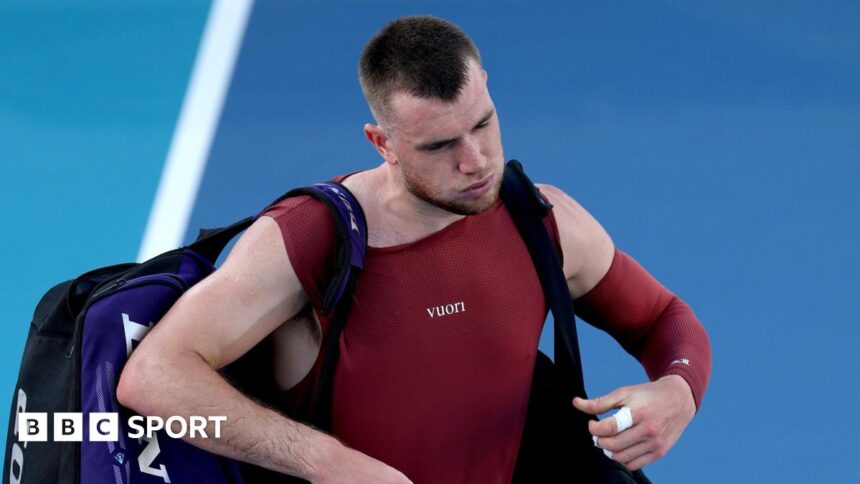
The narrative of a young athlete’s comeback is often written in bold, declarative statements: a triumphant return, a statement victory, a relentless charge back to the top. Britain’s Jack Draper, however, is scripting his with deliberate pauses and strategic full stops. His decision to withdraw from the prestigious Monte Carlo Masters, confirmed this week, is not a setback. It is, in fact, the clearest signal yet of a profound maturity—a commitment to the long game that could define his career.
Since his return from a six-month hiatus due to a debilitating bruised humerus bone, Draper’s trajectory has been a compelling study in controlled explosion. He stormed back with a title in Doha, delivered a seismic win over Novak Djokovic in Indian Wells, and then, predictably, stumbled in his Miami opener. This latest move to skip the clay-court swing opener is a conscious application of the brakes, a recognition that true durability isn’t forged in a frantic sprint, but in a carefully measured marathon.
The Injury Shadow: More Than Just a Bruise
To understand the prudence of Draper’s choice, one must appreciate the insidious nature of his injury. A bruised humerus bone is not a simple muscle strain. It’s a deep, structural issue that saps the very foundation of a tennis player’s power—the serve and the forehand. For six months, the sport’s most promising left-hander was sidelined, watching his ranking plummet as he dealt with an injury that offers no quick fixes, only rest and meticulous rebuilding.
Draper’s initial comeback burst was spectacular, but it was also a high-risk, high-reward test. Playing seven matches in five weeks across varying conditions was a brutal stress test for that healing arm. The victory over Djokovic was a world-class performance, proving his top-tier ceiling remains utterly intact. The loss to Reilly Opelka in Miami was the inevitable physical and mental comedown. As Draper himself stated in Miami, he is “feeling good,” but emphasized the need for patience with eight months of season still ahead. His actions now loudly echo those words.
The Logic of the Withdrawal: A Tactical Resetting
Monte Carlo’s slow, demanding clay courts are the antithesis of a recovery surface. The long, grinding rallies place sustained stress on the entire body, particularly the upper limbs through heavy topspin. For Draper, committing to this would have been a dangerous pivot. His withdrawal is a multi-faceted strategic play:
- Physical Preservation: It provides a critical extended period for continued strength and conditioning work, allowing the humerus to fully consolidate without the acute impact of competition.
- Clay-Court Realism: Draper’s game, built on flat, penetrating power and a potent serve, is naturally less effective on clay. A truncated, cautious clay season minimizes injury risk on his least-favorable surface.
- Grass-Court Prioritization: The real prize for a powerful British lefty is the grass. By managing his load now, Draper positions himself for a full, explosive campaign on the lawns of Stuttgart, Queen’s, and ultimately Wimbledon, where his game is most dangerous.
- Mental Reset: After the rollercoaster of return, a planned break prevents burnout and reaffains a sense of control over his own trajectory.
This is not avoidance; it is asset management. Draper and his team are treating his prodigious talent—and his now-proven ability to beat the very best—as a precious commodity to be protected and deployed optimally.
Expert Analysis: The Blueprint for a Breakthrough
This cautious approach mirrors the career management seen in the sport’s most resilient champions. Andy Murray’s early career was punctuated by strategic scheduling to protect his body, while Novak Djokovic has mastered the art of peaking for majors. Draper is demonstrating a similar macro-view.
“The Draper we saw in Indian Wells is a future Grand Slam contender, full stop,” says a veteran ATP physio who wished to remain anonymous. “But that version only exists if the arm holds up. The humerus injury is a warning sign. Ignoring it to chase ranking points in Monte Carlo would be short-sighted bravery—the kind that ends careers. His withdrawal is the smartest move he’s made all year. It shows he’s listening to his body and has a team with a clear plan beyond next week.”
The key metrics from his comeback are overwhelmingly positive: the power is undimmed, the competitive fire burns bright, and his tactical growth, evidenced by the Djokovic win, is clear. The cautious comeback protocol is about ensuring those metrics remain true in October, not just in March.
Predictions: A Summer of Reckoning on Grass
So, what does the long game look like? The roadmap is becoming clearer. Expect a minimal, preparation-focused clay schedule, perhaps with a late entry into one event like Madrid or Rome solely for match practice. The true focus will shift decisively to the grass.
By prioritizing Wimbledon and the preceding warm-ups, Draper is setting the stage for a potential seismic splash. His game is tailor-made for the surface: his lefty serve swings away, his flat groundstrokes skid through the court, and his improved net play can thrive. We predict:
- A targeted return to action in late April or May.
- A major threat at Queen’s Club, a traditional bellwether for British success.
- A seeded position and legitimate second-week aspirations at Wimbledon.
- A finish to 2024 solidly back inside the world’s Top 20, with his injury woes firmly in the rearview.
The victory over Djokovic was no fluke; it was a preview. The withdrawal from Monte Carlo is the intermission, ensuring the main feature can play out as intended.
Conclusion: Patience as the Ultimate Weapon
In the hyper-competitive, week-to-week grind of the ATP Tour, the courage to step back is often rarer than the courage to step forward. Jack Draper, at 24, is displaying a wisdom beyond his years. He is resisting the external pressure to constantly compete, understanding that his journey is not defined by a single Masters 1000 event on clay, but by a career of contending for the sports ultimate honors.
His cautious comeback and the subsequent Monte Carlo withdrawal are not signs of fragility, but of formidable intelligence. He is playing chess while the tour plays checkers, sacrificing a pawn to protect his king and queen. The arm has been tested. The game is clearly there. Now, by exercising patience with eight months ahead, Draper is building the physical and strategic foundation to ensure that when he arrives at the tournaments that matter most, he is not just present, but primed to dominate. The long game is underway, and for Jack Draper, the wisest move right now is no move at all.
Source: Based on news from BBC Sport.