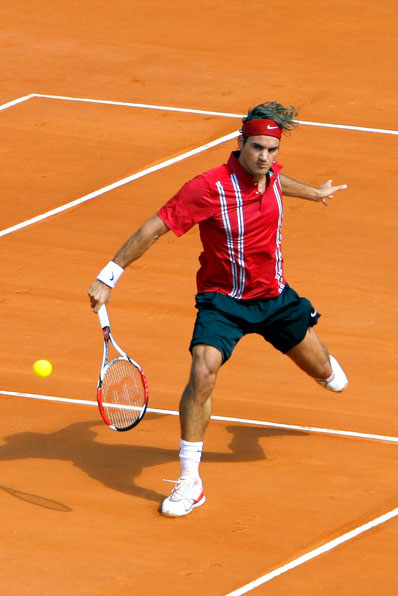
Jack Draper’s Clay-Court Conundrum: Strategic Withdrawal from Monte-Carlo Sparks Season of Speculation
The pristine courts of the Monte-Carlo Country Club, nestled against the Mediterranean, are a rite of passage for the ATP Tour’s clay-court campaign. This year, however, the draw will unfold without one of Britain’s brightest and most physically scrutinized talents. Jack Draper’s decision to withdraw from the Rolex Monte-Carlo Masters is more than a simple schedule change; it’s a calculated move that speaks volumes about his current priorities and the high-wire act of managing a promising yet injury-disrupted career. This withdrawal delays the start of his 2024 clay season, sending a clear signal: for Draper, the long game is the only game that matters.
Beyond the Surface: Decoding the Withdrawal
On the surface, a player skipping a tournament is routine. For Jack Draper, context is everything. The 22-year-old left-hander possesses a game many experts believe is tailor-made for success on all surfaces, with his thunderous serve, flat, penetrating groundstrokes, and improving net craft. Yet, his trajectory has been consistently interrupted by a litany of physical setbacks—from shoulder issues to abdominal strains and persistent fatigue-related problems.
His withdrawal from Monte-Carlo follows a demanding hard-court swing in North America, where he displayed scintillating form, including a run to the quarter-finals at the Mexican Open. The decision, therefore, appears precautionary and strategic. Clay-court tennis is a brutal physical examination, demanding longer points, greater sliding exertion, and extended rallies. For an athlete like Draper, whose body has been a reluctant partner in his ambition, plunging directly into a Masters 1000 on the dirt without optimal preparation is a significant risk.
This move suggests his team is prioritizing peak physical conditioning over ranking points. The goal is likely to build a more robust physical base to not only survive but thrive during the grueling European clay season, which culminates at Roland-Garros.
The Clay Equation: Risk vs. Reward for Draper
Draper’s relationship with clay is intriguing. His powerful game can be devastating, allowing him to hit through the court and shorten points. However, the surface also neutralizes some of his biggest weapons; his serve gains less bite, and the slower bounce can expose any lingering fragility in his movement or stamina.
By skipping Monte-Carlo, Draper and his team are making several calculated bets:
- Recovery Time: Additional weeks to recuperate from the hard-court grind, address any niggling concerns, and engage in specific clay-court physical conditioning.
- Targeted Preparation: A longer, uninterrupted training block to hone his movement, sliding technique, and point construction for clay.
- Schedule Management: A less congested calendar reduces the risk of a mid-season breakdown, allowing him to potentially hit key events like Madrid, Rome, and the French Open at 100%.
The immediate ranking impact is a downside. Draper, who is knocking on the door of the world’s top 30, will forgo valuable points. Yet, this is a trade-off for sustainability. The philosophy is clear: a fully-fit Draper is a threat on any surface, and preserving that asset is paramount.
Expert Analysis: A Mature Move in a Young Career
From a coaching and development perspective, this withdrawal is a sign of maturity. Too often, young talents feel compelled to chase every point, playing through minor discomfort that escalates into major injuries. Draper has already endured that cycle.
“This is a smart, professional decision,” says a veteran ATP fitness coach who wished to remain anonymous. “Draper’s ceiling is immense—Top 10, Grand Slam contender immense. But his body has been playing catch-up with the demands of his power. Clay exposes any physical deficit mercilessly. Using this time for strength and conditioning work, rather than potentially limping through early rounds in Monaco, is an investment. It shows he and his team are looking at the next five years, not just the next five weeks.”
Tactically, it also allows time to refine his approach. On clay, patience and point construction must marry with his natural aggression. This training block is an opportunity to build more clay-court specific patterns, develop a heavier topspin ball to complement his flat drives, and ensure his formidable return game is adapted to the slower conditions.
Predictions: What’s Next for the British No. 2?
Draper’s revised schedule will now be the focus of intense speculation. The logical step is a debut at the Mutua Madrid Open (April 24 – May 5). The altitude in Madrid makes the courts play faster, which could provide a more comfortable transition from hard courts. Following that, the Internazionali BNL d’Italia in Rome (May 8-19) offers a truer, slower clay test as the perfect final tune-up for Paris.
Here’s what to watch for when Draper finally steps onto the clay:
- Movement and Stamina: Will he move with confidence and without hesitation? Can he sustain his intensity in long, grueling rallies deep into a third set?
- Adapted Weaponry: Look for a more varied serve placement and a willingness to engage in longer rallies before unleishing his forehand.
- Emotional Composure: Clay requires problem-solving. How will he handle frustration when winners are retrieved and games extend?
If the extra preparation pays off, Draper could be a dangerous floater in the Roland-Garros draw. His game, if supported by physical resilience, is capable of upsetting established clay-courters. A deep run in Paris is a bold but plausible outcome if this plan comes together.
Conclusion: A Withdrawal as a Statement of Intent
Jack Draper’s absence from the Monte-Carlo Masters is not a retreat. It is a strategic redeployment of time and resources. In an era where the tennis calendar is relentless, his withdrawal is a modern act of career management—a recognition that longevity at the summit requires difficult, proactive choices.
This decision frames the 2024 clay season not as a standalone chapter, but as a crucial phase in the broader narrative of Draper’s career. The message is unambiguous: he is no longer just a prodigious talent battling his body, but a thinking athlete plotting his path to the top. The clay courts of Madrid, Rome, and Paris will now serve as the proving ground for this calculated gamble. The tennis world will be watching closely to see if this delay was indeed the masterstroke that unleashes the full, formidable potential of Jack Draper.
Source: Based on news from Sky Sports.
Image: CC licensed via commons.wikimedia.org