Bodycam Footage Reveals Disoriented Tiger Woods Following Florida Crash and DUI Arrest
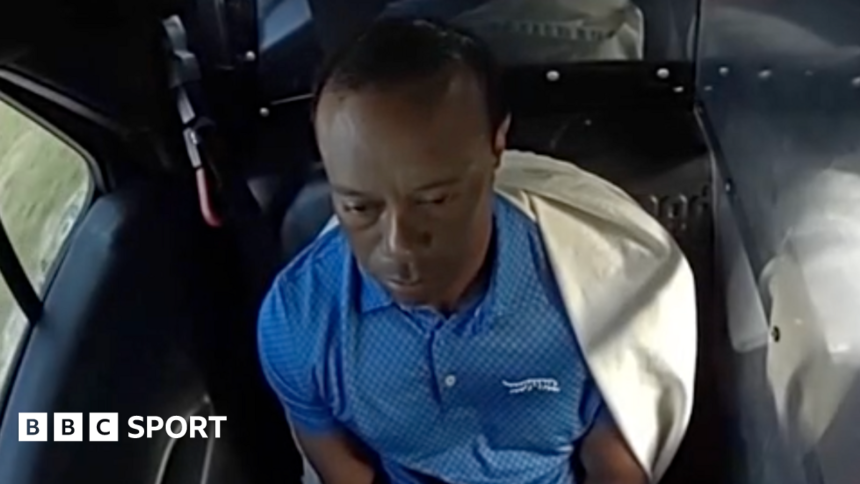
The stark, unblinking eye of a police body camera has provided the world with a jarring and intimate portrait of a legend in crisis. Newly released footage from the Palm Beach County Sheriff’s Office details the immediate aftermath of Tiger Woods’ late-night single-vehicle crash last month, showing a disoriented and physically struggling golf icon in the moments following the rollover accident. The video, coupled with his formal plea of not guilty to a driving under the influence charge, opens a complex new chapter in Woods’ long saga of personal and professional comebacks.
A Jarring Scene: The Bodycam Footage Breakdown
Unlike the controlled, focused athlete seen on Sunday greens, the bodycam footage paints a picture of profound disorientation. The video begins with deputies arriving at the scene of a Genesis SUV that had veered off the road, clipped a truck, and rolled onto a grassy embankment. Woods, the sole occupant, is already out of the vehicle and seated on a curb when officers approach.
Key moments captured in the footage include:
- Cooperative but Confused Demeanor: Woods is polite and compliant with deputies, answering questions about his identity and confirming he was the driver. However, his speech is notably slow and his responses at times seem distant, a stark contrast to his typically sharp public persona.
- Physical Instability: When asked to stand, Woods stumbles and requires assistance from an officer to maintain his balance. He mentions pain in his back, a lingering issue from his 2021 car accident, but his overall motor skills appear significantly impaired beyond what an injury would explain.
- The “Hiccuping” Episode: Perhaps the most telling segment occurs in the back of the patrol car. As he is being transported for evaluation, Woods is heard audibly hiccuping repeatedly, a symptom often associated with certain types of intoxication or the body’s stress response to chemical influence.
- Field Sobriety Test Avoidance: Citing pain from his surgically repaired leg and back, Woods informs the deputies he is physically unable to perform standard field sobriety tests. This led directly to his arrest for DUI.
The footage is devoid of any confrontation or argument. Instead, it portrays a subdued and vulnerable Woods, a man seemingly grappling with the immediate physical and legal consequences of the event in real-time.
Legal Strategy Unveiled: The Not Guilty Plea and Its Implications
On Tuesday, through his legal team, Tiger Woods submitted a written plea of not guilty to the misdemeanor DUI charge. This move, while standard in such cases, signals the beginning of a strategic legal defense. Legal experts analyzing the case suggest several potential avenues his lawyers may pursue.
The core of the defense will likely hinge on the argument that Woods’ impairment was not due to alcohol or illicit drugs, but rather a negative reaction to prescribed medications. In his initial statement following the arrest, Woods attributed the incident to “an unexpected reaction to prescribed medications.” Police reports confirmed no alcohol was detected, but authorities noted “evidence of impairment” leading to the DUI charge, which in Florida encompasses impairment by any substance, not just alcohol.
His legal team may seek to have evidence suppressed or focus on mitigating circumstances, such as his documented physical ailments and the fact he was not involved in a collision with another person. The goal will likely be to negotiate a settlement that avoids a public trial, potentially involving a plea to a lesser charge like reckless driving, coupled with mandatory drug education or community service.
Beyond the Courtroom: Impact on Legacy, Brand, and Comeback Hopes
The ramifications of this incident extend far beyond a Florida courtroom. For Tiger Woods, every public moment is scrutinized through the dual lenses of his unparalleled athletic legacy and his history of personal turmoil.
Brand and Endorsement Fallout: While major partners like Nike have stood by Woods through previous scandals, this incident is different. It directly involves public safety and presents visual evidence of impairment. The bodycam footage is a powerful and damaging piece of media that could give corporate sponsors pause, especially those associated with family or wellness brands. His marketability, once considered bulletproof, now faces a new and severe test.
The Comeback Narrative Derailed: Since his catastrophic 2021 car accident, Woods’ story has been one of heroic recovery and limited, pain-managed golf. This new crash completely reframes that narrative. Questions about his judgment, his management of pain medication, and his overall well-being now overshadow any discussion of a competitive return. The trust he has painstakingly rebuilt with fans is once again fractured.
Personal and Public Health Perspective: At its heart, the footage is a concerning health snapshot. It underscores the serious and often hidden challenges of managing chronic pain and the powerful medications used to treat it. For many, it may serve as a public service announcement about the dangers of prescription drug impairment behind the wheel, regardless of the individual’s fame.
What Comes Next for Tiger Woods?
Predicting the next act in Tiger Woods’ life is notoriously difficult, but the contours of his immediate future are coming into focus.
In the short term, his world will be dominated by legal proceedings. His attorneys will work diligently to resolve the DUI charge with minimal exposure. Expect a series of pre-trial hearings and negotiations played out in the press. Concurrently, Woods will almost certainly retreat from public view, likely re-engaging with a private team of medical and therapeutic professionals to address the root causes of the incident.
Professionally, his golf future is now shrouded in greater doubt than ever. While his body’s ability to withstand tournament play was already the primary question, this incident introduces a massive variable of personal stability. The PGA Tour may issue no formal sanction for a misdemeanor, but the unspoken pressure and personal shame could keep him away from competition indefinitely. His role as a player-ambassador for the PGA Tour and his involvement in course design will continue, but his playing schedule will be indefinitely on hold.
Ultimately, this episode is a tragic reminder that Tiger Woods, for all his superhuman achievements, battles profoundly human demons. The bodycam footage does not show a villain, but a man in clear distress. His path forward requires not just legal maneuvering, but a renewed and transparent commitment to personal health. The greatest comeback story in sports history now faces its most daunting obstacle yet: overcoming not just physical brokenness, but the patterns that led to a broken moment, forever preserved in the high-definition gaze of a police camera.
Source: Based on news from BBC Sport.