Stephon Gilmore Announces Retirement: NFL World Reacts to a Legendary Career’s End
The announcement came not with a press conference fanfare, but with a quiet, dignified post on a Thursday afternoon. A series of career-spanning photos on Instagram, capped with a simple, powerful message: “I have decided to retire from the NFL.” With that, Stephon Gilmore, one of the defining defensive backs of his generation, closed the book on a remarkable 13-year career. The news sent immediate shockwaves across the NFL landscape, triggering an outpouring of respect, nostalgia, and Hall of Fame debate from fans, analysts, and former teammates alike. The retirement of a player of Gilmore’s caliber isn’t just a transaction update; it’s the closing of a chapter on an era of lockdown, technique-driven cornerback play.
From Buffalo Star to New England Legend: The Making of a DPOY
While his legacy is inextricably linked to the New England Patriots, Gilmore’s path to greatness was a testament to relentless evolution. Drafted 10th overall by the Buffalo Bills in 2012, he quickly established himself as a formidable, physical presence in the AFC East. He made his first Pro Bowl in Buffalo, signaling his arrival among the league’s elite. However, his 2017 free-agent move to New England under Bill Belichick proved to be the catalyst for historic achievement.
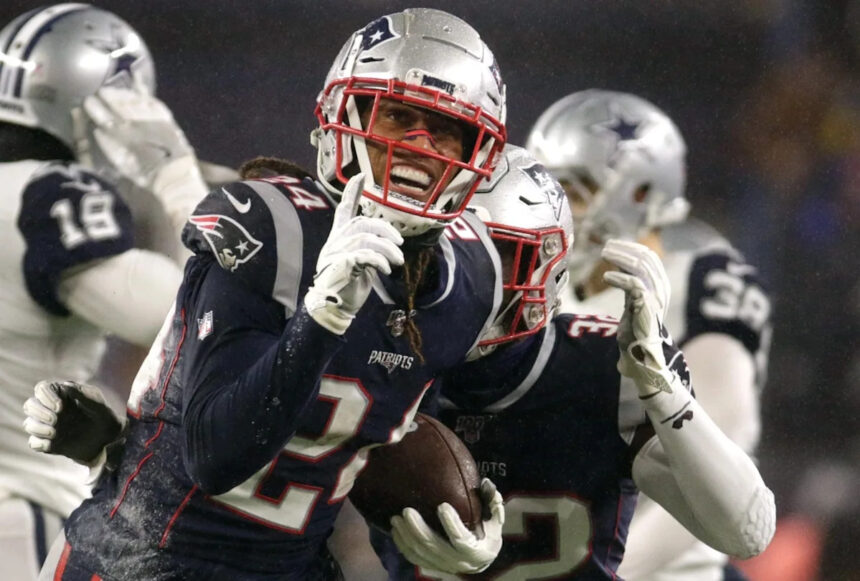
In Foxborough, Gilmore transformed from a Pro Bowl talent into the NFL’s most feared defensive weapon. His game reached its zenith in 2019, a season for the defensive back textbook. That year, Gilmore didn’t just cover receivers; he erased them. Leading the league with six interceptions and 20 passes defended, he became the first cornerback in a decade to be named the NFL Defensive Player of the Year. His signature performance came in a dominant Week 10 victory over the Philadelphia Eagles, where he shadowed and smothered tight end Zach Ertz before sealing the game with a spectacular, one-handed interception in the end zone.
His contributions were pivotal in the Patriots’ run to Super Bowl LIII, a defensive slugfest where Gilmore’s blanket coverage on the Los Angeles Rams’ receivers was a masterclass. His fourth-quarter interception of Jared Goff at the goal line effectively sealed the Patriots’ sixth Lombardi Trophy. The accolades during this peak were staggering:
- 2019 NFL Defensive Player of the Year
- Two-time First-Team All-Pro (2018, 2019)
- Five-time Pro Bowl selection
- Member of the NFL 2010s All-Decade Team
The NFL World Reacts: Respect, Memories, and a Gold Jacket Debate
Social media became a digital retirement party upon Gilmore’s announcement, with reactions highlighting the universal respect he commanded across the league. Former Patriots teammate Devin McCourty simply posted, “Congrats bro!! Hell of a career!” while Julian Edelman shared a photo of their Super Bowl celebration with the caption, “Enjoy retirement Gilly. One of the best to ever do it.” The sentiment extended to rivals and contemporaries, with wide receivers like Torrey Smith acknowledging the challenge he presented: “One of the best I ever went against… Congrats on a great career.”
Beyond the well-wishes, a more substantive debate quickly emerged: Is Stephon Gilmore a future Hall of Famer? Analysts and fans began dissecting his resume. The Defensive Player of the Year award is a monumental differentiator for a cornerback, a honor held by only a select few at the position like Deion Sanders and Charles Woodson. Combined with a Super Bowl ring, multiple First-Team All-Pro nods, and his status on the All-Decade Team, his case is compelling. NFL Network’s Ian Rapoport noted, “The credentials are certainly there,” while many pointed out that his peak, though not as long as some, was as high as any cornerback’s in the 21st century.
The discussion also focused on his style. In an era increasingly favoring athleticism and recovery speed, Gilmore was celebrated as a technician. His game was built on film study, precise footwork, intelligent leverage, and an uncanny ability to disrupt at the line of scrimmage. “He was the last of a dying breed of big, physical, press-man corners who could travel with a team’s No. 1 receiver all game and win with fundamentals,” one analyst tweeted, capturing the essence of his impact.
The Final Tour: A Respected Veteran’s Journey
After an injury-shortened end to his Patriots tenure, Gilmore embarked on a four-team, four-year tour that solidified his reputation as the ultimate professional. Each stop was a one-year “prove-it” deal, and at each, he proved he was still among the best. In Carolina, he provided stability. In Indianapolis, he was a defensive leader and playmaker. In Dallas, he started all 17 games for a playoff team, demonstrating remarkable durability. Finally, in Minnesota last season, the 33-year-old Gilmore started every game, recorded two interceptions, and remained a reliable, high-IQ defender.
This “victory lap” phase of his career was crucial. It showed that his excellence wasn’t solely a product of the Patriots’ system but was rooted in his own skill, preparation, and football intelligence. He wasn’t just chasing a ring; he was demonstrating the timeless value of a true shutdown corner. By contributing at a high level across multiple schemes and conferences, he quietly bolstered his Hall of Fame resume, proving his greatness was portable.
What’s Next for Gilmore and His Legacy?
While Gilmore steps away from the field, his presence in the football world is unlikely to fade. Given his cerebral approach to the game, many predict a swift transition into coaching or broadcasting. His ability to break down wide receiver technique and offensive schemes would make him a valuable asset in any team’s defensive meeting room or in a network’s broadcast booth.
As for his legacy, the debate will rage for the five years until he becomes eligible for the Pro Football Hall of Fame. His peak was arguably the most dominant for a cornerback since prime Darrelle Revis. The combination of individual hardware (DPOY), team success (Super Bowl), and sustained elite recognition (All-Decade) creates a powerful argument. He will be a fascinating test case for the Hall’s valuation of peak performance versus longevity.
A Quiet Exit for a Loud Career
Stephon Gilmore’s retirement marks the end of an era for defensive back play. In a league that constantly evolves towards offense, he was a stark reminder that a single, supremely gifted defender could still tilt the field. He didn’t need outrageous celebrations; his game tape was his statement. From the cold winds of Buffalo to the championship pressure of New England, and through his final respected chapters elsewhere, Gilmore played the cornerback position with a quiet, devastating efficiency.
The social media tributes are more than just digital farewells; they are acknowledgments of a career built on excellence, preparation, and an unwavering standard. As the football world says goodbye to one of its premier technicians, the conversation immediately turns to Canton. Whether he ultimately receives a gold jacket or not, the record is clear: for a period of time, Stephon Gilmore wasn’t just the best cornerback in football—he was the best defensive player, period. And that is a legacy that resonates long after the final Instagram post fades.
Source: Based on news from Yahoo Sports.