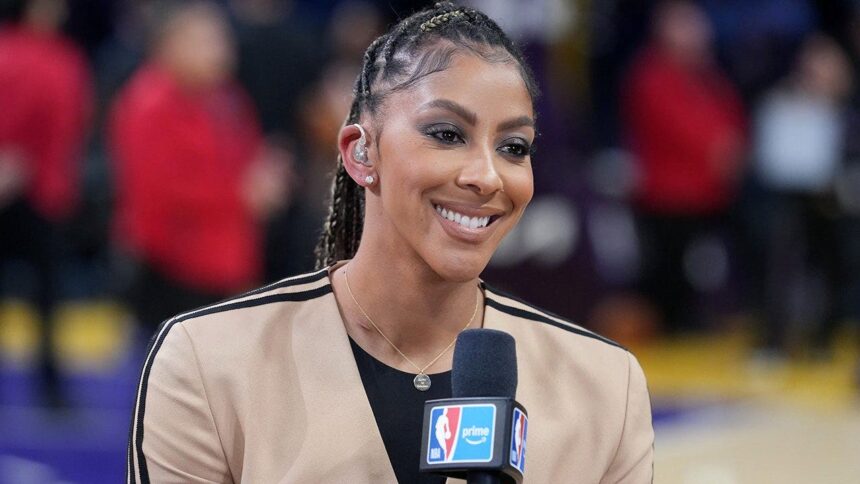
Candace Parker Blasts Geno Auriemma, Sides with Dawn Staley in Final Four Firestorm
The NCAA Women’s Final Four delivered a historic clash on the court, but it was a fiery, post-game confrontation at halfcourt that has ignited a raging debate about respect, rivalry, and the shifting power dynamics in the sport. After UConn’s season ended in a loss to South Carolina, legendary Huskies coach Geno Auriemma confronted Gamecocks coach Dawn Staley, upset over a missed pregame handshake. The tense exchange, which required staff intervention, has now drawn a powerful verdict from one of basketball’s most influential voices: Candace Parker.
A Collision of Titans: The Staley-Auriemma Confrontation Explained
The stage was set for a monumental semifinal. The undefeated South Carolina Gamecocks, led by Dawn Staley, faced the perennial powerhouse UConn Huskies, led by Geno Auriemma. Before the ball was even tipped, Auriemma noted Staley’s absence for the customary pregame coach’s handshake. The moment festered.
After South Carolina secured its victory, Auriemma marched toward Staley at center court. What followed was a heated verbal exchange, with both coaches appearing to yell as assistants quickly moved in to separate them. While the specific words were lost in the arena noise, the body language spoke volumes: frustration, accusation, and a clear rupture in decorum between two of the game’s greatest architects.
Key Points of the Conflict:
- Trigger: A missed pregame handshake, a long-standing ritual of sportsmanship.
- Confrontation: Auriemma initiated a post-game confrontation at halfcourt, leading to a heated, public argument.
- Context: The high-stakes environment of the Final Four, with Staley’s team ending UConn’s season.
Candace Parker’s Unfiltered Take: A New Generation Weighs In
Enter Candace Parker. The two-time WNBA MVP, three-time champion, and current broadcaster did not mince words in her analysis. Having transitioned from a player who competed against both coaches’ teams to a respected media voice, Parker’s perspective carries unique weight. She squarely sided with Dawn Staley, showing zero empathy for Auriemma’s position.
Parker’s critique, delivered on her broadcast platform, went beyond the single incident. It framed Auriemma’s reaction as a symptom of an older guard struggling to adapt to a new era. In her view, the demand for a public ritual of respect clashed with the modern, competitive intensity that Staley embodies. Parker highlighted Staley’s focus on her team and the game at hand, suggesting that pregame formalities can—and perhaps should—be secondary to competitive preparation.
Parker’s Core Argument: The game has evolved. The era of mandated, performative respect between fierce competitors is fading, replaced by a raw, focused intensity that prioritizes the team above all else. For a player of Parker’s generation, Staley’s approach is understandable, even commendable. Auriemma’s public eruption, therefore, was seen as an unnecessary escalation.
Beyond the Handshake: A Deeper Cultural Clash in Women’s Hoops
This incident is not merely about a forgotten greeting. It reflects a deeper, simmering cultural shift within women’s basketball.
For decades, Geno Auriemma and UConn were the undisputed epicenter of the sport. The standard was set in Storrs, and the dynasty demanded a certain deference. The pregame handshake is part of that established protocol.
Dawn Staley and South Carolina represent the new vanguard. Staley has built a juggernaut that rivals UConn’s dominance, but with a distinctly different, fiercely passionate culture. Her identity as a coach is tied to protecting and empowering her players in a bubble of “us versus the world.” In that framework, external formalities can be viewed as distractions.
Candace Parker, as a bridge between these eras, is effectively validating the new school’s ethos. Her public stance signals that the sport’s center of gravity—and its rulebook of unwritten rules—is changing. The authority to define what constitutes “respect” is no longer unilateral.
Expert Analysis: What This Means for the Sport’s Future
The reverberations from this clash will be felt long after the championship nets were cut down. First, it cements the South Carolina-UConn matchup as the premier, and most emotionally charged, rivalry in women’s college basketball. Future meetings will now carry this baggage, adding a layer of personal stakes that fans will eagerly anticipate.
Second, it elevates the voices of former players like Candace Parker in shaping the narrative. Their perspectives, rooted in recent lived experience, challenge traditional coaching protocols and hold immense sway with the audience. The media landscape for women’s sports is powerful enough to host these debates and amplify them.
Predictions for the Road Ahead:
- The pregame handshake ritual between these two coaches may be permanently altered, if it exists at all.
- Auriemma will face questions about his adaptability in this new era, while Staley’s status as a culture-defining leader for her players will only grow.
- This incident will empower other players and younger coaches to prioritize their own team’s routines and mental preparation over longstanding expectations.
Conclusion: A Defining Moment in a New Era
The Final Four confrontation between Dawn Staley and Geno Auriemma was a lightning rod, but Candace Parker’s decisive commentary was the thunder that followed. This moment transcends a simple sideline spat. It is a symbolic passing of the torch, a public declaration that the paradigms of the past are being rewritten.
While Auriemma’s frustration stemmed from a breach of tradition, Parker and many modern observers see Staley’s actions as a reflection of a deeper, more immersive form of leadership. In the high-stakes world of modern women’s basketball, where visibility and pressure have never been greater, the old rules are being questioned. Candace Parker didn’t just take aim at Geno Auriemma; she fired a shot across the bow of convention itself, signaling that in this new, vibrant era of the sport, respect will be earned on terms defined not solely by tradition, but by the powerful new voices now steering the conversation.
Source: Based on news from Fox Sports.