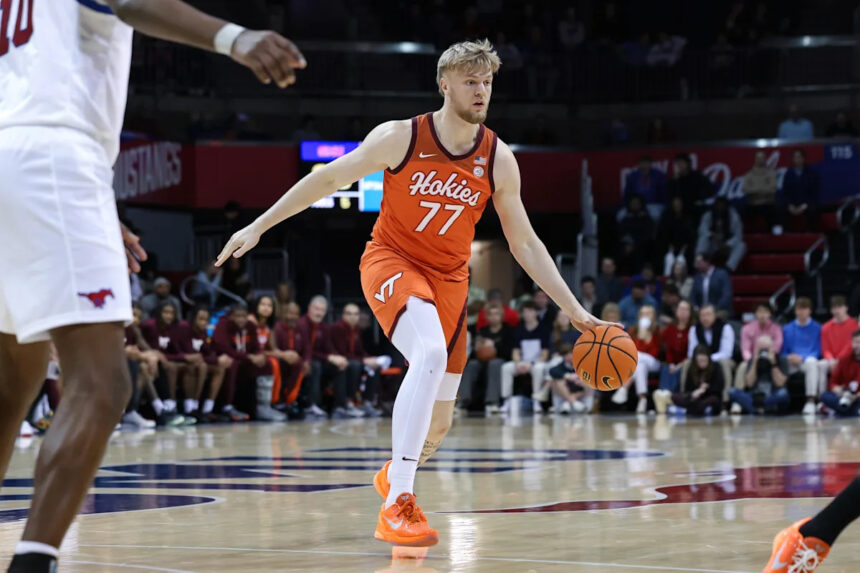
Virginia Tech Basketball Exodus Continues: Freshmen Dorn, Freeman Enter Transfer Portal
The revolving door of college basketball’s modern era continues to spin in Blacksburg. As the NCAA transfer portal officially opened this week, the Virginia Tech Hokies saw two more players officially enter their names, further reshaping a roster already in significant flux. Freshman center Antonio Dorn and freshman guard Brett Freeman have become the fifth and sixth members of the 2025-26 squad to seek opportunities elsewhere, signaling a period of stark transition for head coach Mike Young’s program. This latest development underscores the relentless challenge of roster construction in today’s game, where continuity is often sacrificed for immediate opportunity.
A Deepening Trend: One-and-Done in Blacksburg
The departures of Dorn and Freeman are not isolated incidents. They follow a growing list of Hokies exiting stage left, including Neoklis Avdalas, Jaden Schutt, Christian Gurdak, and Izaiah Pasha. A striking pattern emerges from this group: five of these six players spent only a single season with Virginia Tech. This “one-and-done” trend—not for the NBA, but for the transfer portal—highlights the precarious nature of building with freshmen in the current landscape. For a program like Tech, which has relied on veteran leadership and system continuity under Young, this level of turnover presents a unique and urgent challenge. The roster churn forces the coaching staff into a relentless cycle of recruitment, both from the high school ranks and, increasingly, the portal itself.
The reasons for such widespread movement are multifaceted:
- Playing Time Pursuit: Young players often seek larger, guaranteed roles.
- NIL Opportunities: Financial considerations can drive decisions to explore the market.
- System Fit: A freshman’s first year can reveal a mismatch in playing style or development trajectory.
- Roster Competition: The promise of incoming transfers can push existing players down the depth chart.
Analyzing the Departures: Dorn and Freeman’s Brief Tenure
Each departure tells its own story, and the cases of Antonio Dorn and Brett Freeman are distinctly different, yet both speak to the unpredictability of roster management.
Antonio Dorn: The 7-foot-0 German import arrived with the intrigue of size and international pedigree. His freshman campaign, however, was hampered by adversity. A back injury cost him seven games, and an eligibility issue sidelined him for another. In his 24 appearances (five starts), Dorn showed flashes of his potential but averaged a modest 2.6 points and 1.8 rebounds per game. For a player of his stature, the adjustment to ACC physicality and pace was a work in progress. With two years of eligibility left, Dorn’s decision to enter the portal suggests a desire for a fresh start where he can play a more central role and develop without the interruptions that marked his first year in Blacksburg.
Brett Freeman: The story for the 6-foot-5 guard from Charlotte is one of delayed launch. Freeman took a redshirt this past season, meaning he practiced but did not see game action. As a late addition to the 2025 class following a standout senior year, the plan was likely for a year of development before contributing. With four years of eligibility remaining, Freeman represents a clean slate for any program. His decision to transfer now indicates either a shift in his projected future role at Tech or an attractive opportunity presented itself, allowing him to reset his college career elsewhere with a full four-year window to make an impact.
The Silver Lining: Amani Hansberry’s Return Anchors the Frontcourt
Amid the departures, Virginia Tech received pivotal news. Forward Amani Hansberry, an All-ACC honorable mention selection, announced his return for next season. This cannot be overstated. Hansberry emerged as a cornerstone for the Hokies, providing interior scoring, rebounding toughness, and veteran savvy. His decision to stay offers Mike Young a critical foundational piece around which to rebuild. Hansberry’s presence in the paint provides stability, leadership, and a proven ACC performer. His return is the single most important roster development this offseason, acting as a counterbalance to the exodus and giving the Hokies a legitimate star to build upon.
What’s Next for Mike Young and the Hokies?
The immediate path forward for Virginia Tech is clear: aggressive portal recruitment. With six scholarships now effectively open, Mike Young and his staff must be buyers in the most competitive market in college sports. The needs are glaring:
- Experienced Guard Play: Replacing the ball-handling and shooting of departed guards is priority number one.
- Frontcourt Depth: Even with Hansberry’s return, the loss of Dorn and others necessitates adding size and muscle.
- Immediate Contributors: The Hokies can no longer afford projects; they need players who can log ACC minutes from day one.
This situation is a definitive test of Young’s adaptability. Known for developing players over time within his system, he must now master the art of quick integration. The 2025-26 season will likely hinge on the quality of the portal haul. Can Young identify and secure players who fit his motion-offense philosophy while also possessing the maturity to contribute immediately? The success of this recalibration will determine whether the Hokies slide toward the bottom of the ACC or remain competitive in the league’s middle tier.
Conclusion: An Era of Constant Rebuild
The departure of Antonio Dorn and Brett Freeman is more than a simple roster update; it is a symptom of the new reality in college basketball. For programs like Virginia Tech, the era of patiently building a team over four years is over. Replaced by a model of constant, year-to-year reassembly, where loyalty is fleeting and rosters are perpetually in motion. While the return of Amani Hansberry provides a vital anchor, the Hokies are undeniably in the midst of a significant overhaul. Mike Young’s challenge is no longer just about coaching games; it’s about architecting a competitive roster from a foundation that seems to shift monthly. The Hokies’ fortunes next season will be decided not on the hardwood of Cassell Coliseum this winter, but in the virtual trenches of the transfer portal this spring. The clock is ticking, and the rebuild is on.
Source: Based on news from Yahoo Sports.