Hugo Ekitike’s World Cup Dream Shattered: Achilles Rupture Sidelines Liverpool Star
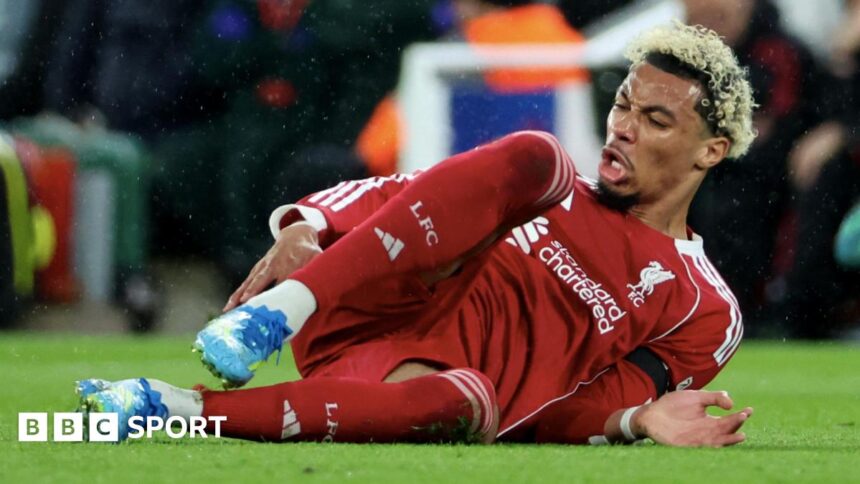
The cruel, unforgiving nature of elite sport was on full display at Anfield on Tuesday night. In a moment devoid of contact, a slip, a grimace, and a season—along with a lifelong dream—came crashing down. Hugo Ekitike, Liverpool’s electric French striker, suffered a ruptured Achilles tendon during the Champions League clash with Paris St-Germain, an injury that will see him miss the remainder of the campaign and the upcoming FIFA World Cup. The devastating diagnosis, confirmed by scans on Wednesday, sends shockwaves through Merseyside and the French national team setup, altering the trajectory of Liverpool’s season and one of football’s most promising careers.
A Night of Promise Turns to Agony at Anfield
The atmosphere was crackling under the Anfield lights, a heavyweight European tie poised on a knife’s edge. Hugo Ekitike, whose pace and direct running had troubled PSG’s defense in the opening exchanges, was embarking on another characteristically driving run. Then, in an innocuous instant, his foot gave way. The 23-year-old went down alone, clutching the back of his leg, his face etched with a pain that transcended the physical. The stadium fell silent as he was carefully stretchered off, the sympathetic applause masking a collective dread. Initial fears of a significant long absence were tragically confirmed less than 48 hours later. Liverpool’s subsequent statement, deliberately vague on a timeline, spoke volumes. A ruptured Achilles is one of football’s most dreaded sentences, a 6-9 month minimum recovery that steals time, rhythm, and momentum.
Analyzing the Impact: A Blow to Liverpool and Les Bleus
The ramifications of Ekitike’s injury are profound and multi-layered, creating immediate tactical voids and long-term planning headaches.
For Liverpool: Manager Jürgen Klopp has lost his most potent tactical weapon in transition. Ekitike’s ability to stretch defenses with his blistering speed and offer a clinical outlet on the counter-attack was integral to Liverpool’s approach in big games. His absence strips the frontline of a unique profile, placing greater creative burden on the likes of Mohamed Salah and Darwin Núñez. With the Premier League title race intensifying and the Champions League knockout stages looming, Klopp must now find solutions from within his squad or potentially expedite summer transfer plans.
- Goal Scouting Burden: Ekitike was Liverpool’s joint-top scorer in the Champions League this season. His output must be redistributed.
- Tactic Re-think: Klopp may be forced to adopt a more possession-dominant approach in big games without Ekitike’s counter-punching threat.
- Summer Uncertainty: With a recovery potentially stretching into the start of the next season, the club’s pre-season planning and budget are immediately complicated.
For France: Didier Deschamps has lost a wildcard. While not always a guaranteed starter, Ekitike represented a specific and terrifying option from the bench for Les Bleus. His skill set offered a completely different challenge for tiring defenders in the latter stages of World Cup matches. In a tournament packed into a compact schedule, such impact substitutes are gold dust. His absence narrows Deschamps’ choices and likely secures the spot for another contender, reshaping the dynamic of the reigning champions’ attack before a ball is even kicked in Qatar.
The Road to Recovery: What History Tells Us
An Achilles tendon rupture is a career-altering injury, though modern medicine and sports science have improved outcomes significantly. The road back is notoriously long and mentally grueling. The initial surgery will be followed by months of immobilization, meticulous rehab to regain range of motion, and then the arduous process of rebuilding strength, proprioception, and, most crucially for a striker, explosive power and confidence.
History provides a mixed bag. Some players, like Barcelona’s Ronaldinho in his later career, never fully recaptured their pre-injury explosiveness. Others, such as former Liverpool striker Mohamed Salah following a similar injury earlier in his career, have returned to peak levels, albeit after a careful, patient build-up. The key for Ekitike will be patience—a commodity in short supply for a young athlete at the peak of his powers. Liverpool’s medical team, renowned for their work, will be cautious. Rushing this recovery risks re-injury and long-term damage. The club’s statement, withholding a timeline, is a clear signal that this will be a marathon, not a sprint.
Psychological battle is as important as the physical one. Missing a World Cup, watching your teammates compete for the biggest prize while you are in the gym, is a brutal mental test. Liverpool will need to wrap their star in support, managing his expectations and keeping him engaged with the squad throughout the process.
Predictions and Silver Linings
Looking ahead, the landscape has undeniably shifted. For the World Cup, France remains formidable, but their path is now slightly less flexible. A player like Randal Kolo Muani or Wissam Ben Yedder may now feel their ticket to Qatar is more secure. For Liverpool, the January transfer window just became a more pressing period. While a like-for-like replacement for Ekitike’s caliber is nearly impossible to find mid-season, Klopp may seek a short-term attacking addition to bolster depth.
There is, however, a potential silver lining in this dark cloud. For Ekitike, the relentless grind of modern football, with its endless cycle of matches, has been forcibly paused. His body, which has carried him from prospect to stardom at a breakneck pace, receives the ultimate reset. If managed correctly, he can return in the next season physically refreshed, with a renewed hunger, and with many prime years still ahead of him. Furthermore, his absence opens a door for another Liverpool attacker—a Diogo Jota or a potential January recruit—to step into the void and make an indelible mark.
A Stark Reminder of Football’s Fragility
Hugo Ekitike’s injury is a heart-breaking narrative of potential postponed. It is a stark reminder that amidst the billions, the glamour, and the roaring crowds, football’s foundation is built on the fragile tendons and ligaments of its athletes. In one slip, the pinnacle of a player’s career—the World Cup—vanishes from view. The focus now shifts from the pitches of Anfield and Qatar to the operating theatre and the rehabilitation room. Liverpool’s season must march on without its French dynamo, and France will fly to the World Cup with one less weapon in their arsenal. But the football world will watch with hope, waiting for the day when Hugo Ekitike can once again grace the pitch, his devastating pace restored, ready to write the next chapter of a story that has, for now, been painfully interrupted.
Source: Based on news from BBC Sport.