FIFA Faces Fan Fury: $100 Train Rides Threaten World Cup Accessibility
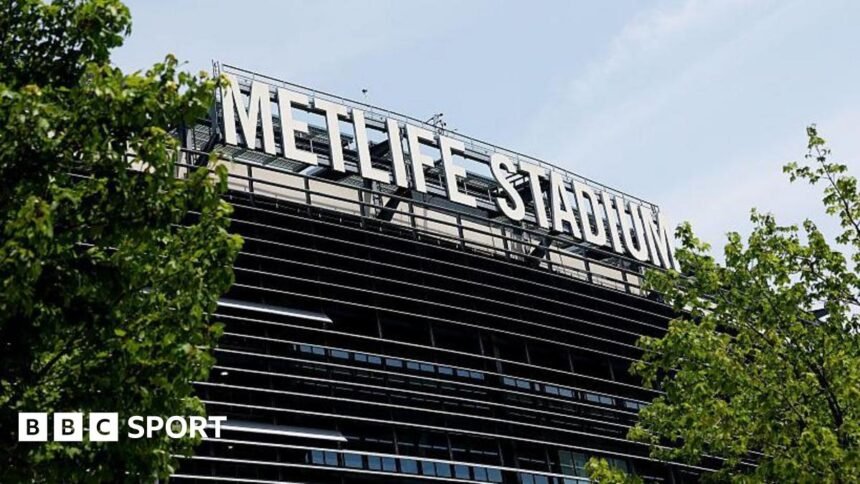
The 2026 World Cup promises to be a spectacle of unity, bringing the globe’s most beautiful game to North American soil. Yet, a brewing controversy over transportation costs for matches at New Jersey’s MetLife Stadium is threatening to overshadow the on-field action before a single ball is kicked. With reports that a single train ticket to the stadium could skyrocket to over $100—a staggering seven-fold increase—the dream of an accessible tournament is colliding with a harsh economic reality. In a dramatic political intervention, New Jersey Governor Mikie Sherrill has pointed the finger squarely at FIFA, arguing the global football body must step in to subsidize fares and prevent pricing out the very fans who give the event its soul.
The $100 Journey: From Penn Station to Price Shock
For years, fans attending New York Giants or Jets games at MetLife Stadium have enjoyed a relatively affordable and straightforward rail link. The standard round-trip fare from New York’s Penn Station to the Meadowlands is approximately $12.90. According to a report by The Athletic, this will change dramatically for the World Cup. The New Jersey Transit authority plans to implement special event pricing for the eight matches at the venue, which include the coveted final.
This premium pricing model could see that same 30-minute journey cost fans more than $100. To add insult to injury, no concessionary rates for seniors or children are currently planned, meaning a family of four could be facing a transportation bill exceeding $400 before accounting for tickets, food, or merchandise. This policy stands in stark contrast to the typical fan experience for major sporting events, where public transit is often promoted as an affordable and efficient alternative to gridlocked roads.
- Standard Fare: ~$12.90 round-trip (Penn Station to MetLife)
- Projected World Cup Fare: >$100 round-trip
- Increase: Over 670% (seven-fold)
- Key Matches Affected: All 8 games at MetLife, including the World Cup Final.
A Governor’s Gambit: Sherrill Calls Out FIFA’s Responsibility
Enter New Jersey Governor Mikie Sherrill, who has transformed a transit pricing story into a major point of political and public pressure. Governor Sherrill has publicly and unequivocally blamed FIFA for the situation, framing it as a failure of the governing body to plan for holistic fan accessibility. Her argument is rooted in the immense revenue FIFA generates from the tournament—broadcast rights, sponsorship deals, and ticket sales that are expected to shatter records.
“This is FIFA’s World Cup,” is the essential thrust of Sherrill’s position. She contends that the burden of providing accessible infrastructure for the event should not fall solely on local taxpayers or regular commuters who use NJ Transit. Instead, as the primary financial beneficiary, FIFA should allocate funds to subsidize fan transportation. This move is not just about fairness; it’s a pragmatic concern about traffic chaos. Without a viable and affordable rail option, hundreds of thousands of fans will be forced onto the roads, potentially paralyzing the already congested highways of New Jersey and New York and creating a security and logistical nightmare.
Sherrill’s stance raises a critical question about the modern mega-event host agreement: do governing bodies like FIFA have a moral, if not contractual, responsibility to ensure their events remain accessible to a broad demographic, not just the wealthy?
Expert Analysis: The True Cost of a Mega-Event
Sports economists and event logistics experts see this clash as a classic case of conflicting priorities. “FIFA operates on a model of maximized revenue and minimized operational risk,” explains Dr. Alan Torres, a professor of sports management. “The host cities and states bear the infrastructure costs—stadium upgrades, security, and yes, often transit enhancements—with the promise of long-term economic benefit. But the line between ‘enhancement’ and ‘exploitation’ of fans is very thin.”
The special event pricing strategy is not invented by FIFA but is a common tool for transit agencies seeking to manage extraordinary crowds and offset overtime and logistical costs. However, the scale of this price hike is unprecedented for a sporting event. Experts point out two key failures:
1. Lack of Integrated Planning: True fan experience planning integrates venue, ticket, and transport costs. This appears to have been siloed, with FIFA securing its revenues and local agencies left to manage crowd flow independently.
2. Public Relations Blind Spot: FIFA, still rehabilitating its image from past scandals, is acutely sensitive to perceptions of greed. A narrative of “$100 train rides to the Final” is a public relations disaster, painting the organization as out of touch with the common fan.
The absence of concessions is particularly glaring. “A World Cup is a generational family event,” notes fan experience consultant Maria Chen. “Telling a grandparent or a child that they must pay a $100 surcharge to attend is not just bad economics; it’s a betrayal of the spirit of the game FIFA claims to promote.”
Predictions and Potential Resolutions
How will this high-stakes standoff resolve? The pressure from Governor Sherrill, amplified by inevitable fan outrage, creates a powerful impetus for negotiation. Several outcomes are possible:
Scenario 1: The FIFA Subsidy (Most Likely): Under intense public and political pressure, FIFA quietly agrees to a financial package to offset transit costs. This could take the form of a direct payment to NJ Transit to lower the per-ticket price or the inclusion of a transit pass within the official ticket package for MetLife matches. This allows FIFA to claim it is “supporting fans” while avoiding a PR catastrophe.
Scenario 2: Tiered or Scaled Pricing: A compromise where fares are still elevated but not to the $100 extreme. Perhaps early-round matches see a $50 fare, dropping to the premium price only for the semi-finals and final. Concessionary rates may also be introduced as a goodwill gesture.
Scenario 3: Gridlock and Backlash (Worst Case): Negotiations break down. The $100 fare is implemented, leading to fan boycotts of transit, nightmarish traffic, and a global media narrative focused on exorbitant costs rather than football. This scenario damages FIFA’s brand, New Jersey’s reputation as a host, and the overall fan experience.
The precedent set here will be critical for other 2026 host cities. If FIFA subsidizes New Jersey, they will face similar demands from Dallas, Los Angeles, and Vancouver. The organization is therefore fighting not just one transit bill, but a fundamental principle of who pays for the fan ecosystem.
Conclusion: More Than a Train Ticket—A Test of Values
The debate over the $100 World Cup train ride is a microcosm of a larger struggle in modern sports. It is a test of values, pitting the commercial imperatives of a multi-billion dollar global enterprise against the fundamental accessibility and community spirit of a game that calls itself “for the world.” Governor Mikie Sherrill’s bold accusation has forced this issue into the open, challenging FIFA to live up to its own rhetoric.
Ultimately, the cost of a ticket from Penn Station to MetLife Stadium will be measured in more than dollars. It will be measured in goodwill, in legacy, and in the message sent to millions of fans worldwide. Will the 2026 World Cup be remembered as a tournament that welcomed all, or one where the journey to the cathedral of sport was priced as a luxury item? The ball, as they say, is now in FIFA’s court. How they respond will define the tournament’s heart long before the first whistle blows.
Source: Based on news from BBC Sport.