‘It’s Not Like My Ovaries Are Fighting’: Ronda Rousey’s Fiery Dismissal of Ageism Ahead of Historic Return
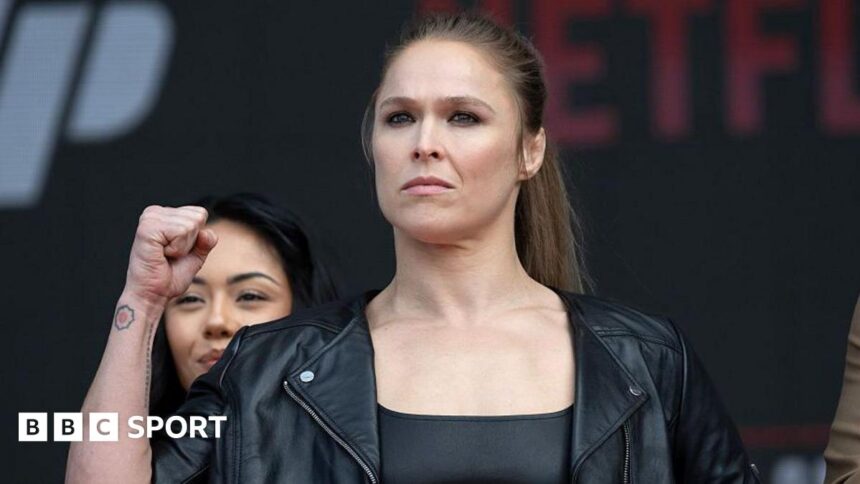
The world of combat sports is buzzing with a mixture of excitement and skepticism. On May 16th, at the gleaming new Intuit Dome in California, Ronda Rousey will step into an MMA cage for the first time in a decade. Her opponent, Gina Carano, hasn’t fought in 17 years. The narrative, predictably, has fixated on one element: their ages. Rousey, 39, and Carano, 44, are facing a chorus of critics questioning the legitimacy of their comeback. But in a characteristically blunt retort, Rousey has reframed the entire conversation, telling doubters, “It’s not like my ovaries are fighting.” This isn’t just a pre-fight soundbite; it’s a seismic challenge to the entrenched ageism and gendered criticism that female athletes uniquely face.
More Than a Comeback: A Cultural Reckoning
To understand the weight of this moment, one must recognize the stature of these two pioneers. Gina Carano was the face of women’s MMA before it had a UFC home, a mainstream star who crossed over into Hollywood. Ronda Rousey, the first woman signed by the UFC in 2012, didn’t just join the promotion—she dominated it, becoming one of the biggest MMA stars of all time and a global icon. Her record of 12 professional wins, with only 2 losses, is decorated with armbars and first-round finishes that revolutionized the sport. This bout is a living history lesson, a clash of the trailblazers who built the very platform today’s stars stand on.
Yet, the discourse has been clouded by reductive critiques about their “prime.” Rousey’s sharp analogy highlights a double standard seldom addressed so plainly. The focus on female athletes’ age is often implicitly tied to fertility and physical decline narratives that aren’t applied with the same frequency or tone to men. “It’s not like my ovaries are fighting,” she stated, cutting through the noise to assert that her value, her skill, and her competitive fire exist entirely separately from societal expectations of a woman in her late 30s.
The Double Standard: Rousey’s Jones Comparison
Rousey didn’t just defend herself; she pointed a spotlight on the industry’s hypocrisy. She cited 38-year-old former UFC champion Jon Jones, a fighter widely considered the greatest of all time, who last competed 17 months ago. His returns from layoffs are met with analyses of his skill and legacy, not dismissals based on his age or time away.
- Jon Jones (38): Layoffs are strategic; experience is an asset; “GOAT” status is reaffirmed.
- Ronda Rousey (39): Layoffs are a liability; age is a deficit; questions of relevance dominate.
This contrast is stark. The male athlete’s maturity is often framed as wisdom, while the female athlete’s is framed as expiration. Rousey’s comment forces a question: why is the timeline for competitive viability so drastically different? Her argument isn’t that age is irrelevant—it’s that the gendered lens of criticism is distorting the true analysis of this fight, which should center on technique, strategy, and the unique pressures of a comeback.
Expert Analysis: What to Expect in the Cage
Setting the cultural commentary aside, the in-cage dynamics are fascinating. This is not a typical fight. Both women have been absent from active MMA competition for eras. The key questions experts are asking:
Can Rousey’s Judo Still Dominate? At her peak, Rousey’s judo was nonpareil. Her ability to clinch, throw, and seamlessly transition to her signature armbar was a cheat code. After a decade, against an opponent not drilled in modern MMA defenses, that instinct may still be potent. However, ring rust is a real phenomenon, and the explosive, reflexive timing needed for her throws may have diminished.
What Does Gina Carano Have Left? Carano’s 17-year layoff is unprecedented for a main-event-level fight. Her striking was always heavy-handed, but the sport has evolved dramatically. Her cardio, grappling defense, and ability to handle the modern pace are immense unknowns. Her advantage lies in the sheer unpredictability she presents.
The X-Factor: Psychology. This fight will be won or lost in the mind. Who handles the monumental pressure, the bright lights, and the weight of expectation? Rousey has been there more recently, but also carries the memory of her two devastating losses. Carano enters with nothing to lose, a potentially liberating position.
Predictions and Legacy Impact
Predicting this fight is a fool’s errand, which is precisely what makes it compelling. The most likely scenario is a Rousey victory via her classic judo-to-armbar sequence, especially if Carano shows early hesitation. However, if Carano can keep the fight standing and test Rousey’s chin—a question mark since the Holly Holm fight—a stunning upset is within the realm of possibility.
Regardless of the outcome, the legacy impact is already cemented. This fight is a victory lap for two pioneers, a financial blockbuster, and a powerful cultural statement. It proves the enduring marketability of women’s MMA’s foundational stars. For Rousey, a win would be a storybook ending on her own terms. For Carano, simply competing at this level after so long would be a triumph.
Conclusion: A Fight Transcending Sport
The Rousey vs. Carano event on May 16th is more than a nostalgia act. It is a spectacle, a business milestone, and a social commentary. Ronda Rousey, with her signature ferocity, has already scored a significant victory outside the cage by calling out the age criticism for what it often is: a veiled form of sexism. “It’s not like my ovaries are fighting,” will resonate far beyond MMA, joining the lexicon of powerful retorts from female athletes demanding to be judged on their ability, not their age or gender.
When the cage door locks, two history-makers will write their final chapter. They carry not just their own ambitions, but the symbolic weight for every athlete told they’re “too old.” This fight is about legacy, redemption, and the raw, ageless desire to compete. The world will be watching, and Rousey has ensured we’re watching with a more critical eye toward the narrative, not just the fight.
Source: Based on news from BBC Sport.