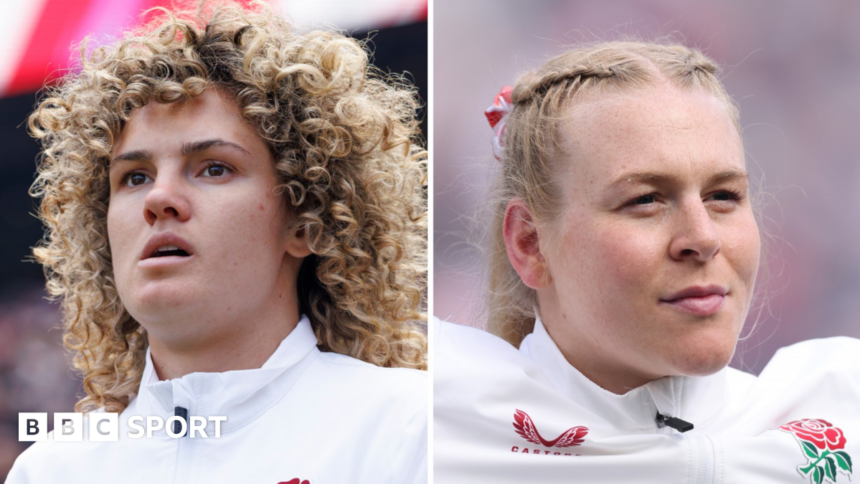
Kildunne Shifts to Wing, Burton to Lock: England’s Bold Selection Gambit for Scotland Clash
The Red Roses are not just evolving; they are experimenting at a rapid pace. Head coach John Mitchell has unveiled a startlingly reshuffled lineup for England’s Women’s Six Nations trip to Edinburgh, headlined by two of the most audacious positional switches seen in recent memory. In a move that underscores both a wealth of talent and a depth crisis, star full-back Ellie Kildunne is named on the wing, while powerhouse back-rower Abi Burton is thrust into the engine room at lock. This is not mere rotation; it is a strategic gambit that reveals Mitchell’s vision and tests the very adaptability of his world-class squad.
A Backline Reshuffle: Unleashing Kildunne’s X-Factor
Ellie Kildunne, the reigning World Rugby Women’s 15s Player of the Year and the tournament’s most potent attacking weapon, will start on the wing for the first time in her Six Nations career. This decision is a fascinating piece of tactical calculus. While it moves England’s primary strike runner one position infield, it is designed to amplify her impact.
Expert Analysis: Mitchell’s logic is multi-faceted. Firstly, it allows the dynamic Megan Jones to continue at full-back, where her playmaking skills and incisive running from deep have added a new dimension. Secondly, it potentially gives Kildunne more involvement in phase play, hunting for work in the midfield channels where her explosive power and elusive footwork can devastate a drifting defense. “It’s about getting our best athletes in positions to challenge the opposition’s defensive structure,” a source close to the setup suggested. The risk is disrupting the positional familiarity and safety under the high ball that Kildunne provides at 15, but the reward could be an even more unpredictable and potent Red Roses attack.
Elsewhere in the backs, Zoe Harrison reclaims the fly-half jersey from Holly Aitchison. Harrison, the steady hand who guided England through much of the World Cup, brings a proven tactical kicking game and distribution skills that will be crucial in the expected Scottish conditions. This selection signals a desire for control and territory, providing the platform for the game-breakers outside her.
The Forwards Crisis and Burton’s Baptism by Fire
If the backline shift is intriguing, the forward change is born of necessity. England’s resources at lock have been decimated by an unprecedented confluence of circumstances:
- Abbie Ward and Zoe Stratford are on maternity leave, having been cornerstone figures in the pack.
- Rosie Galligan is also pregnant and unavailable.
- Promising youngster Morwenna Talling suffered a tournament-ending leg injury against Ireland.
This dire shortage has forced Mitchell’s hand, leading to the seismic selection of back-row specialist Abi Burton in the second row. The 22-year-old Gloucester-Hartpury star is renowned for her ferocious tackling, athletic ball-carrying, and work over the ball, but the lock role demands a different skillset.
Expert Analysis: Burton’s selection at lock is a monumental challenge. The core duties of a lock—set-piece dominance in the lineout and providing brute force in the scrum—are not her natural domain. Her success will hinge on her athleticism and learning curve. England will likely simplify their lineout calls and rely on the experience of captain Marlie Packer and Alex Matthews in the back row to assist. However, Burton’s dynamism in open play could be a secret weapon, offering a mobile, disruptive presence that a traditional lock might not. This is a high-risk, high-reward strategy that will be severely tested by a physical Scottish pack.
Strategic Implications and Scotland’s Opportunity
These changes are not made in a vacuum. Scotland, fresh from a confidence-boosting win over Wales, will see this as a prime opportunity to exploit potential English instability. Coach Bryan Easson will have pinpointed two key areas:
1. The Lineout: This is Scotland’s clearest avenue for disruption. With a debutant lock pairing (Burton and the returning Sarah Beckett, also more a back-rower) and the absence of primary jumpers, England’s set-piece could be vulnerable. Scotland will look to attack throw and contest aggressively.
2. Defensive Positioning: Scotland’s kickers will undoubtedly test Kildunne’s positioning on the wing and the back-three chemistry early and often. High balls and tactical grubbers into the space behind the wing will be a persistent tactic.
For England, the game plan will be to simplify and empower. Expect a forward game built around powerful carries from the likes of Packer and Matthews to soften the Scottish defense, with Harrison using her boot to play in the right areas. The brilliance will be entrusted to individuals: Kildunne seeking mismatches, Jones entering the line, and Burton aiming to be a nuisance at the breakdown.
Predictions and Long-Term Vision
While the changes are dramatic, England’s sheer quality across the park should see them through against Scotland. The bench impact, featuring players like Sadia Kabeya and Lizzie Hanlon, will be crucial in solidifying the performance in the final quarter. A victory is the likely outcome, but the performance metrics Mitchell will care about most are cohesion at the lineout and defensive solidity out wide.
Looking beyond this weekend, these selections offer a glimpse into John Mitchell’s philosophy. He is stress-testing his squad’s versatility and building a “next player up” mentality that is not confined by positional labels. The experimentation with Burton, in particular, could unearth a valuable hybrid forward option for the future, much like the All Blacks have utilized in the men’s game.
Prediction: England to win by 18-25 points, but in a scrappier, more disjointed affair than their Irish rout. The scoreline may flatter a performance that will be more about grit and individual moments of class than fluid, structured dominance. The real battle, and the most telling narrative, will be fought in the air at the lineout and in the adaptation of two exceptional athletes to unfamiliar roles.
Conclusion: A Necessary Revolution
John Mitchell’s bold team selection is a statement of intent. Faced with a injury and absence crisis at lock, he has refused to simply promote a like-for-like replacement from the Championship. Instead, he has chosen to reconfigure his resources, placing immense faith in the athleticism and rugby intellect of Abi Burton and Ellie Kildunne. This is more than a team sheet; it is a manifesto for a flexible, resilient, and unpredictable England.
The match against Scotland is now laden with subplots. Can Burton withstand the set-piece onslaught? Will Kildunne’s magic translate seamlessly to the wing? The answers will not only determine the outcome at Hive Stadium but will also chart the course for Mitchell’s Red Roses revolution. In the pursuit of long-term growth and tactical surprise, England are willingly embracing short-term risk. The results of this fascinating experiment will reverberate throughout the rest of their Six Nations campaign and beyond.
Source: Based on news from BBC Sport.