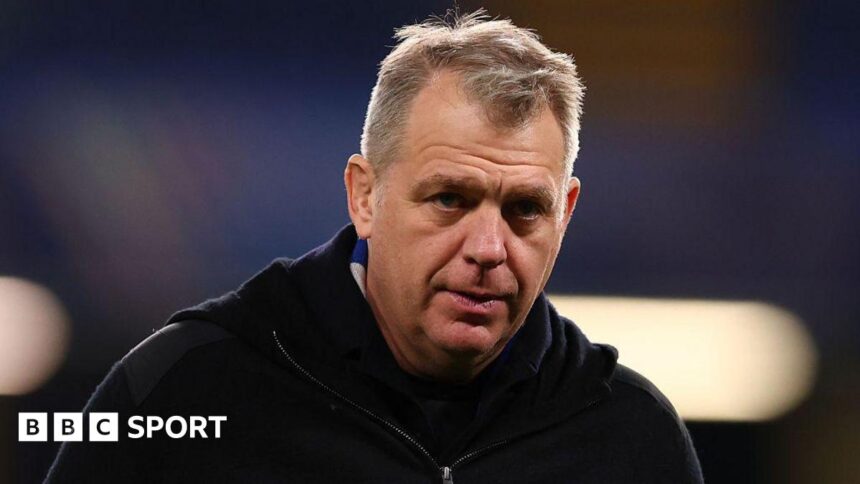
Chelsea in Crisis: Boehly-Linked Site’s £1,705 FA Cup Tickets Spark Fan Fury and Ownership Questions
The beautiful game, at its core, is built on a sacred covenant between club and supporter. It’s a relationship forged in shared history, identity, and, not least, access. For Chelsea fans dreaming of a day out at Wembley for the FA Cup semi-final against Leeds United, that covenant now feels shattered by the very hands steering the ship. A startling revelation has ignited a firestorm at Stamford Bridge, as it emerges that tickets for the marquee fixture are being offered for a staggering £1,705 on Vivid Seats—an American ticket resale platform part-owned by Chelsea chairman Todd Boehly.
The Price of Disloyalty: From £150 Face Value to a Four-Figure Scandal
When Chelsea released ticket details for the Wembley clash, the club-sanctioned prices were clear and, by modern standards, relatively fair: a range from £30 to £150. These were to be offered first to season ticket holders and members, upholding a long-standing tradition of rewarding loyalty. However, before a single legitimate sale had even begun via the club, over 100 listings appeared on Vivid Seats. The optics are damning:
- Prices soared to an astronomical £1,705 ($2,308) for the most expensive seats, representing a markup of over 1,000%.
- Listings were not confined to neutral areas; they populated all four stands of Wembley, including sections officially designated for Chelsea and Leeds supporters.
- Even hospitality lounge access was being resold, indicating a systemic harvesting of premium inventory.
- Critically, these tickets appeared before Chelsea’s official sale, suggesting access to tickets outside the public club channels.
For fans, this isn’t just a case of opportunistic touts; it’s a perceived betrayal from within. The connection to Boehly, the club’s co-controlling owner since the BlueCo consortium purchase in 2022, transforms a frustrating ticketing issue into a profound crisis of trust.
Boehly’s Dual Role: A Glaring Conflict of Interest in the “Modern Football” Era
Todd Boehly’s tenure at Chelsea has been defined by bold, often controversial, modernizing moves. A multi-club model, extravagant long-term contracts, and a data-driven approach have signaled a clear break from the Roman Abramovich era. Yet, this incident strikes at something more fundamental than transfer policy. It highlights an acute and uncomfortable conflict of interest.
As Chairman of Chelsea, Boehly’s primary duty is to the club’s health, its legacy, and its supporters. As a minority shareholder in Vivid Seats, a company that profits from the secondary ticket market, his financial interest is served by the very inflation of prices that hurts those same supporters. This isn’t a distant corporate link; it’s a direct overlap where the commercial gain of one entity (Vivid Seats) is in direct opposition to the fan welfare remit of another (Chelsea FC).
Experts in sports governance are sounding the alarm. “This isn’t just poor optics; it’s a fundamental breach of the stewardship role,” notes one leading football finance analyst. “When the chairman is financially tied to a platform that exploits the scarcity of his own club’s tickets, it eviscerates any notion of fair access. It commercializes fandom in its most raw and damaging form.” The question fans are rightly asking is: where does Boehly’s loyalty truly lie—in the stands at Stamford Bridge, or on the balance sheet of a resale platform?
Fan Backlash and the Wider Implications for Football
The reaction from the Chelsea faithful has been one of visceral “upset and confusion,” as described by supporter group spokespeople. This confusion stems from the sheer brazenness of the situation. Fan groups are now demanding immediate and transparent explanations from the club’s board. Key demands include:
- A full investigation into how these tickets were sourced and listed prior to the official sale.
- A public statement from Todd Boehly clarifying his position and involvement.
- Assurances that the club will take concrete steps to prevent ticket harvesting and protect future allocations.
- Potential legal or regulatory scrutiny into the secondary market for major sporting events.
This scandal extends beyond West London. It serves as a cautionary tale for the entire Premier League, where American ownership and associated commercial interests are increasingly prevalent. The incident exposes the dangerous frontier of “convergence” between club ownership and ancillary businesses. If left unchecked, it sets a precedent where the emotional capital of fans is seen not as a bond to be nurtured, but as a revenue stream to be leveraged across an owner’s entire portfolio.
Prediction: Reckoning and Reform on the Horizon
The fallout from this controversy will be significant and multi-faceted. We predict the following developments:
Short-Term: Chelsea will be forced into a major PR offensive. Expect a carefully worded statement distancing the “club’s operations” from Vivid Seats, possibly announcing an internal review. Boehly himself may need to address it directly to quell the uprising. The listings will likely be removed, but the damage to trust is already done.
Medium-Term: Supporter groups will gain renewed political capital. This incident will be weaponized in ongoing debates over ticket prices, safe standing, and fan representation on boards. We may see Chelsea, and other clubs, tighten ticket distribution protocols and advocate for stricter UK regulations on secondary platforms, despite the potential conflict.
Long-Term: This episode will become a case study in the ethics of modern football ownership. It will fuel the argument for an independent football regulator in the UK, one with powers to examine conflicts of interest and protect consumer rights. For Boehly and BlueCo, the cost will be measured in eroded goodwill, making every future misstep—on or off the pitch—magnified by a fanbase that now feels institutionally exploited.
Conclusion: More Than a Ticket, A Test of Legacy
The £1,705 FA Cup ticket is more than a grotesquely priced piece of paper; it is a symbol of a widening chasm in the modern game. For Todd Boehly, this is the sternest test of his ownership yet—far more consequential than any league position. It is a test of values. Will he be remembered as the owner who brought a new, data-led efficiency to Chelsea, or the one who monetized the very passion that gives the club its soul?
Chelsea’s journey to Wembley was meant to be about footballing glory, a chance to unite a season of inconsistency under the famous arch. Instead, it has been hijacked by a scandal of corporate avarice. Repairing the broken trust will require more than words; it will require tangible, fan-first action that proves the chairman’s seat at Stamford Bridge is not merely another node in a global investment network. The whistle has blown on this off-field disaster, and the world is watching how the owner responds.
Source: Based on news from BBC Sport.