Palace’s Profligacy Proves Costly as Glasner Demands Cutting Edge in West Ham Stalemate
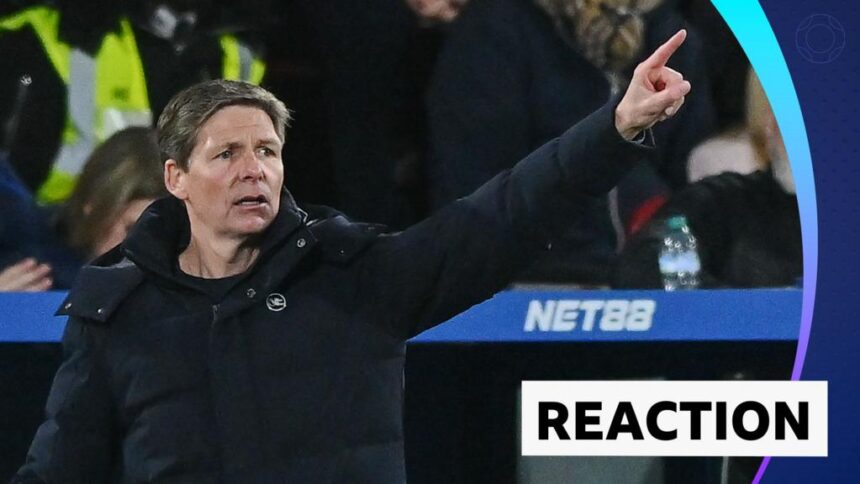
Under the bright lights of a Friday night at Selhurst Park, Crystal Palace and West Ham United played out a Premier League stalemate that will leave Eagles boss Oliver Glasner with a familiar, nagging frustration. In a match defined by squandered opportunities rather than defensive masterclasses, the Austrian manager delivered a blunt post-match assessment: his team were “not clinical enough.” The 0-0 draw, while extending Palace’s unbeaten run under their new manager, felt like two points dropped in South London, a story of promising build-up meeting a disappointing final act.
A Tale of Two Halves and Missed Chances
The narrative of the match was established early and persisted until the final whistle. Crystal Palace, buoyed by the vibrant energy of their home support, controlled large swathes of the game, particularly in the first half. The midfield trio, with Adam Wharton again impressing with his composure, consistently found pockets of space to feed a lively forward line. Jean-Philippe Mateta, the focal point of Glasner’s system, worked tirelessly and found himself in dangerous positions, but his finishing boots were left in the dressing room. The French striker spurned the game’s clearest chance in the first period, a moment that set the tone for the evening.
West Ham, in contrast, were pragmatic and occasionally perilous on the counter-attack. Michail Antonio provided a physical outlet, but the Hammers’ most potent weapon, Jarrod Bowen, was kept relatively quiet by a disciplined Palace backline marshalled by Joachim Andersen. For David Moyes, a point away from home is rarely frowned upon, but even he will know his side rode their luck at times, relying on last-ditch blocks and wayward Palace finishing to secure the clean sheet.
Glasner’s Philosophy: Progress Marred by Profligacy
Since taking the reins, Oliver Glasner has implemented a clear, aggressive philosophy at Crystal Palace. The hallmarks are evident: a high defensive line, intense pressing triggers, and rapid vertical transitions. Against West Ham, the framework functioned well. The Eagles won the ball high up the pitch on numerous occasions and engineered promising situations. However, the crucial final component—the clinical finish—was glaringly absent. This gap between performance and result is the current challenge at Selhurst Park.
Glasner’s post-match comments cut to the heart of the issue. “We created the chances, we had the possession, we were the better team for long periods,” he likely reflected. “But in football, you must score. We were not clinical enough. It’s something we work on every day, but we have to show it on the pitch.” This analysis points to a team still in transition, absorbing the tactical instructions but yet to perfect the execution under match pressure. The lack of a consistent, ruthless scorer beyond the in-form Mateta remains a talking point.
- Expected Goals (xG) Dominance: Palace’s xG likely told a story of dominance, underscoring the quality of chances created and wasted.
- System Success: The press worked, forcing turnovers in dangerous areas—a positive sign for Glasner’s long-term project.
- Final Third Frustration: The recurring theme was poor decision-making or execution in the last moment, whether a pass or a shot.
Key Battles and Individual Performances
Digging deeper into the individual duels reveals why the game ended goalless. For Palace, Tyrick Mitchell had an excellent game nullifying the threat of Bowen, showcasing defensive maturity. In midfield, Adam Wharton’s progressive passing was a highlight, but the absence of Michael Olise from the start was palpably felt. The Frenchman’s wizardry and directness in one-on-one situations were missed, as Palace often opted for an extra pass instead of a decisive shot.
For West Ham, Edson Álvarez was a shield in front of the defense, breaking up play effectively. The real heroes, however, were in the back four. Konstantinos Mavropanos and Kurt Zouma threw their bodies in the way of everything, embodying their team’s resilient, if somewhat fortunate, point. In a game of fine margins, West Ham’s defenders won their personal battles when it mattered most.
Looking Ahead: What This Means for the Run-In
For Crystal Palace, this result is a microcosm of their season—flashes of thrilling potential undermined by a lack of consistent end product. The draw leaves them in a comfortable mid-table position, but the focus for Glasner is purely on performance evolution. The quest for clinical efficiency in front of goal will dominate training at Copers Cope. The upcoming fixtures will test whether this side can turn promising draws into commanding wins, a necessary step for any team with aspirations of climbing the table.
West Ham will view this as a solid, if unspectacular, point that keeps them in the European conversation. Moyes’s side demonstrated the defensive resolve that has characterized his tenure, but their lack of attacking fluency will be a concern. The reliance on moments of individual quality from Bowen or Lucas Paquetá remains high.
Prediction: Expect Glasner to intensify finishing drills in training. Palace’s underlying numbers are promising, and if they can find a sharper edge, a strong end to the season is probable. For West Ham, consistency is the key; they must find a way to marry defensive solidity with more sustained attacking threat to secure a European spot.
Conclusion: A Point Gained or Two Points Lost?
Perspective is everything in football. David Moyes will likely board the team bus to East London content with a hard-earned clean sheet and a point on the road. For Oliver Glasner and the Crystal Palace faithful, however, the overriding emotion will be one of frustration. The blueprint for success under the new manager is visible—the energy, the tactical structure, the chance creation are all present. Yet, the most critical element, the cold, clinical dismissal of chances, was missing.
The Selhurst Park stalemate against West Ham serves as both an encouragement and a warning for Glasner. The encouragement lies in the fact his ideas are taking root; the warning is that in the ruthless economy of the Premier League, philosophy alone does not earn points. Finishing does. The Austrian’s project is underway, but its next phase—and its ultimate success—depends entirely on solving the riddle of profligacy that left them frustrated on a Friday night under the lights.
Source: Based on news from BBC Sport.